
New York's creator economy is unusually dense, and unusually visible. New York produces the second-largest share of America's top influencers of any state, behind only California, with the state's creators generating a combined 2 billion followers, according to a New York Post report published in May 2026. That density means NYC creators face a specific kind of pressure most markets don't: a large, engaged, and famously blunt audience of people who happen to work in media, fashion, and finance, and who scrutinize a creator's business decisions as closely as their outfits.
That scrutiny has produced a useful side effect. The NYC creators who've lasted more than a few years tend to be the ones who built something that survives beyond a single platform's algorithm, whether that's a product line, a service, an audience-owned newsletter, or genuine subject-matter expertise. This piece profiles 17 of them, organized by how they actually make money rather than by follower count, and it's honest about the ones whose business bets didn't fully pan out. That's arguably more useful than a highlight reel, since understanding why something didn't work tells you more about business durability than another success story does.
TL;DR
- NYC influencers with the most durable businesses tend to focus on product development, education, or community infrastructure, not sponsored posts alone.
- Owned revenue streams create real stability when platform algorithm changes disrupt reach, though owning a brand doesn't guarantee it survives; a few of the creators below show what happens when it doesn't.
- Community engagement signals, saves, shares, and repeat commenters tend to predict monetization potential better than raw follower counts.
- NYC's influencer snark community, especially the long-running r/NYCinfluencersnark forum, reflects genuine audience fatigue with inauthentic content, and it has pushed some creators toward more transparent business practices.
- Cross-platform presence and owned channels like email newsletters protect against the risk of any single platform changing its rules or its reach overnight.
Influencers Who Turned Digital Presence Into Revenue Streams
Sponsorship rates rise and fall with algorithm changes, platform shifts, and general ad-market conditions, which is exactly why the most durable creator businesses tend to build something they own outright: a product line, a service, or intellectual property that doesn't disappear if a single platform deprioritizes their content overnight.
The creators in this section are probably better described as entrepreneurs who happened to build an audience first, rather than content creators who occasionally sell something. That's a meaningful distinction, because the skills required to run a supply chain, manage inventory, or build a service business are almost entirely different from the skills required to post consistently. NYC's influencer snark community, most visibly the subreddit r/NYCinfluencersnark, tends to focus its sharpest criticism on exactly this gap: when a creator launches a product line that reads as a licensing deal with their name slapped on it, rather than something they were genuinely involved in developing, audiences tend to notice, and they say so loudly.
That distinction between white-labeled products and genuinely developed ones connects to a broader research finding. A peer-reviewed study published in the International Journal of Environmental Research and Public Health found that social media users tend to perceive influencers as more authentic in their subject area than traditional celebrity endorsements, largely because influencers appear to demonstrate a closer, more consistent relationship with their content over time. Understanding authenticity in influencer marketing becomes especially relevant here, since audiences increasingly evaluate a creator's product not just on whether it exists, but on whether it reflects real involvement.
1. Arielle Charnas
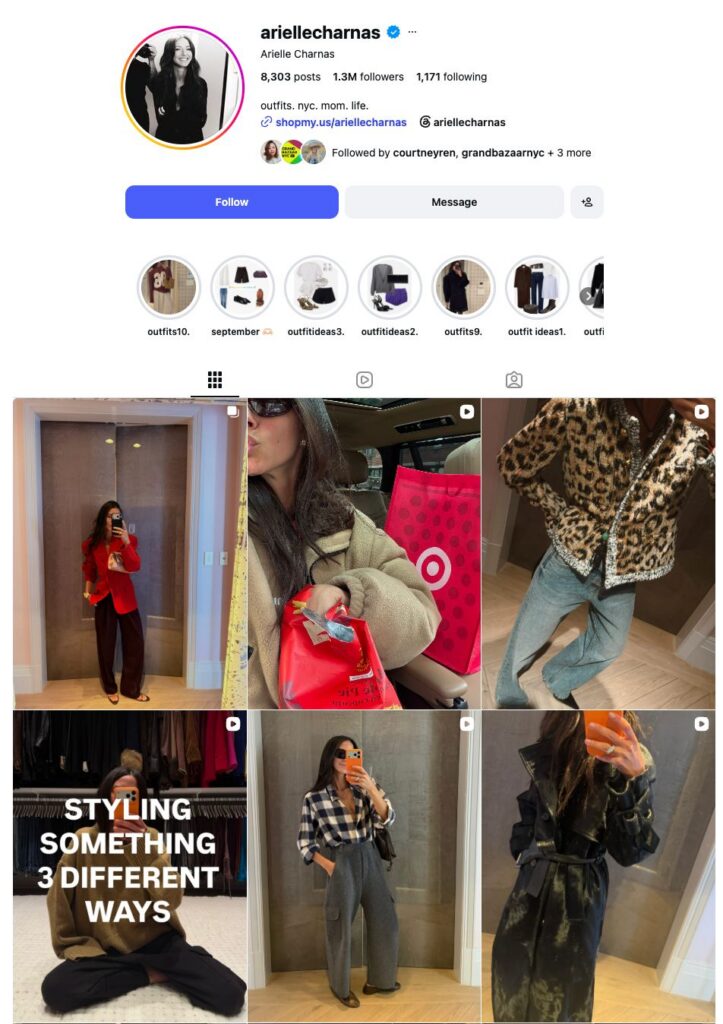
Arielle Charnas built one of the most recognizable fashion-blogger-to-brand stories in the industry, and it's also a useful lesson in why owning a brand doesn't automatically mean the brand survives.
She started blogging in 2009, and her 2018 capsule collection with Nordstrom sold out quickly, reportedly generating more than $4.4 million in sales in a single day, according to contemporaneous reporting from outlets including Business Insider and CNBC. When Nordstrom's exclusive partnership ended in 2019, Charnas relaunched Something Navy as an independent, direct-to-consumer brand in July 2020, delayed from its original spring launch by the pandemic. That relaunch also generated more than $1 million in sales within its first 30 minutes.
The full story doesn't end there, and it's worth knowing the rest. Charnas faced significant public backlash in early 2020 after disclosing a COVID-19 diagnosis and admitting she had left New York for the Hamptons during the city's outbreak, criticism that became a defining moment in NYC influencer discourse at the time. More materially for the business lesson here: Something Navy ceased producing new clothing and began exploring a sale in 2023, reportedly amid a heavy debt load, and the brand was ultimately sold off. The company's trajectory, from a single-day, multimillion-dollar retail launch to a distressed sale within a few years, illustrates a real and instructive point: owning a brand removes dependence on any one platform's algorithm, but it introduces an entirely different set of risks around inventory, cash flow, and retail execution that a content business never has to face.
2. Danielle Bernstein
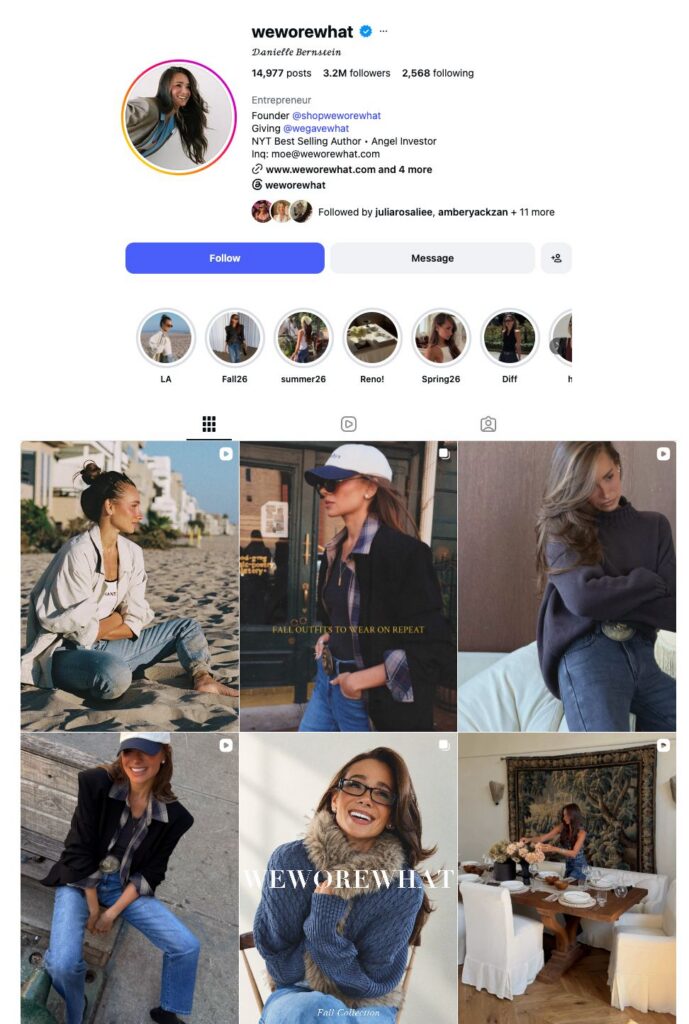
Danielle Bernstein built WeWoreWhat from a personal style blog into a multi-category brand spanning swimwear, activewear, and accessories, generating revenue through licensing deals and co-branded partnerships with established retailers including Onia, Saks Fifth Avenue, and Macy's.
That diversification across product categories is a genuinely sound business strategy on its own terms; if one line underperforms, the others can carry the business. But Bernstein's business has also faced a specific, repeated criticism worth naming directly: since 2018, she and WeWoreWhat have been publicly accused of closely copying designs from at least nine smaller, independent brands, according to a Business Insider investigation, and one of those brands, the Brooklyn lingerie label The Great Eros, filed a federal copyright and trademark lawsuit in 2020 that led to a multi-year legal dispute. Bernstein and her manufacturing partner have denied the allegations. This pattern is one of the more frequently cited storylines across NYC influencer discussion forums, precisely because it raises the same authenticity question the previous section touched on: a licensing and co-branding model works only as long as the underlying designs are genuinely original, and repeated accusations of copying tend to undercut the trust a brand needs from the audience that made it possible in the first place.
3. Ella Rose
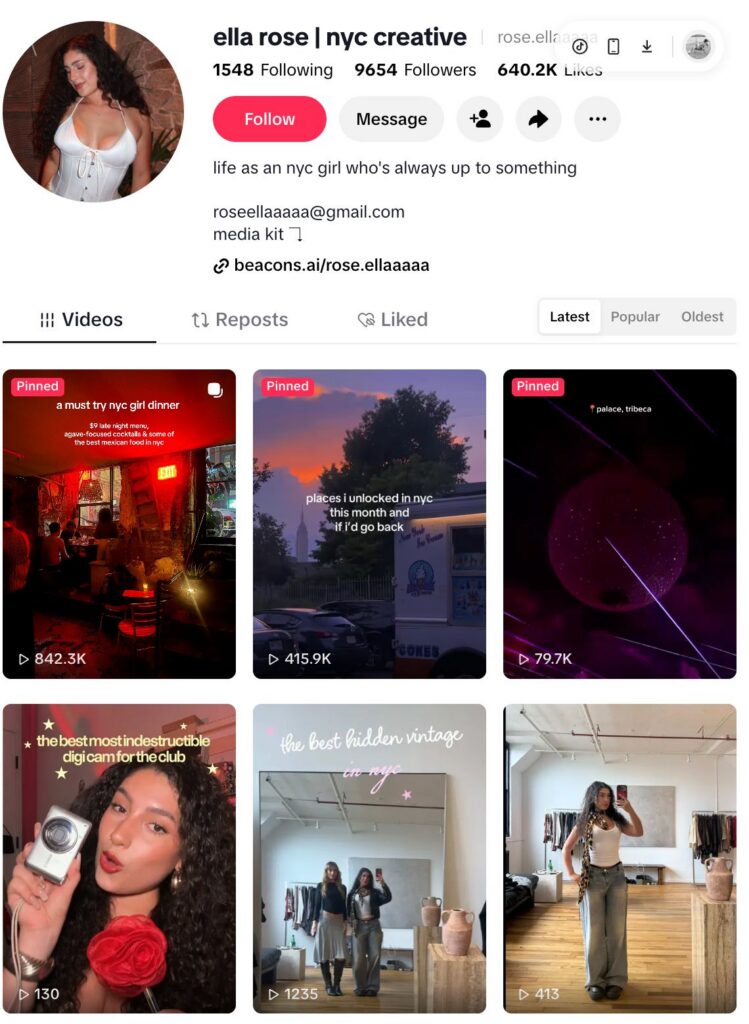
Not every profitable creator business runs on physical products. Ella Rose, a wellness and lifestyle content creator, built a consulting business offering creative direction, content strategy, and brand positioning services to other brands and creators, using her own channels primarily as a working portfolio rather than her main revenue source.
Her business model runs on consulting retainers, workshop fees, and speaking engagements rather than product sales or sponsored posts, which typically means a smaller audience than a mega-influencer commands, but potentially higher earnings per follower given how B2B service pricing works. This model illustrates a point worth taking seriously when evaluating any creator for a partnership: expertise and execution ability can matter more than raw reach. Many brands struggle with identifying the right influencers for exactly this reason, since a creator's follower count says very little about whether they can actually deliver strategic value beyond a single sponsored post.
Influencers Who Monetize Through Education and Expertise
Courses, memberships, and educational content generally carry higher profit margins than physical products, since there's no inventory risk and delivery scales without proportionally scaling cost. They also build authority in a way a sponsored post typically can't, since teaching something in enough detail that people pay for it is a fairly high bar to fake.
This shift toward education-based revenue also connects to a recurring theme in NYC creator discourse: some corners of influencer snark communities direct real criticism at course sellers, often around concerns about gatekeeping expertise behind a paywall or overselling results. That criticism is worth taking seriously rather than dismissing, but it doesn't erase the more basic economic logic here: subscription and course-based relationships tend to be more resilient than one-time product purchases, because they depend on ongoing perceived value rather than a single purchase decision.
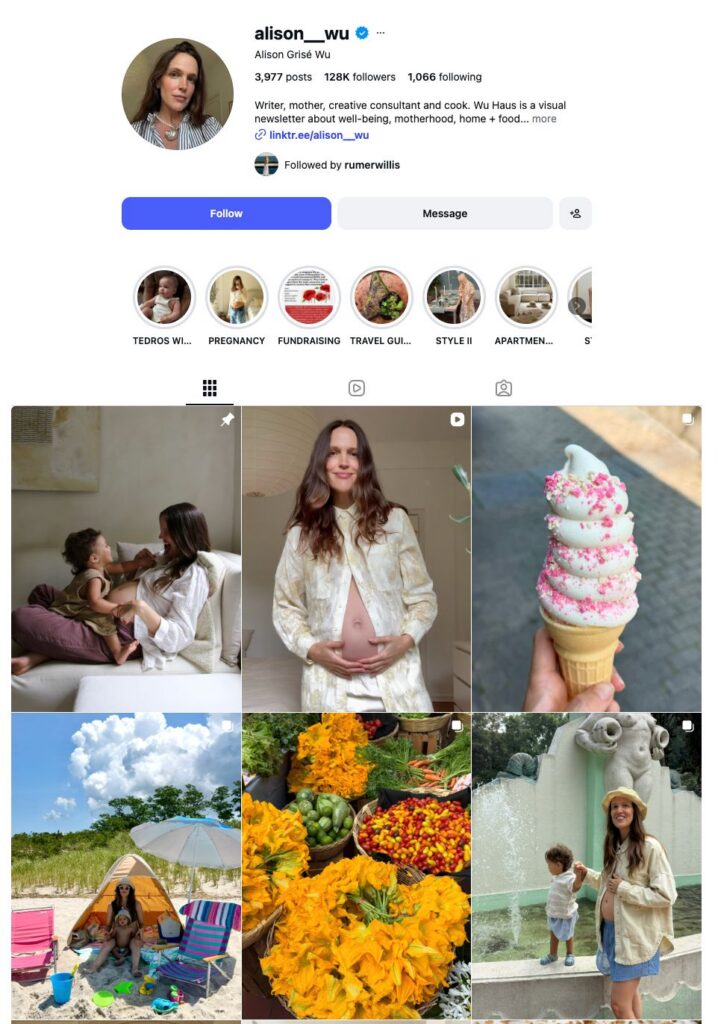
4. Alison Wu
Alison Wu transitioned from doing makeup professionally to teaching it, which is a meaningfully different business than either working as a makeup artist or selling makeup products. She offers virtual consultations, personalized beauty routine planning, and technique-focused workshops, using free Instagram and YouTube content to demonstrate expertise before any paid offering enters the picture.
Her consulting rates for one-on-one sessions commonly fall somewhere in the low hundreds of dollars, and she's built a reputation partly around declining to promote products she doesn't personally use, which matters more in beauty specifically than in most categories, since audiences in this space tend to be unusually sensitive to inauthentic recommendations.
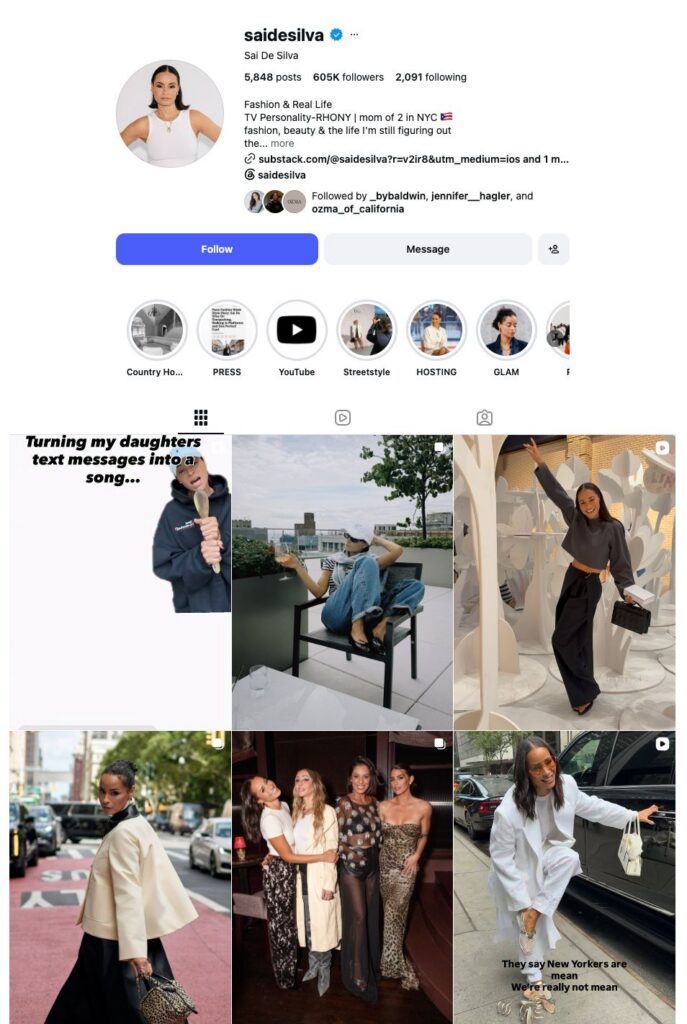
5. Sai De Silva
Sai De Silva started Scout the City in 2014, originally documenting her daughter's outfits from her home in Brooklyn, before the account expanded into a broader fashion, lifestyle, and family-content platform. The blog now generates revenue through affiliate commissions, brand partnerships with companies including Amazon, Apple, and Target, and digital products like city guides and travel planning resources.
De Silva has since become a cast member on The Real Housewives of New York City, which has extended her visibility well beyond her original audience, while Scout the City itself continues to operate as an independent lifestyle brand built on trust and consistent, genuinely useful content rather than purely aspirational posts.
6. Jené Luciani Sena
Jené Luciani Sena built her platform from a foundation in traditional media, working as a television correspondent and journalist before establishing a digital following. She's written books on lifestyle topics and uses her platform to drive book sales, while regular TV appearances as an on-air expert feed back into her digital authority.
The combination of traditional media credibility and a digital following tends to make brand partnerships more lucrative than either credential alone would, since brands are effectively paying for both reach and an outside validation signal that a pure content creator doesn't have.
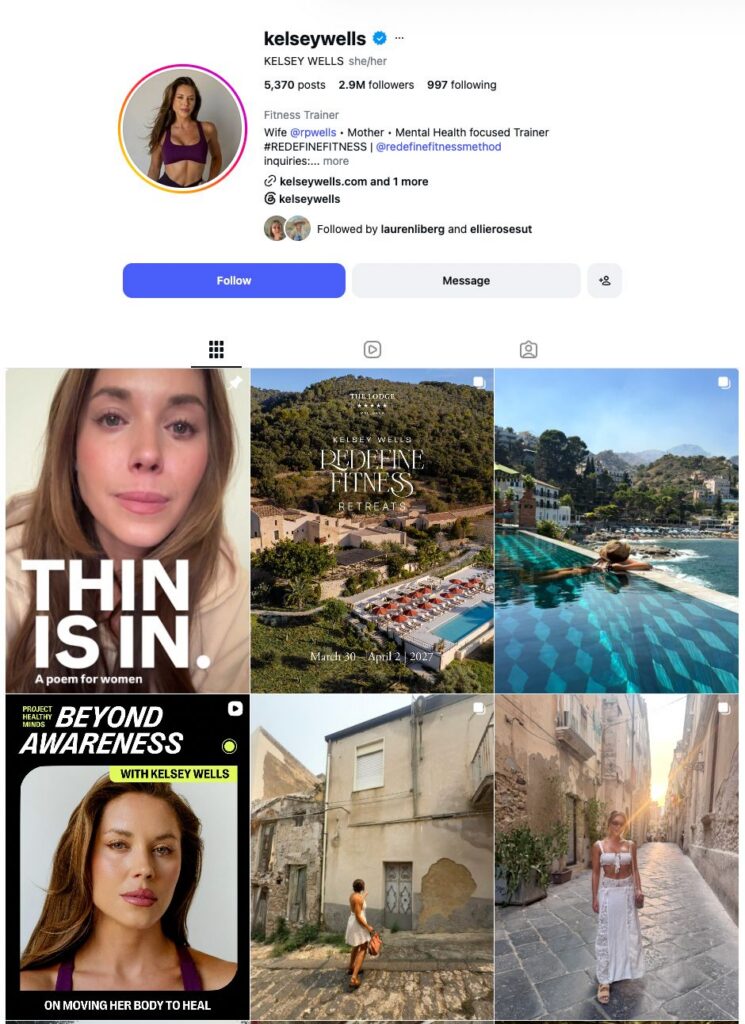
7. Kelsey Wells (PWR at Home)
Kelsey Wells built her PWR training program within the Sweat app ecosystem, documenting her own workouts and body transformation on Instagram to drive subscriptions to a broader platform rather than selling a standalone product of her own.
This model shows a specific transformation path: from solo personal trainer to a scalable digital program, with engagement built around visible results and community rather than aesthetics alone. It requires constant content creation to keep the top of the funnel active, but the underlying revenue, largely trainer fees paid through the app, becomes considerably more passive over time than a traditional one-on-one training business would be.
8. Mimi Ikonn (Luxy Hair)
Mimi Ikonn co-founded Luxy Hair extensions and used detailed YouTube tutorials, covering styling and care techniques, to build trust in the product before ever asking for a purchase. That educational content functions as a marketing funnel: free, genuinely useful content builds an audience, and a percentage of that audience eventually converts to customers.
She's since expanded into personal development content and courses as well, on top of the original hair-extension business, which itself relies on YouTube ad revenue and affiliate partnerships alongside direct product sales. The model requires a real amount of patience; it's a multi-year content investment before major revenue typically shows up, not a fast path to income.
9. Paola Alberdi (Blank Itinerary)
Paola Alberdi built her fashion and travel platform around detailed, genuinely useful destination guides rather than purely aspirational trip photography, and now offers travel planning consultations for luxury trips alongside digital guide sales, consultation fees, and affiliate hotel bookings.
Her content strategy favors quality over quantity, fewer posts with meaningfully higher production value, which tends to work specifically because her audience trusts her taste level enough to act on her specific recommendations rather than just admiring the photos.
Influencers Who Built Community-First Platforms
Engaged communities convert better than large, passive audiences, and that distinction matters more now than it did five years ago. Algorithm changes can suppress reach overnight, but they can't destroy a genuine relationship a creator has built with people who choose to keep showing up.
NYC's influencer snark and drama communities, alongside similar forums covering other cities, actually reveal something useful here, even when the tone is harsh: audiences consistently reward authenticity, consistency, and genuine interaction, and they consistently punish creators who feel manufactured or dishonest. Revenue in this model tends to come from community serving community rather than a creator simply broadcasting to followers, and smaller, genuinely engaged communities frequently outperform much larger, passive follower counts on a revenue-per-follower basis.
| Community Metric | High Engagement Signal | Low Engagement Signal |
| Comment quality | Detailed questions, personal stories, ongoing conversations | Generic "love this!" or emoji-only responses |
| Save rate | Meaningfully higher share of reach saved for later reference | Very low save rate relative to reach |
| DM volume | Regular direct messages seeking advice or sharing experiences | Minimal or largely automated DM activity |
| Share behavior | Content shared to close friends or specific interest groups | Low-context shares with no personal framing |
| Repeat interaction | Same usernames appearing across posts over months | One-time commenters who rarely return |
Building influencer relationship management into a brand's broader strategy requires understanding this exact dynamic: the creators who maintain community loyalty tend to be the ones who survive a platform's next algorithm update, because their audience follows them specifically, not the feed that happens to be serving their content that week.
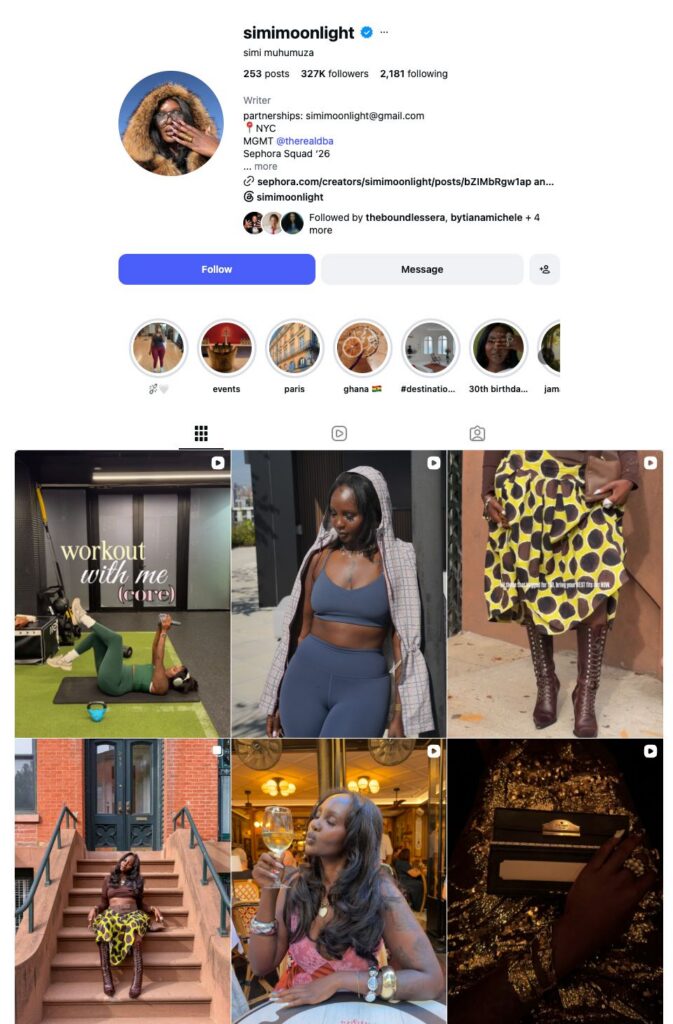
10. Simi Muhumuza
Simi Muhumuza moved to New York from Atlanta in 2020 and built a following, now roughly 328,000 on Instagram under the handle @simimoonlight, plus an active presence on TikTok, YouTube, and Substack, around fashion, wellness, and a genuinely specific knowledge of the city, the kind of hyperlocal recommendation content that a purely aspirational lifestyle account can't fake. In a September 2026 interview with The Cut, she walked through her actual go-to spots for vintage shopping, home décor, cocktails, and skincare across Brooklyn and Manhattan, the sort of granular, personally tested recommendation that builds a different kind of trust than a sponsored "best of NYC" roundup.
That hyperlocal specificity is the actual product here. Rather than generic aspirational content, Muhumuza's value proposition rests on functioning as a genuinely reliable Rolodex for a specific slice of city life, and she's built real community infrastructure around that positioning, including hosting her own small in-person gatherings for followers, a breakfast event at her own apartment being one recent example, that turn a one-directional feed into an actual two-way relationship. She's a member of the 2026 Sephora Squad, an ongoing beauty-brand ambassador program, alongside a steady rotation of fashion and lifestyle partnerships with brands including Nordstrom Rack, Old Navy, and Oura, and she's represented by a talent agency, which reflects a level of partnership volume and professional structure that a purely organic account typically doesn't reach.
11. Tiffany Ima
Tiffany Ima built her beauty and lifestyle platform around product discovery paired with a willingness to publicly call out products that don't work, which is a meaningfully different trust proposition than a purely promotional beauty account. She engages directly with follower questions and concerns, and generates revenue through affiliate commissions, brand partnerships limited to companies she genuinely trusts, and consulting work.
Her selectivity is the actual product here: a recommendation only carries weight if the audience believes the creator would say no to a bad one, and Ima's business model depends on maintaining that credibility consistently over time.
12. Bryan Boy
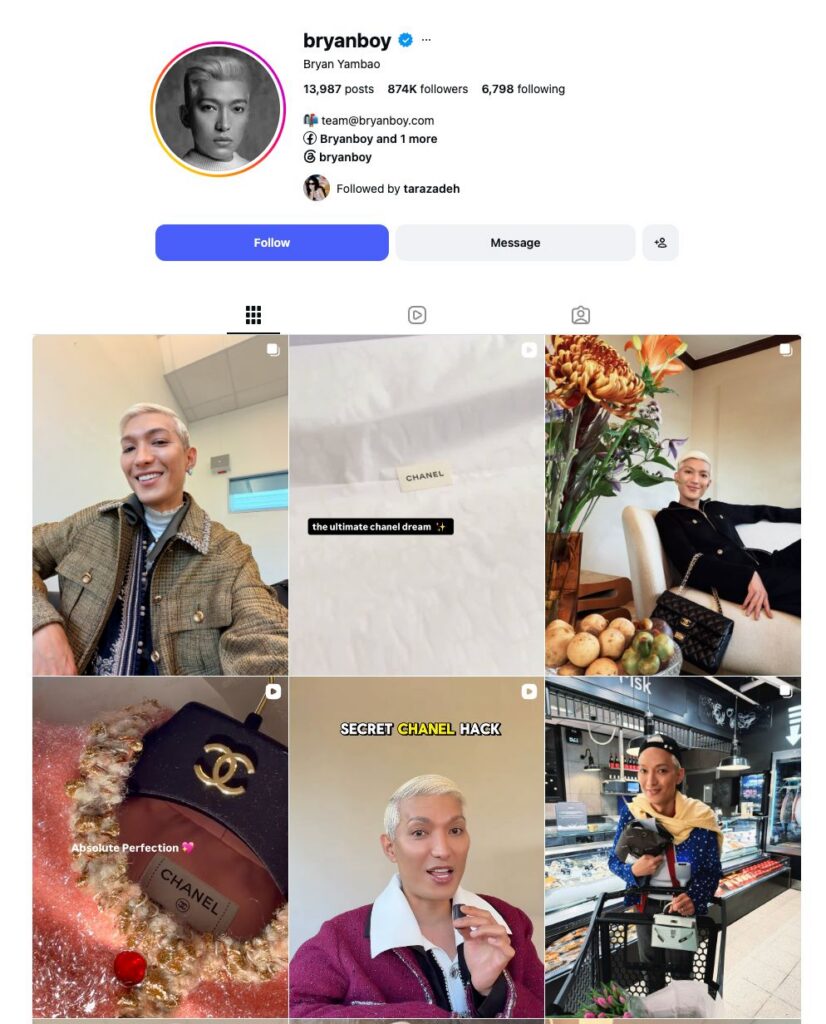
Worth a quick correction here for accuracy: Bryan Boy, whose blog dates back to 2004, is one of the original fashion bloggers and a genuinely important figure in the medium's early history, but he's based in Manila, Philippines, not New York, and built much of his career around international fashion week access rather than a New York-specific identity. He's included here as a foundational figure in the broader online fashion-commentary space that many NYC-based creators later worked within, rather than as a New York creator himself.
His business has survived several major platform shifts, from blog to Instagram to TikTok, largely because his audience follows him for his specific voice and fashion commentary rather than for outfit posts alone. His revenue today spans brand partnerships, consulting, speaking engagements, and monetized front-row access to shows, and his longevity across two decades of constant platform change is genuinely instructive: a distinct point of view tends to outlast any single platform's relevance.
13. Manny MUA
Also worth a direct correction: Manny MUA, born Manuel Gutierrez, built his early career working at a Sephora location in California and is generally associated with Los Angeles rather than New York, though his beauty platform and Lunar Beauty brand have national reach and NYC-based partnerships. He's included here for the strength of the business model itself, since it's a genuinely useful case study regardless of geography.
In 2017, he became the first male brand ambassador for a Maybelline campaign, and in 2018 he founded Lunar Beauty, a cosmetics line he describes as designing personally, down to the color schemes and packaging. He's involved his community directly in product development through polls and feedback, which tends to create a specific kind of investment: an audience that feels some ownership in a brand because they contributed to shaping it is generally more loyal to that brand than an audience being sold to from a distance. Creating an effective influencer brand strategy on social media increasingly depends on exactly this kind of co-creation rather than one-directional promotion.
14. Brian Lindo
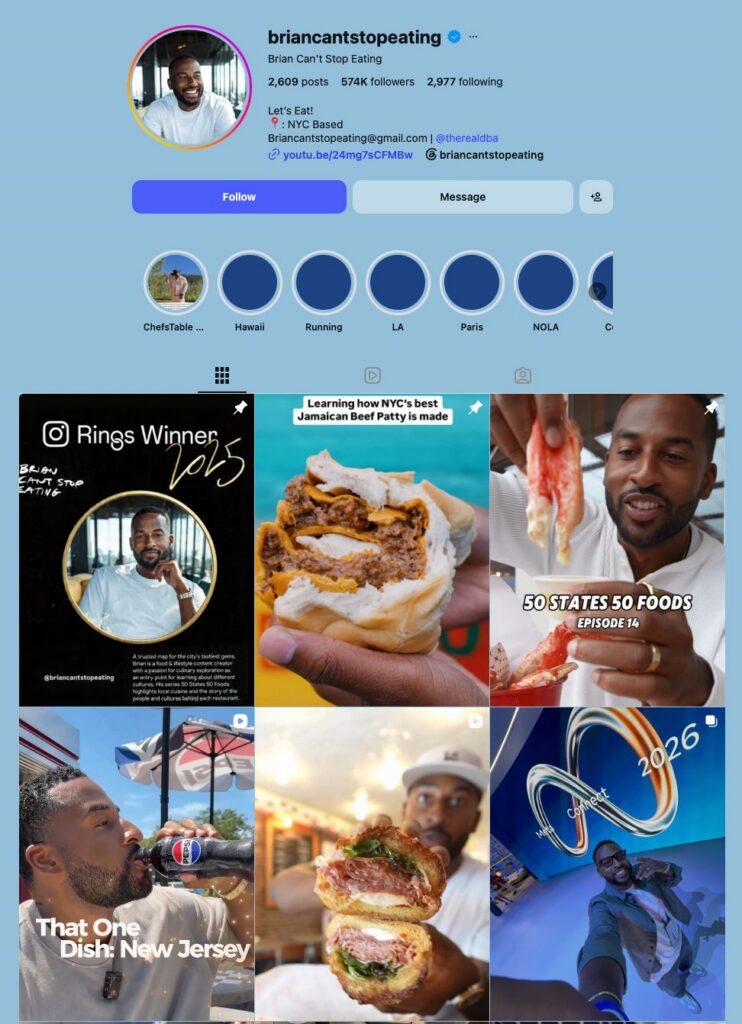
Brian Lindo started documenting NYC restaurants on Instagram in 2017 as a side project while working a corporate finance job, initially building an app-based recommendation platform with a friend before pivoting entirely to food content under the handle Brian Can't Stop Eating. His following has grown from a few thousand early followers to more than 570,000 on Instagram today, alongside a large presence on TikTok and YouTube, and he's been featured in Forbes, New York Magazine's The Cut, and on the Drew Barrymore Show.
His business model rests on a specific, deliberate editorial policy that functions as his core differentiator: he pays for the overwhelming majority of his own meals rather than accepting comped visits from restaurants, a choice he's described directly as protecting his ability to say what he actually thinks about a place. That's a meaningfully different credibility structure than most restaurant-content accounts operate on, since food influencer marketing typically runs on some mix of paid partnerships and free meals in exchange for coverage, and audiences have grown increasingly skeptical of recommendations that might be bought rather than earned. Lindo eventually left his finance career once his content income surpassed his day job's salary, and his revenue today spans brand partnerships with national food and beverage companies, restaurant collaborations, and hosted events, including appearances at the New York City Wine & Food Festival's FoodieCon.
The lesson here connects to a broader pattern worth remembering when evaluating any restaurant or food-focused creator for a partnership: a policy of paying for your own coverage is a slower, more expensive way to build trust than accepting free meals, but it produces exactly the kind of credibility that makes a later, disclosed paid partnership carry more weight, since the audience already believes the creator's independent opinion is real.
15. Jessica Wang
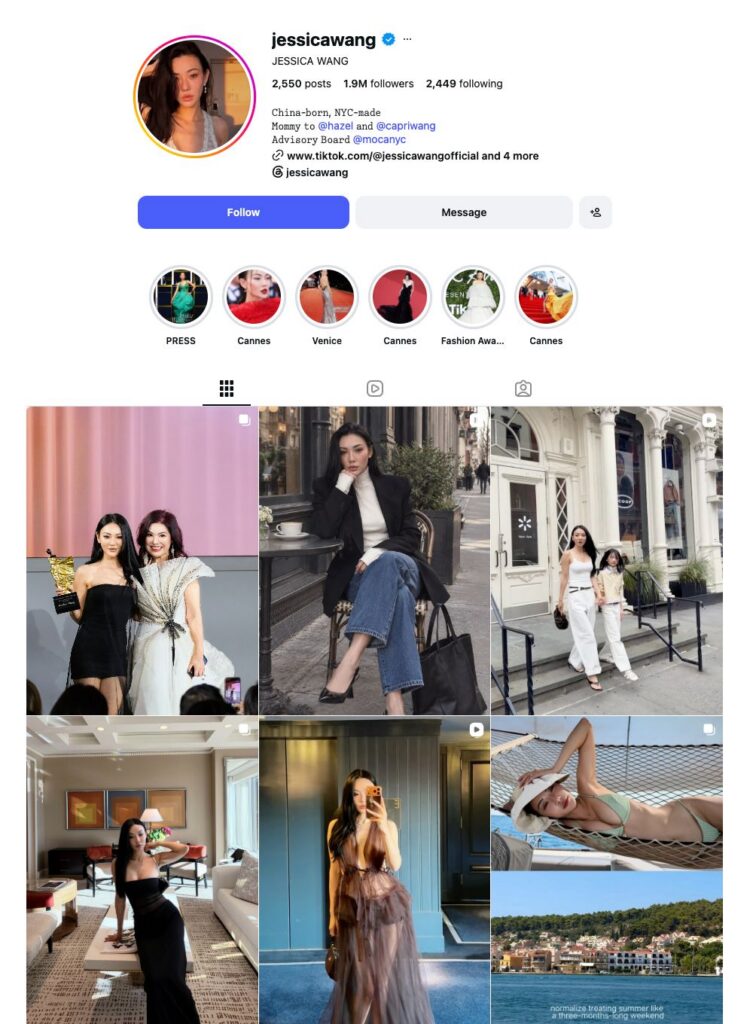
Jessica Wang built her fashion platform around styling versatility rather than showcasing unattainable luxury pieces in isolation, demonstrating multiple ways to wear the same items and get more use out of an existing wardrobe. That practical framing tends to build a different kind of trust than aspirational-only content does, since the audience can actually recreate what they're seeing rather than simply admiring it.
Her revenue comes through brand partnerships and affiliate sales, and the engagement her content generates tends to come from genuine usefulness: a styling tip someone can actually apply is worth more, in trust terms, than a look someone can only look at.
16. Grace Atwood
Grace Atwood built The Stripe from a personal style and lifestyle blog into a broader platform that now includes a Substack newsletter and the Bad on Paper podcast, which she co-hosts. That newsletter is the more strategically important piece here: an email list is a genuinely owned audience relationship, unaffected by any single platform's algorithm or reach changes, which most purely social-media-based creators don't have.
Her revenue spans newsletter sponsorships, affiliate sales, podcast sponsorships, and consulting work, and the diversification across owned and rented platforms is itself the lesson: many creators explore working with brands as an influencer exclusively through their primary social account, but building an owned channel alongside that relationship reduces how exposed the whole business is to a single platform's decisions.
17. Julia Berolzheimer
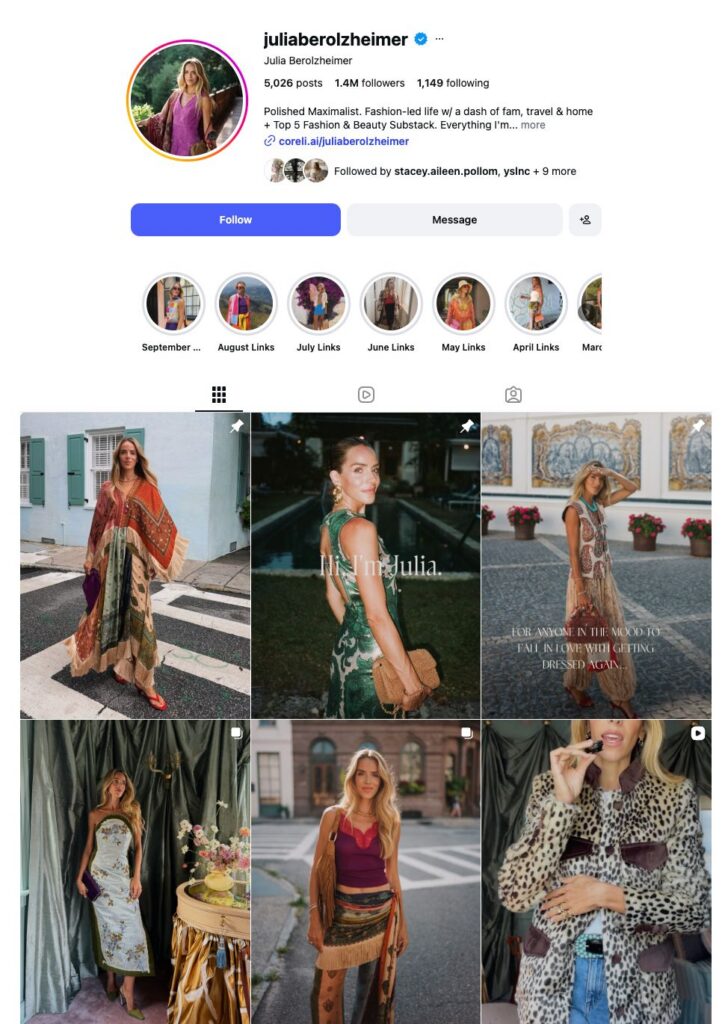
Julia Berolzheimer started Gal Meets Glam as a personal style blog and eventually expanded into the Gal Meets Glam Collection, a clothing line built around feminine dresses that reflects the aesthetic she'd already established with her audience. She maintains her blog, Instagram, and a newsletter as complementary channels to keep the audience relationship intact across formats.
Her revenue spans product sales, affiliate income, and brand partnerships, and the overall model runs in a genuine full circle: content built the audience, that audience's response informed what products to actually make, and product revenue now funds continued content creation. That loop, content to audience to product to funding for more content, is close to the ideal version of what a creator-owned brand can look like when the underlying product genuinely reflects what the audience already trusted the creator's taste to deliver.
Finding Influencers Who Actually Fit Your Brand
Follower counts don't indicate business results or genuine audience alignment on their own, and plenty of brand budgets get spent on NYC-based Instagram influencers whose audiences look impressive on paper but simply don't convert. The creators profiled above succeed because they built real, defensible businesses, but finding similarly substantive creators at scale, rather than one at a time through manual research, is a genuinely difficult problem for most marketing teams.
Manually vetting influencers, scrolling through profiles, checking engagement rates by hand, trying to assess whether an audience is real, takes real time per creator, and that time adds up fast once a campaign needs more than a handful of partners.
| Evaluation Approach | Time Investment | Accuracy | Scalability |
| Manual profile review | Roughly 2-4 hours per influencer | Inconsistent, since it depends on subjective judgment | Low; limited by team bandwidth |
| Basic influencer databases | Roughly 30-60 minutes per search | Moderate; surface-level metrics only | Medium; filtering is limited |
| AI-powered platforms | Roughly 10-15 minutes per campaign | Higher; demographic and psychographic matching | High; scoring runs automatically at scale |
| Agency partnerships | Ongoing retainer required | Variable, depending on agency expertise | Medium; still bottlenecked by manual curation |
SPIRRA was built around closing that specific gap. The platform's Audience Alignment Score™ and Brand Alignment Score™ analyze whether an influencer's actual followers match a brand's target demographics, replacing manual guesswork with a repeatable, data-backed evaluation. Because SPIRRA operates a 100% verified influencer network, brands aren't spending budget or time discovering that a promising-looking account is padded with bots or purchased followers only after the campaign is already running. Understanding how to spot fake influencers becomes considerably less necessary when the network itself is verified from the start, which is exactly the kind of problem better suited to a platform than to a manual checklist.
Ready to find influencers whose audiences actually align with your brand? Schedule a demo with SPIRRA to see how AI-powered alignment scoring identifies creators who drive real business results, not just impressive-looking metrics.
Final Thoughts
The NYC influencers who've lasted, and the ones whose stories are more complicated than a highlight reel would suggest, share a common thread: the ones building something durable focus on real businesses, not just audiences. Owned revenue streams, whether that's a product line, a course, a consulting practice, or an email list, tend to create stability when an algorithm update tanks reach overnight. Community engagement consistently beats raw follower counts for actually predicting monetization potential.
Authenticity matters here for a business reason as much as a moral one: audiences convert when they trust a recommendation, and NYC's notoriously blunt influencer discourse, including the snark and drama communities that scrutinize local creators closely, actually serves a real function by holding creators accountable to delivering genuine value rather than just visibility. Something Navy's path from a record-breaking launch to a distressed sale, and Love Taza's transition from one of the most-followed family blogs of its era to a deliberately quieter, more private life, are both worth remembering alongside the more straightforwardly successful stories above; they're not less instructive for having a harder ending.
For brands, the practical takeaway from all 17 profiles above is the same one, repeated in 17 different forms: a follower count tells you almost nothing about whether a creator has built something durable enough to be worth your budget. Something Navy looked like a business success story right up until it wasn't. WeWoreWhat's licensing model looked like smart diversification until repeated design-copying allegations started to erode the trust it depended on. The creators who held up, Ella Rose's consulting practice, Grace Atwood's owned newsletter audience, Kristin Gallant and Deena Margolin's course-based revenue at Big Little Feelings, all share a structural quality that a media kit or an engagement-rate screenshot won't show you on its own.
That's precisely the gap SPIRRA was built to close. Rather than asking your team to manually reconstruct a creator's business model, revenue mix, and audience quality from public posts and secondhand snark-forum discussion, SPIRRA's Audience Alignment Score™, Brand Alignment Score™, and Content Alignment Score™ surface that same signal systematically, across a 100% verified influencer network, so you're evaluating real audience fit and business substance before a campaign launches, not discovering the gaps after budget is already spent. Whether you're vetting a single NYC creator for a targeted campaign or building a broader roster across categories, the same underlying question this piece has asked about all 17 creators applies to your next partnership decision too: does this creator's business hold up to scrutiny, and does their audience genuinely align with what you're selling?
Ready to find NYC influencers whose businesses and audiences actually hold up under scrutiny? Schedule a demo with SPIRRA to see how AI-powered alignment scoring and a verified creator network help your team build campaign rosters around real business substance, not just impressive-looking follower counts.