

If you searched "best AI influencer generator," you're probably in one of two places: you're genuinely curious whether virtual AI-generated personas could work for your brand, or you're trying to understand what the technology actually does before making a budget decision. Either way, the honest answer is more nuanced than most of the content ranking for this keyword will tell you. The best AI influencer generator for your brand might not be a generator at all. For most brands running performance-driven campaigns, AI is most valuable not as a tool for creating synthetic influencers but as the intelligence layer that makes real creator partnerships dramatically more effective. This guide breaks down what AI influencer generators are and where they genuinely fit, where they fall short and why brand interest in fully virtual creators has been cooling, and why SPIRRA's approach to AI in influencer marketing produces better measurable outcomes than swapping humans for holograms.
What Is an AI Influencer Generator and How Does It Work?
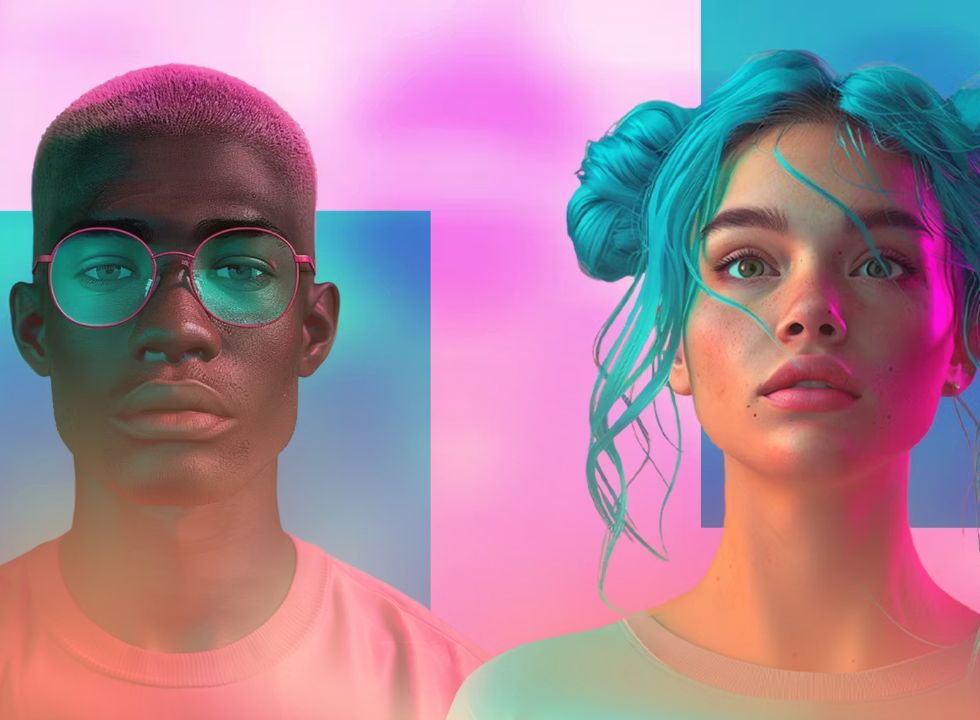
An AI influencer generator is a software platform that creates virtual personas for use on social media. The output ranges from static AI-generated images of fictional people posted as branded content to fully animated 3D avatars with synthesized voices capable of producing video content at scale. The underlying technology typically combines generative image modeling, text-to-video synthesis, voice cloning, and avatar customization tools that allow brands to define a persona's appearance, personality traits, and content style.
The most widely used tools in this category include platforms like HeyGen and Creatify for video avatar creation, Influencer Studio for full-persona generation with image and video output, and various generative image tools that produce AI creator content for static social posts. These platforms are genuinely capable of producing realistic visual content at a pace and cost that human creators can't match on volume alone. A brand can generate hundreds of product images featuring an AI persona in the time it would take to schedule and execute a single human creator shoot.
Where the technology gets more complicated is in what it can't do. Content volume is not the limiting factor in most influencer campaigns; trust is. And trust, as the data consistently shows, is not something a synthetic persona generates reliably.
The Real Limitations of AI-Generated Influencers
Brand interest in AI influencer campaigns has been measurably cooling. According to Business Insider reporting from late 2025, brands are booking fewer campaigns with AI creators specifically because of authenticity problems that undermine the core mechanism of influencer marketing. Keith Bendes, chief strategy officer at Linqia, put it directly: "You can't really speak to your personal experience with a product or service through an AI because they haven't had a personal experience. Every brand wants authenticity and that's the opposite of authenticity."
The trust issue is backed by research as well. A study from Northeastern University found that brands using AI-powered virtual influencers face greater reputational damage than brands using human influencers when a product fails to meet consumer expectations, because audiences hold brands more accountable for the actions of AI personas they have created and control. The paper concluded that "organisations must recognise their accountability for the actions of AI-powered virtual influencers, as these directly affect brand trust."
HubSpot's 2024 State of Marketing report found that 63% of Gen Z consumers trust recommendations from real influencers more than branded content. This is the population most brands are trying to reach with influencer marketing, and it is also the population most likely to disengage when content feels artificial or manufactured.
The fundamental problem is structural. Influencer marketing works because creators transfer their earned trust to brand recommendations. That trust is built through years of authentic content, real product experiences, and genuine community relationships. An AI persona has none of that history, which means it has no trust to transfer. A virtual avatar endorsing your product is, from an audience psychology standpoint, closer to a branded ad than an influencer recommendation, and it carries all of the skepticism that branded ads carry without the targeting efficiency of paid media.
Where AI-Generated Influencers Do Have a Role
This doesn't mean AI influencer generation has no legitimate applications. There are specific use cases where virtual personas deliver value without requiring the trust transfer that makes human influencer campaigns work.
Regulated industries like pharmaceuticals and financial services sometimes use AI avatars for educational and compliance-reviewed product explanations, where consistent, controlled messaging is more important than authentic personal recommendation. High-frequency content needs, such as product demo videos that need to be produced in 20 languages simultaneously for a global launch, can use AI avatar technology practically without relying on it for trust-based conversion. Experimental campaigns where novelty itself is the creative hook can use virtual personas as a deliberate aesthetic choice, provided that the AI nature of the content is clearly disclosed to audiences.
Outside of these specific cases, the calculus shifts significantly. For most brands running awareness, consideration, or conversion-focused campaigns, fully virtual influencer strategies are high-risk and frequently underperform against comparable human creator programs.

What "AI in Influencer Marketing" Means for Performance
Here is where the framing of the "best AI influencer generator" question needs to be reoriented. The most impactful application of AI in influencer marketing in 2026 is not generating synthetic creators. It's using machine learning and predictive analytics to make decisions about real creators with far more precision than manual processes allow.
The traditional influencer discovery process, reviewing profiles, estimating audience fit, evaluating engagement quality, and checking for fake followers, is slow, subjective, and consistently produces errors that cost brands real budget. A marketing manager reviewing 50 creator profiles manually in a day will make estimates about audience demographics, engagement authenticity, and brand alignment that are based on surface signals (visual aesthetic, follower count, recent posting cadence) rather than data. Those estimates are frequently wrong in ways that only become visible after the campaign. AI applied to this problem produces something fundamentally different. Rather than surface-signal evaluation, machine learning models can analyze millions of data points across creator histories, audience behavioral patterns, engagement authenticity signals, content performance benchmarks, and brand affinity indicators to surface creators whose audiences have demonstrated genuine propensity to engage with a specific brand category. This is AI that makes influencer marketing work better, not AI that replaces the humans who make influencer marketing work at all.

How SPIRRA Uses AI to Power Real Influencer Performance
SPIRRA is not an AI influencer generator. SPIRRA is an AI-powered influencer marketing platform that uses artificial intelligence to dramatically improve the quality of every decision in a real creator partnership: who to work with, why they fit, whether their audience is genuine, and how the campaign is performing in real time.
Discovery That Goes Beyond Profile Review
SPIRRA's creator discovery platform analyzes more than 18 million discoverable U.S. influencers across multiple AI-driven scoring dimensions. The Brand Alignment Score™ quantifies how well a creator's content history, values, and brand partnership record map to your specific brand. The Content Alignment Score™ assesses whether the creator's posting style and format are consistent with what your campaign requires. The Audience Alignment Score™ goes deeper than demographic matching to evaluate whether the creator's followers have demonstrated behavioral indicators of purchase intent in your product category.
These three scores together do something that no manual process can replicate at scale: they surface the specific creators whose audiences are most likely to act on a recommendation about your brand, before a single dollar is spent on the partnership. For brands that have previously relied on follower count and category relevance as their primary discovery criteria, this shift in selection methodology consistently produces stronger campaign performance.
Authenticity Verification That Protects Your Budget
Fake followers and inflated engagement are persistent problems in influencer marketing, and they're problems that visual profile review almost never catches reliably. SPIRRA's True Follower™ technology applies multi-layered authenticity verification to every creator in the discovery results, filtering out fraudulent engagement before a profile ever appears in your shortlist. This means your campaign budget is being allocated toward real audience reach from the start, rather than discovering after the fact that a percentage of a creator's audience was inauthentic.
SPIRRA's True Follower™ technology applies multi-layered authenticity verification to every creator in the discovery results, filtering out fraudulent engagement before a profile ever appears in your shortlist. This means your campaign budget is being allocated toward real audience reach from the start, rather than discovering after the fact that a percentage of a creator's audience was inauthentic.
For brands evaluating the best AI influencer generator versus AI-assisted human creator programs, this distinction matters financially. An AI persona with 100,000 followers has zero fake follower risk because it has zero real followers. But a verified human creator with 40,000 real, engaged followers in your target demographic will consistently produce better conversion outcomes, and SPIRRA's authenticity verification is what makes "verified" a meaningful data-backed claim rather than an assumption.
Predictive Analytics and Real-Time Optimization
SPIRRA's Cora-IQ AI strategy agent provides predictive performance modeling that forecasts expected ROI before campaigns launch and surfaces optimization signals during active campaigns. Rather than discovering underperformance after a campaign cycle has concluded, Cora-IQ identifies which creator partnerships and content formats are trending toward strong or weak performance while there is still time to act: reallocating budget toward high-performing creators, adjusting content briefs, or identifying new creator profiles that better fit the campaign objective.
This is the practical application of AI that most brands searching for the "best AI influencer generator" actually need. Not a tool to generate fake creators, but a system that makes their investments in real creators measurably smarter and more defensible. Ready to reach niche audiences? Book a free demo with SPIRRA.

Ethical and Disclosure Considerations for Brands Exploring AI Influencers
If you are considering any use of AI-generated personas alongside or instead of human creator partnerships, disclosure is not optional. The FTC's updated Endorsement Guides explicitly extend to virtual influencers, AI avatars, synthetic voices, and AI-generated visuals, and the FTC's position is direct: audiences have the right to know when content is paid and when it is artificially generated. Undisclosed AI influencer content creates legal and reputational risk that far outweighs any efficiency gain from skipping the disclosure. The FTC is actively monitoring AI-generated endorsements, including deepfake videos and synthetic voices, and has already taken enforcement action against brands using AI-generated celebrity testimonials without disclosure.
Best practices for brands using any AI-generated persona content include clear labeling of all AI-generated posts as computer-generated or AI-created content, audience-facing transparency about the nature of the persona in bio copy and story highlights, human review of all AI-generated content before publication to catch factual errors or off-brand messaging, and a documented crisis communications plan for situations where AI persona content generates negative audience response.
For most brands, these requirements create an operational overhead that reduces much of the cost advantage that AI influencer generation offers on paper. Managing disclosure compliance across a virtual persona program requires the same kind of systematic oversight that human creator programs require, often with greater legal exposure because the brand is directly accountable for every word a self-created AI persona says.

Choosing the Right Approach: A Framework for Brands
The decision between AI influencer generation and AI-powered human influencer marketing doesn't need to be binary, but it should be deliberate. A few questions worth working through before committing budget to either approach:
Is your primary campaign objective trust-driven conversion, or high-volume content production? If you need audiences to genuinely believe in and act on a product recommendation, human creators are the only reliable vehicle for that outcome. If you need to generate large volumes of consistent visual content for product pages, ads, or multilingual markets, AI generation tools have legitimate utility in that context.
What is your target audience's sensitivity to authenticity? Audiences with high authenticity expectations, particularly Gen Z consumers in lifestyle, wellness, beauty, and fashion categories, are the most likely to disengage from AI persona content and the most likely to reward genuine human creator recommendations. Audiences in more transactional categories (software, B2B tools, technical products) may be less sensitive to persona authenticity and more open to AI-driven educational content.
What does your measurement infrastructure look like? AI persona content is easy to produce and hard to measure accurately in terms of trust and conversion impact. Human creator programs with proper attribution infrastructure (UTM links, promo codes, conversion tracking) generate real performance data that improves over time. If your team doesn't have that infrastructure in place, starting with SPIRRA's platform gives you both the creator discovery tools and the analytics framework needed to build a measurable program from the first campaign.
Why SPIRRA Is the Right AI Investment for Influencer Marketing
The brands that are producing the strongest influencer marketing results in 2026 are not the ones that have found the best AI influencer generator. They're the ones that have deployed AI intelligently as an infrastructure layer: improving who they partner with, validating that their audiences are real, forecasting campaign performance before launch, and optimizing spend in real time based on actual data.
SPIRRA is built to deliver exactly this. More than 18 million discoverable creators with AI-verified audience data. Proprietary alignment scoring across brand, content, and audience dimensions. True Follower™ verification that protects every dollar of creator budget from fake engagement. Cora-IQ predictive analytics that connects creator selection to expected revenue outcomes. And end-to-end workflow infrastructure for discovery, contracting, content approvals, payments, and reporting, all in a single platform.
This is what AI in influencer marketing actually looks like when it's built to drive measurable business results rather than to generate novelty content.
Book a free SPIRRA demo to see the platform in action and learn what an AI-powered human creator program can produce for your specific audience and growth objectives.




Frequently Asked Questions
Are AI influencers effective for driving sales?
The evidence is mixed, and the trend line is not favorable for fully virtual personas in most categories. Brand interest in AI influencer campaigns has been declining as authenticity problems become more visible in performance data. For trust-driven conversion campaigns, particularly in lifestyle, consumer goods, and Gen Z-targeted categories, human creators with verified authentic audiences consistently outperform AI personas. Virtual influencers may have utility for specific applications including educational product content, regulated industry communications, and high-volume multilingual campaigns where authenticity is less central to the objective.
Do AI influencer generators cost less than working with real creators?
AI influencer generation tools can reduce certain costs, specifically talent fees, scheduling, and travel, by an estimated 40% to 60% compared to traditional influencer contracts according to Hootsuite research. However, those savings need to be weighed against lower conversion performance, disclosure compliance overhead, and the reputational risk of AI content that doesn't land with audiences. For many brands, micro and nano creator programs built through SPIRRA produce lower cost-per-acquisition than AI persona alternatives because the trust transfer that drives conversion is actually present.
What disclosure is required when using AI influencer content?
All AI-generated persona content that promotes a brand's products or services must be clearly disclosed as AI-created content. This applies to FTC endorsement guidelines in the United States and equivalent regulations in other markets. Disclosure should appear directly in the post, not just in the caption fine print, and should be clear enough that a casual viewer understands the content is computer-generated. SPIRRA's compliance monitoring tools support disclosure verification for human creator content; for AI persona programs, brands should build a dedicated compliance review step into their content approval workflow.
What is the difference between an AI influencer generator and SPIRRA?
An AI influencer generator creates synthetic virtual personas to post content on social media. SPIRRA is an AI-powered platform that improves every phase of human influencer marketing: discovering creators whose audiences genuinely match your target customer, verifying audience authenticity before any budget is committed, predicting campaign performance before launch, and tracking real ROI through the full conversion funnel. SPIRRA uses AI as intelligence infrastructure, not as a replacement for the human creators who make influencer marketing work.