
The fashion influencers who've built durable, monetizable influence share one characteristic: they stopped trying to be everything to everyone. They found a specific angle, became the definitive voice in that space, and built communities of people who genuinely act on their recommendations. For brands trying to identify which fashion influencers will actually drive sales — not just impressions — understanding how these creators built their authority is the foundation for making partner selection decisions that generate real ROI.
TL;DR
- Fashion influencers who focus on archival pieces and historical context create deeper audience connections than trend-chasers — and those deeper connections translate to higher conversion rates for brand partners
- Niche specialization (sustainable fashion, petite styling, vintage curation) builds more loyal, commercially actionable followings than broad appeal attempts
- Instagram fashion influencers who prioritize wardrobe functionality attract audiences tired of aspirational content — and that audience fatigue with aspiration is a brand partnership signal worth acting on
- Community-building tactics outperform aesthetic perfection for long-term influence and repeat purchase behavior
- Style influencers who teach replicable systems generate stronger purchase intent than those who just showcase looks
- Top fashion influencers distinguish themselves through editorial perspectives, not just outfit posts — that distinction predicts audience trust and commercial response
- The best fashion influencers on Instagram create value through education and accessibility — which makes their endorsements carry more weight than creators who only post aesthetics
The Archivists: Mining Fashion History for Modern Relevance
Most fashion influencers chase what's next. The creators in this category do the opposite. They dig through decades of fashion history, pull forward forgotten silhouettes, and demonstrate how a 1970s Yves Saint Laurent blazer works with contemporary basics. This approach resonates because it gives audiences permission to shop their existing wardrobes — or their parents' closets — instead of perpetually consuming new pieces. These creators understand that fashion moves in cycles, and teaching that rhythm creates more value than posting whatever arrived in yesterday's PR package. For brands, this matters commercially: archival and educational content generates higher save rates and longer content shelf life, which means brand associations built through these partnerships compound over time rather than expiring with the news cycle.
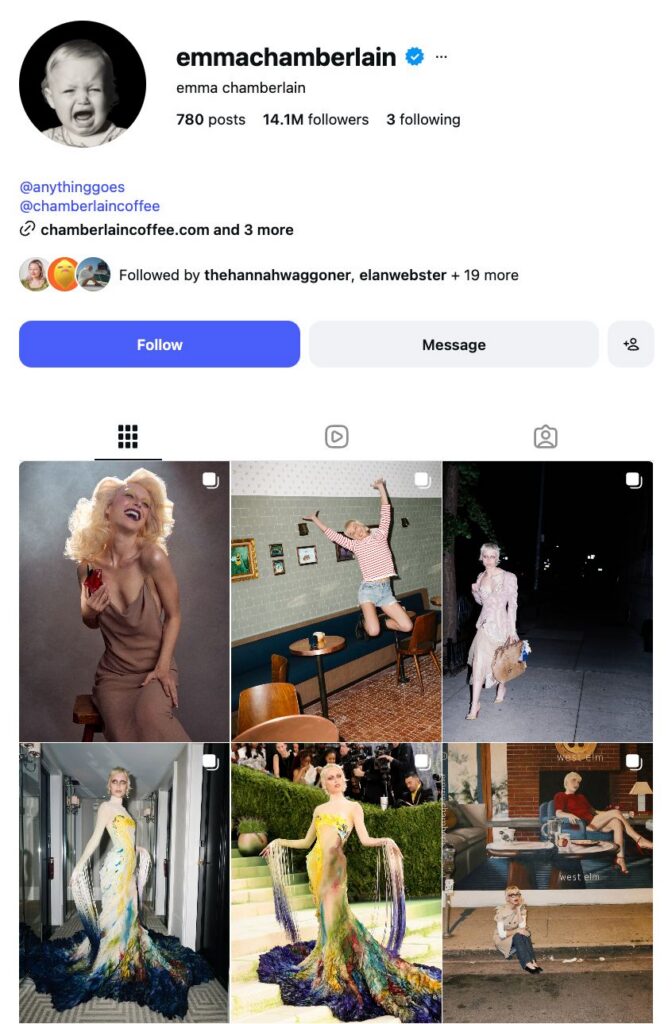
1. Emma Chamberlain
Emma built her following on YouTube authenticity, but her fashion influence comes from her ability to make vintage accessible. She doesn't just wear archival pieces — she explains why they matter, how to spot quality construction, and where to find similar items at different price points. Her approach demystifies high fashion for an audience that grew up on fast fashion. She'll pair a $3,000 vintage Chanel jacket with thrifted jeans, then break down exactly what makes that jacket worth the investment versus what's just branding. This educational angle transformed her from a Gen Z personality into a legitimate style influencer whose content influences actual purchase decisions rather than passive admiration — and who launched her own coffee brand with the same design-forward thinking she applies to fashion.
For aspiring creators studying what works, building your own influence on social media through the educational content approach Emma demonstrates — teaching the why behind style choices rather than just posting the what — is one of the clearest patterns that separates lasting fashion influence from trend-dependent accounts that plateau. For brand partners, her audience's genuine education-seeking behavior is the commercial signal: audiences who follow creators to learn something actively seek the products those creators recommend.
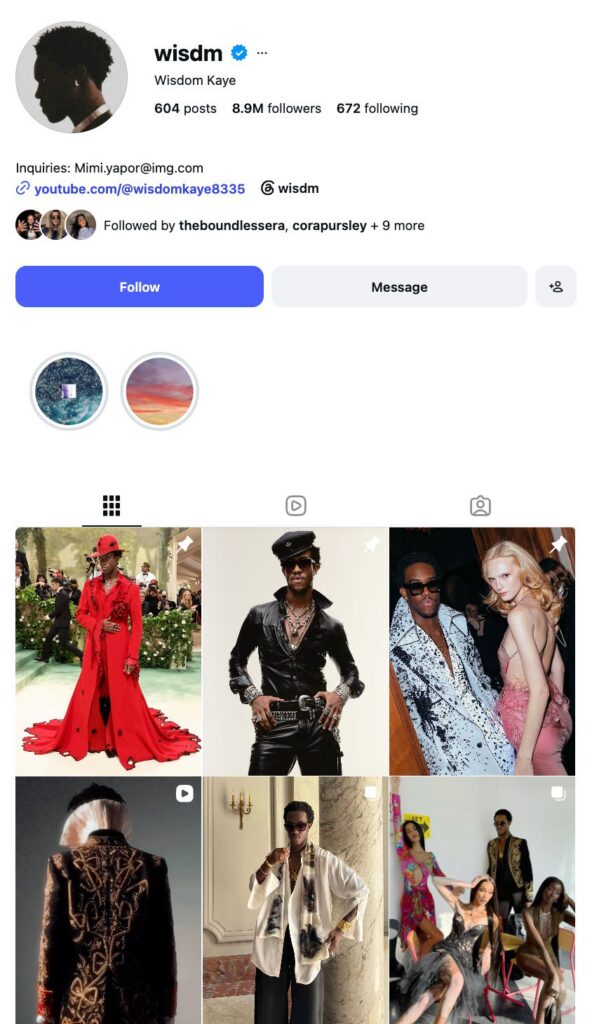
2. Wisdom Kaye
Wisdom treats fashion like architecture. His Instagram feed reads as a visual thesis on proportion, color theory, and textile interaction — pulling from Japanese avant-garde designers, 1980s power dressing, and contemporary streetwear, then synthesizing these references into outfits that teach design principles. His captions include specific design elements (a dropped shoulder, an asymmetric hem, unexpected fabric pairings). This level of specificity attracts an audience that wants to understand fashion, not just consume it. He's proven that you can be one of the best fashion influencers without ever posting a generic "outfit of the day" — and that an intellectually engaged audience is a commercially valuable one, because they make considered purchase decisions rather than impulse-driven ones.
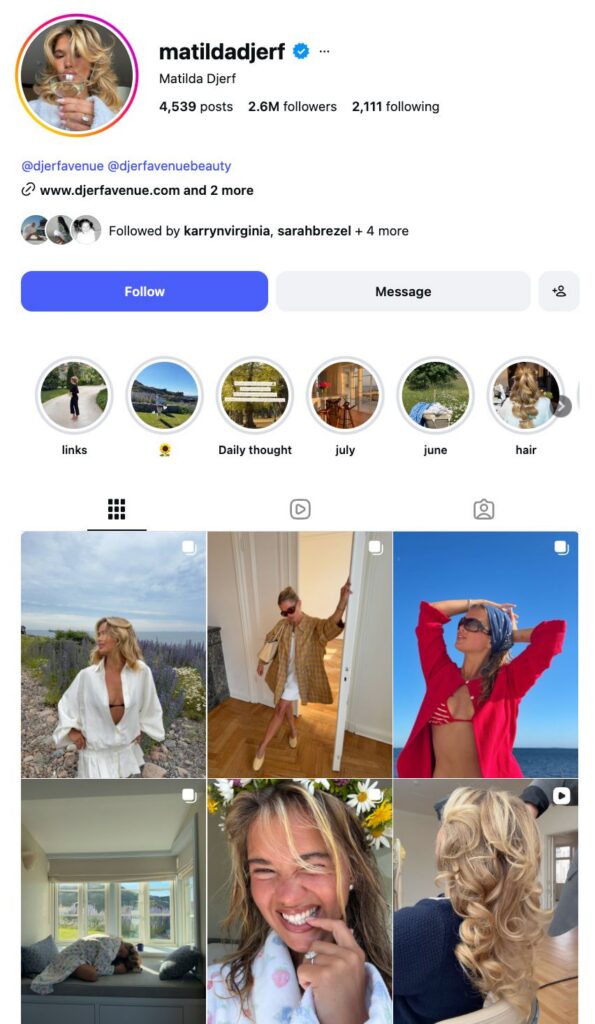
3. Matilda Djerf
Matilda's entire aesthetic revolves around Scandinavian minimalism filtered through 1990s supermodel references. She's built a multi-million dollar brand (Djerf Avenue) by showing the same silhouettes repeatedly, styled slightly differently each time. Her audience isn't following for variety — they're following for mastery of a specific look. She demonstrates how to build a cohesive wardrobe around neutral tones, oversized tailoring, and timeless pieces that reference fashion history without costume-level recreation. Her content proves that depth beats breadth when building a fashion empire, and that an audience following for depth rather than novelty represents a significantly more stable commercial base for brand partners.
4. Alexa Chung
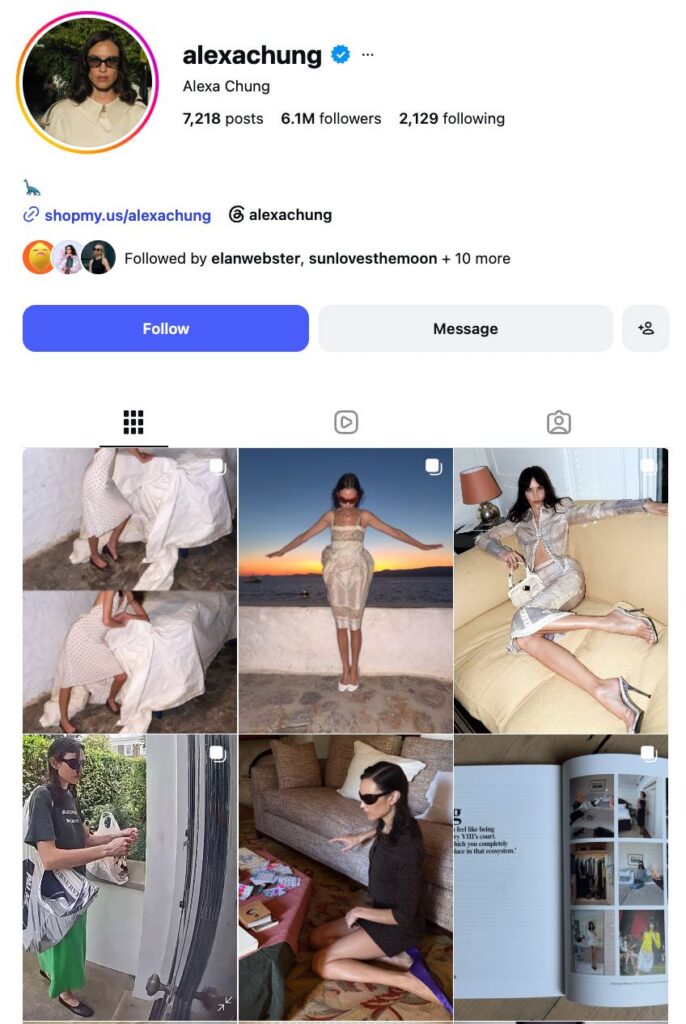
Alexa's influence spans nearly two decades because she's always positioned herself as a fashion editor who happens to be in front of the camera. Her Instagram functions as a mood board where 1960s Françoise Hardy references sit next to contemporary designer collaborations. She doesn't explain every reference — which gives her content an insider feel — but she posts frequently enough that patterns emerge. You start recognizing the silhouettes she returns to, the eras she mines most often, the designers she champions before they hit mainstream recognition. This curatorial approach makes her one of the top fashion influencers who've maintained relevance across multiple platform shifts and algorithm changes, which is itself a commercial durability signal brands should weight heavily in long-term partner selection.
The Niche Obsessives: Owning One Thing Completely
These Instagram fashion influencers rejected the pressure to be everything to everyone. Instead, they carved out specific territories — sustainable fashion, petite styling, luxury investment pieces — and became the definitive voice in that space. This strategy works because modern audiences don't follow fashion influencers for general inspiration anymore. They follow for solutions to specific problems: How do I dress a petite frame without looking juvenile? Where do I find sustainable brands that don't compromise on style? Which luxury pieces actually hold value? By answering one question exceptionally well, these creators built audiences that trust their recommendations enough to actually purchase based on their content.
For brands, the implication is direct: niche specialization in a creator's content is the strongest available signal that their audience is pre-qualified for your product category. When identifying the right influencers for your brand, the question isn't just "does this creator post fashion content?" but "does this creator's specific niche directly map to our product's use case and target customer?" — that alignment, not follower count, is what predicts commercial performance.[spirra]
| Niche Specialization | Target Audience Pain Point | Content Strategy | Monetization Approach |
| French Wardrobe Philosophy | Budget constraints + desire for quality | Cost-per-wear breakdowns, versatile styling | Educational content + affiliate partnerships |
| Professional Workwear | Limited closet space + dress codes | Zoom-appropriate styling, capsule systems | YouTube tutorials + brand collaborations |
| Luxury Designer Focus | Building cohesive high-end wardrobes | Statement piece integration tips | Exclusive partnerships + aspirational content |
| Streetwear-Feminine Hybrid | Balancing masculine/feminine elements | Proportion formulas, replicable systems | Product lines based on signature aesthetic |
5. Camille Charrière
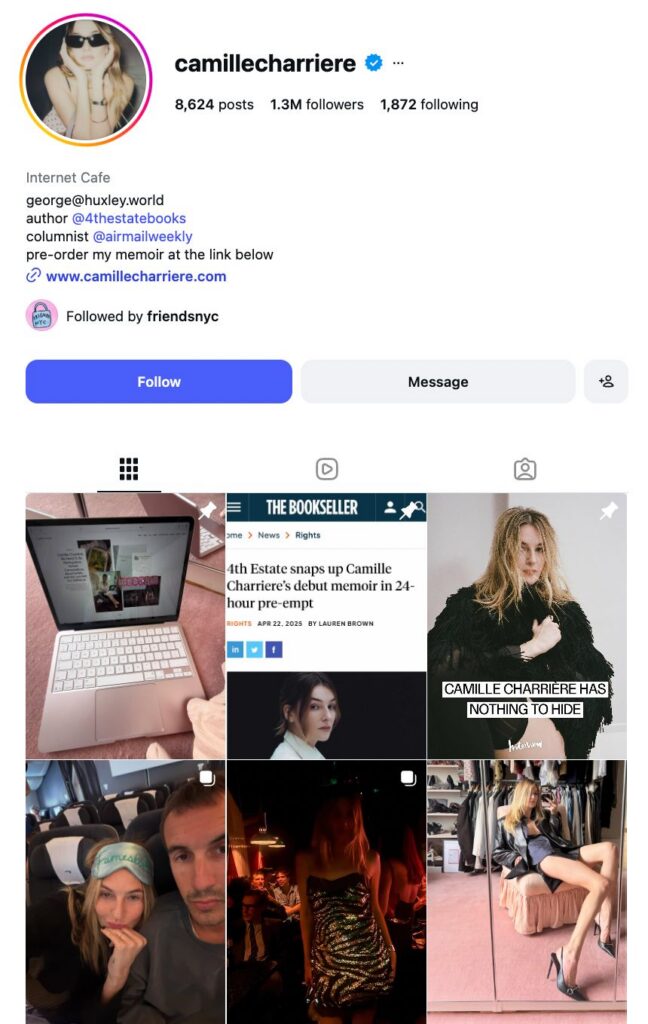
Camille occupies the space between accessible and aspirational. She focuses specifically on French wardrobe philosophy — quality over quantity, investment pieces, versatile styling — but makes it practical for people who don't have unlimited budgets. Her content breaks down cost-per-wear calculations, shows how to style one piece five different ways, and explains which trends are worth adopting versus which to skip. She's become one of the best fashion influencers by teaching a system rather than just showing outfits, and her podcast and writing extend this educational approach beyond Instagram to create multiple audience touchpoints.
The commercial implication for brands is that Camille's audience has specifically self-selected for information about investment quality — they're not passive scrollers, they're active decision-makers seeking justification for considered purchases. Authenticity in influencer marketing works through this exact mechanism: creators who demonstrate genuine expertise, rather than paid promotion, build audience trust that transfers to brand recommendations in ways that transactional content cannot replicate.
6. Chriselle Lim
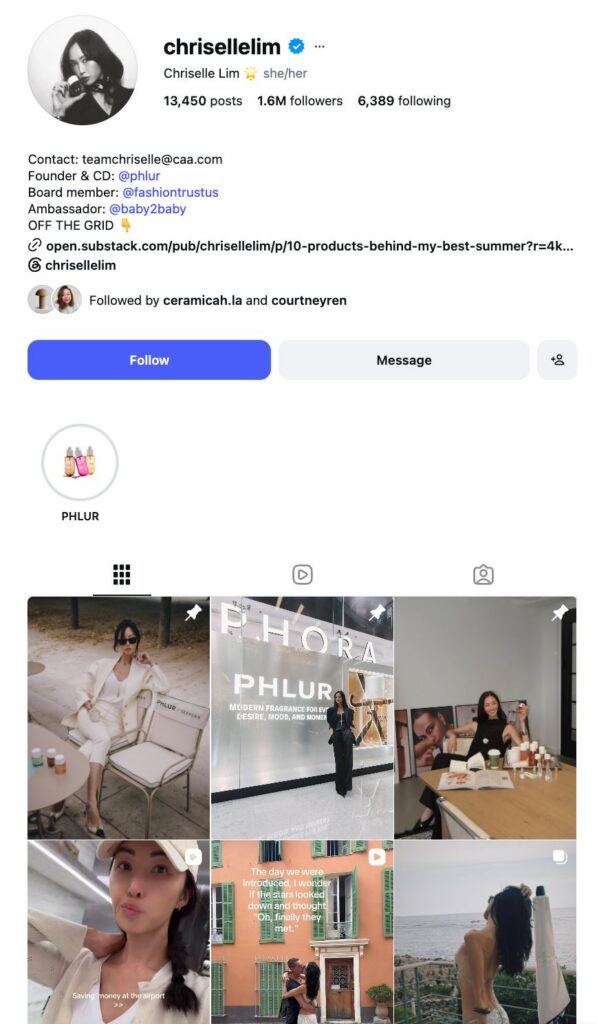
Chriselle built her empire around workwear for professional women who want to look polished without sacrificing personality. Her niche became even more specific during the pandemic when she pivoted to "Zoom-appropriate" styling and work-from-home wardrobe essentials — demonstrating the niche obsessive's core advantage: deep audience understanding that allows rapid, credible adaptation when circumstances change. Her YouTube channel includes detailed styling tutorials, closet organization systems, and brand comparisons that help her audience make informed purchasing decisions. This functional approach to fashion content generates higher engagement than purely aesthetic posts — and higher-engagement fashion influencer content on Instagram consistently correlates with stronger commercial response to brand integrations.
7. Leonie Hanne
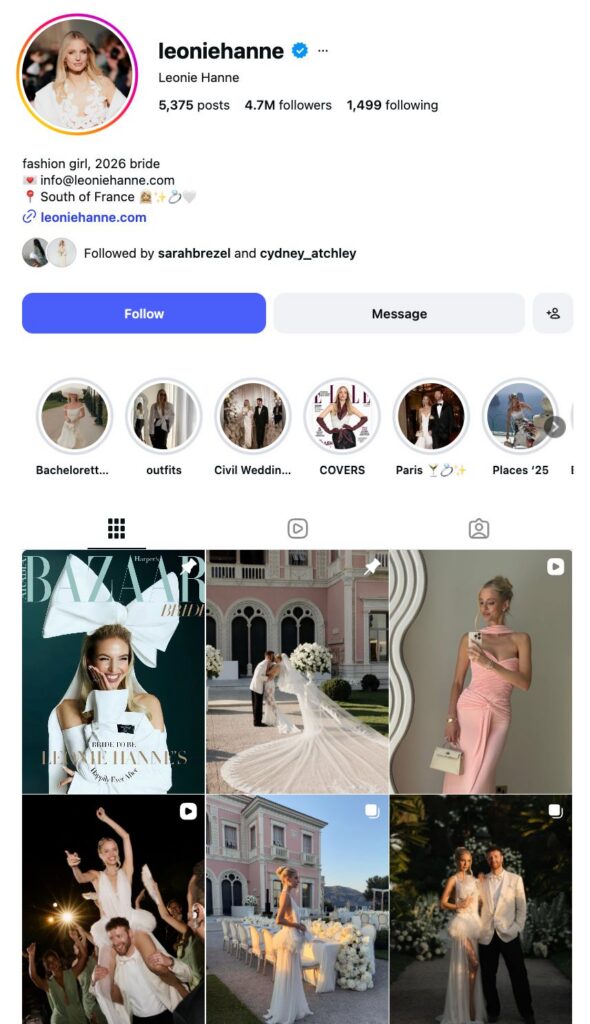
Leonie dominates the luxury fashion influencer space by focusing exclusively on high-end designer pieces and how to incorporate them into everyday wardrobes. She doesn't pretend luxury fashion is accessible to everyone, but she does show how to style statement pieces in ways that maximize impact. Her content appeals to an audience already investing in designer items who want guidance on building a cohesive luxury wardrobe. She's mastered aspiration without alienation — exclusive but not exclusionary — and her engagement rates prove that niche luxury content outperforms mass-market appeal when executed with this level of specificity. For luxury fashion brands, Leonie's audience concentration in high-intent luxury consumers represents a premium CPM justification that broader lifestyle creators cannot match.
8. Danielle Bernstein
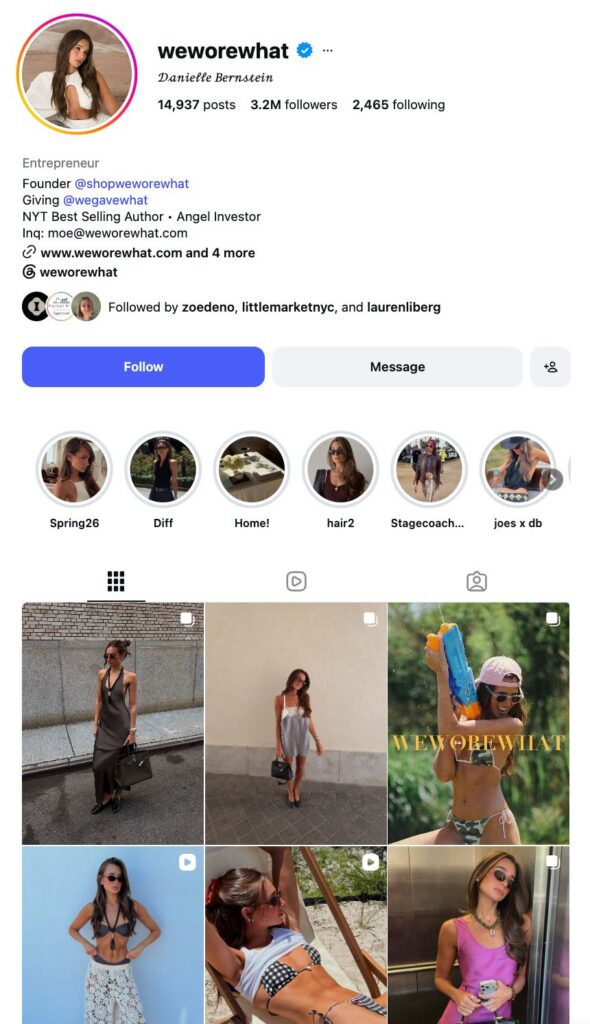
Danielle (WeWoreWhat) carved out the intersection of streetwear and feminine dressing. Her niche focuses on making traditionally masculine pieces — oversized blazers, sneakers, baseball caps — work within a feminine aesthetic. She's launched multiple fashion lines based on this specific point of view, proving that a clear niche translates directly to product success. Her content consistently shows how to balance proportions when mixing these style elements, which gives her audience replicable formulas rather than one-off outfit inspiration.
This teaching approach has made her one of the top fashion influencers who successfully transitioned from content creation to product development — a platform-independence signal that, as with creators across all categories, indicates genuine audience ownership rather than algorithm dependency. For brands navigating how to work with influencers who have made this transition, partnering with creator-founders means accessing an audience that has already demonstrated willingness to follow a creator's commercial recommendations into actual purchases.
The Anti-Aesthetic Builders: Function Over Fantasy
These fashion influencers on Instagram rejected the perfectly curated feed in favor of practical utility. They post about packing strategies, capsule wardrobes, travel-friendly pieces, and realistic styling for actual life situations. This resonates with audiences exhausted by aspirational content with no application to their daily routines. These creators understand that most people don't need another photo of an influencer in a designer gown at a European villa. They need to know which black pants won't wrinkle on a business trip, how to transition an outfit from office to dinner, and what basics actually earn their closet space.
For brand partners, this functional perspective is a commercial superpower. Audiences who follow creators to solve practical problems make purchase decisions driven by genuine need rather than fleeting aspiration — which means conversion rates are higher, return rates are lower, and customer lifetime value is stronger. The anti-aesthetic category produces some of the highest-performing fashion brand partnerships precisely because the audience arrived with purchase intent already activated.
| Functional Content Type | Audience Problem Solved | Engagement Driver | Trust-Building Element |
| Capsule Wardrobe Systems | Decision fatigue + overconsumption | Replicable frameworks | Lifestyle-based recommendations |
| Pattern Mixing Tutorials | Fear of color/print combinations | Technical education | Principle-based teaching |
| Scenario-Based Styling | Time constraints + versatility needs | Practical application | Real-life situation focus |
| California Casual Basics | Comfort without sacrificing style | Accessible price points | Product development feedback loop |
9. Aimee Song
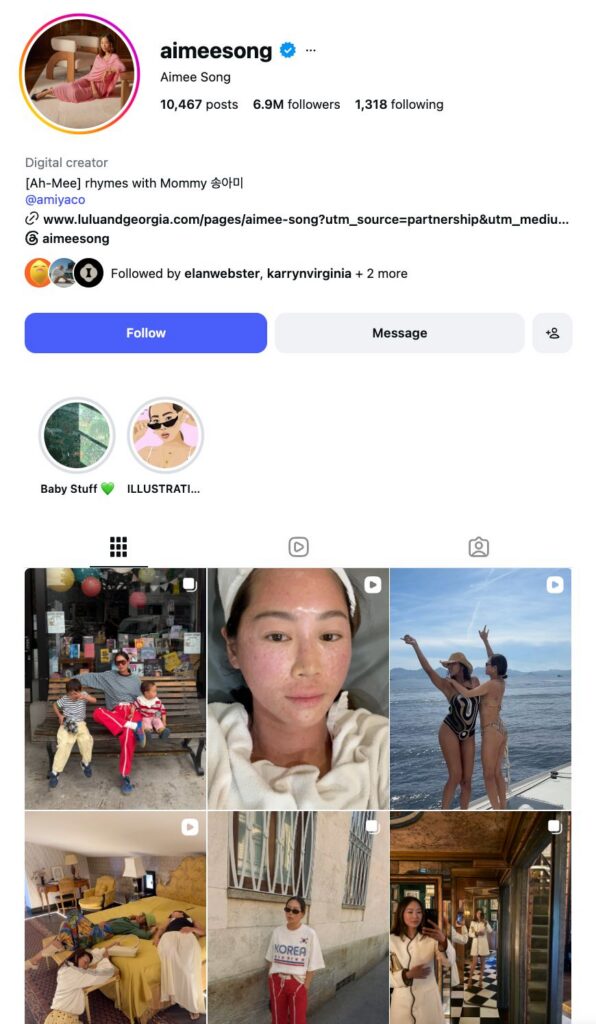
Aimee approaches fashion through her background in interior design, which means she thinks about wardrobe building the same way she thinks about designing a room. Her content focuses on creating a cohesive personal style system rather than chasing individual pieces — covering color palettes, proportion rules, and how to identify actual lifestyle needs before shopping. Her two books extend this systematic approach, offering frameworks for building a functional wardrobe. This methodology appeals to people who feel overwhelmed by fashion and need structure. She's proven that teaching systems creates more value than showcasing products — and for brands, a creator who teaches systems generates longer-tail commercial impact because their content continues influencing purchase decisions long after posting.
10. Blair Eadie
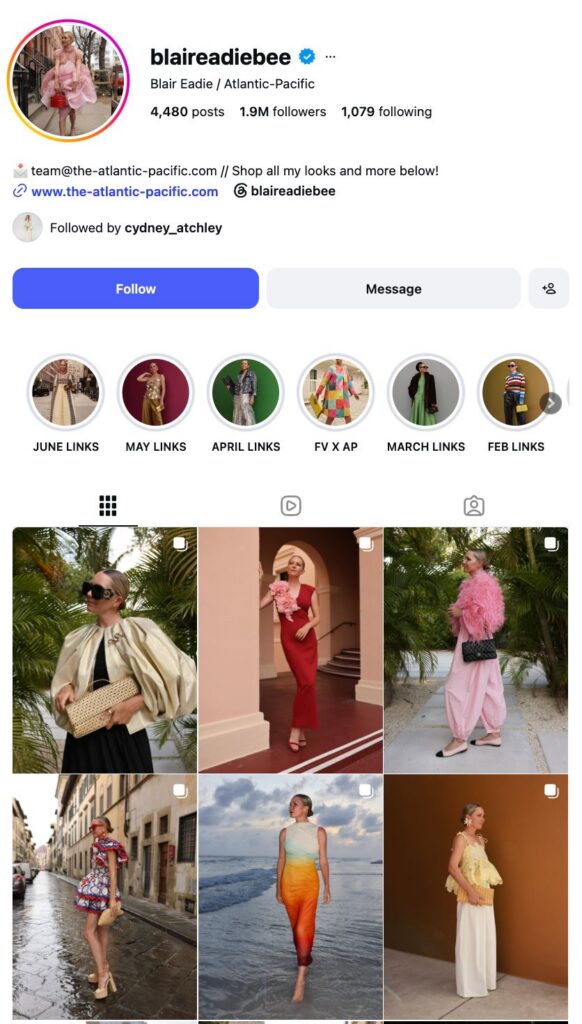
Blair (Atlantic-Pacific) built her following around one hyper-specific skill: mixing prints and colors in ways that shouldn't work but do. Her niche is bold pattern mixing for professional environments, and she's become the definitive voice in that space. Her content breaks down the technical rules of print mixing — scale variation, color bridging, neutral anchors — in ways that make the process replicable rather than magical. She doesn't just post pretty photos. She teaches the underlying principles so her audience can apply them independently. This educational focus has made her one of the best fashion influencers for audiences who want to develop their own style eye rather than copy looks — and educational content that teaches principles, rather than just showcasing products, is the content type that drives higher conversion rates for brand integrations. Brands evaluating where to invest in fashion partnerships can use measuring influencer marketing ROI frameworks to confirm what patterns like Blair's demonstrate: content that generates saves and return visits consistently outperforms content that generates only likes when the goal is commercial action.
11. Brittany Xavier
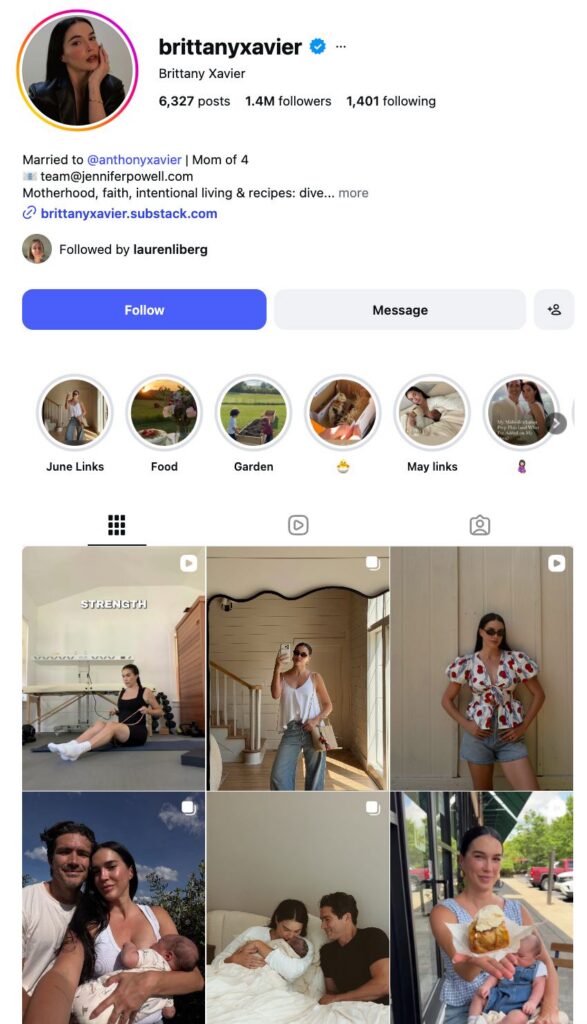
Brittany focuses on realistic styling for busy women, particularly mothers who need to look pulled together without spending an hour getting dressed. Her content addresses specific scenarios — school drop-off, casual Friday, weekend errands — and shows efficient outfit formulas for each. She's mastered the "5-minute outfit" concept, demonstrating how strategic wardrobe planning eliminates daily decision fatigue. Her audience follows her because she solves real problems, not because she posts aspirational content. This practical approach generates high engagement because people actually use her advice rather than admiring it from a distance — the commercial distinction that separates action-oriented audiences from passive ones.
12. Julie Sariñana
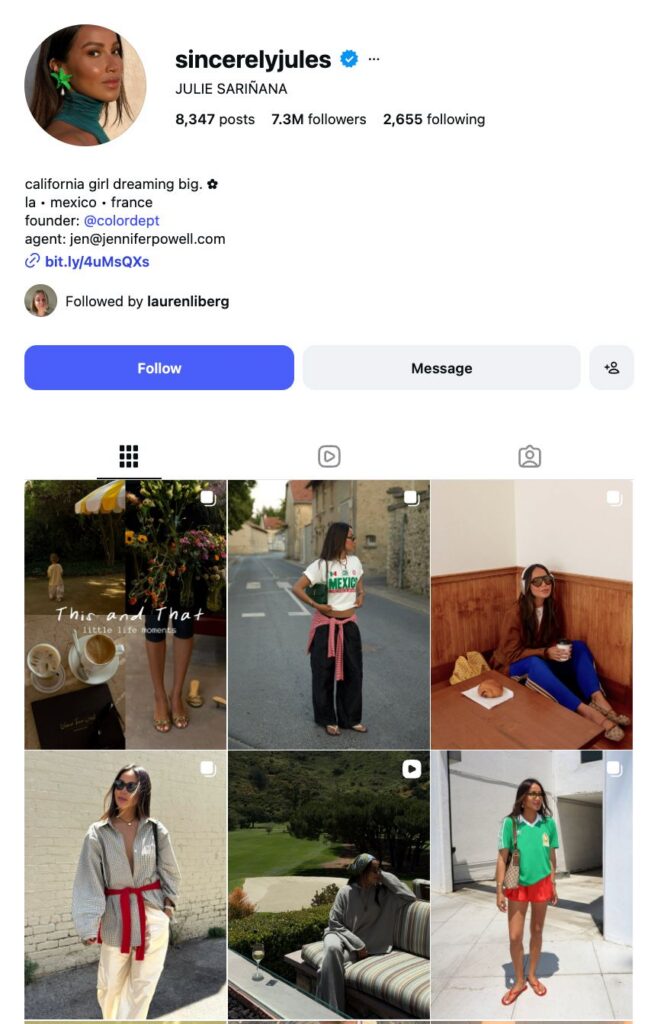
Julie (Sincerely Jules) pioneered the California casual aesthetic but made it functional rather than just aspirational. Her content focuses on versatile basics, comfortable silhouettes, and pieces that work across multiple settings. She's built a clothing line around these principles — elevated basics at accessible price points — and her Instagram serves as a testing ground for product development, where she gauges audience response to different styles before producing them. This feedback loop between content and commerce has made her one of the top fashion influencers who successfully monetized their point of view beyond brand partnerships. For fashion brands, that product development credibility signals an audience that has already demonstrated commercial behavior — the strongest available predictor of brand partnership conversion performance.
The Community Architects: Influence Through Inclusion
These fashion influencers understood early that sustainable influence requires community, not just followers. They create content that invites participation rather than passive consumption — asking questions, responding to comments, featuring follower content, building ecosystems where the audience feels invested in the creator's success. This generates higher engagement rates and more authentic influence because the relationship is reciprocal. Their followers don't just watch. They contribute, collaborate, and advocate. For brand partners, this community architecture matters commercially in ways that raw follower counts never capture. Influencer relationship management done well — for both the creator managing their community and the brand managing its creator partnerships — follows the same principle: sustained, reciprocal engagement produces commercial outcomes that transactional relationships never reach. Community-focused fashion influencers produce brand integrations that feel like peer recommendations rather than ads, because their audiences are primed for participatory engagement rather than passive reception.
13. Chiara Ferragni
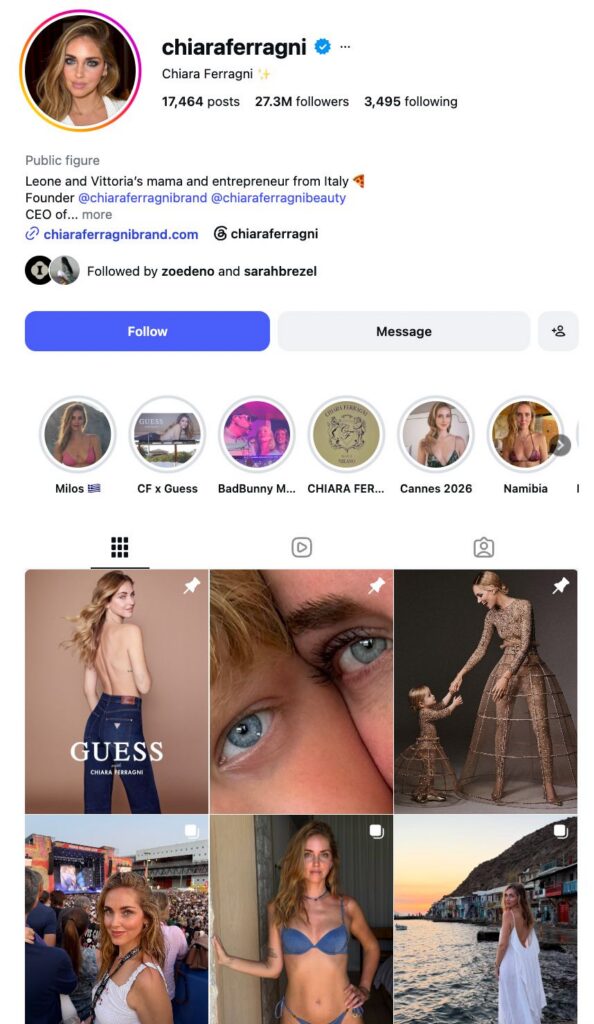
Chiara transformed from blogger to business mogul by treating her audience as collaborators rather than consumers. She regularly features follower photos, asks for input on product development, and shares behind-the-scenes content that demystifies the influencer business. Her transparency about partnerships and business decisions builds trust that translates to purchasing power. She's proven that the best fashion influencers aren't necessarily those with the most followers, but those with the most engaged communities. Her ability to mobilize her audience for causes — raising millions for Italian hospitals during COVID-19 — demonstrates community-focused influence at its most powerful: an audience that acts in the real world, not just on a shopping page.
14. Negin Mirsalehi
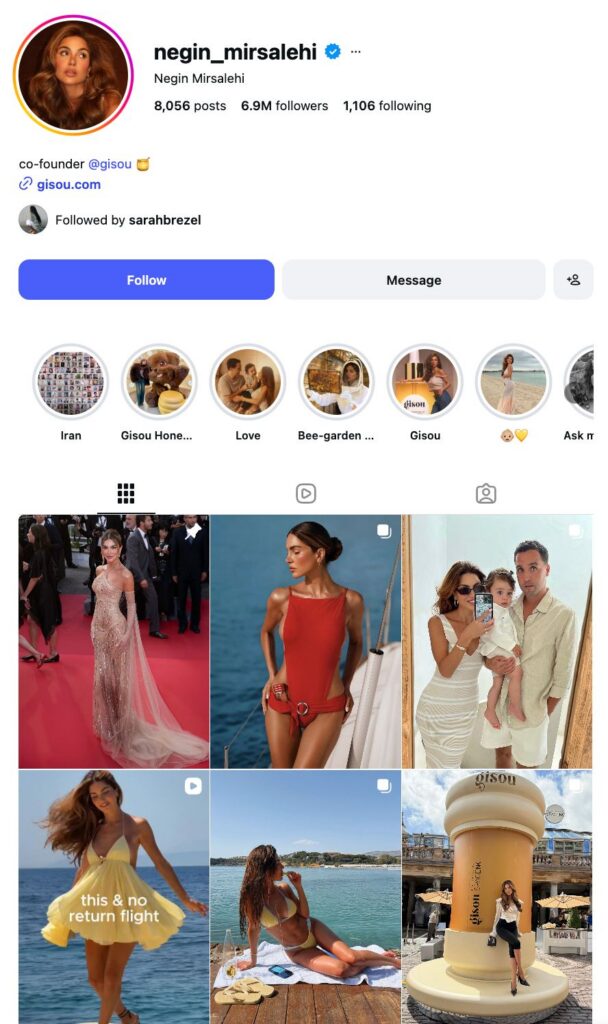
Negin built her fashion influence and hair care empire (Gisou) by creating a narrative her audience could participate in. She shares her family's beekeeping history, explains ingredient sourcing, and invites followers into product development decisions. This storytelling approach makes her audience feel like stakeholders in her success. Her fashion content follows the same principles — polls about styling choices, requests for feedback on outfit combinations, features of follower recreations. This participatory approach generates engagement rates that far exceed those of influencers with larger but less connected audiences.
The principle behind Negin's model is why the power of micro-influencers and their community engagement dynamics consistently outperform raw reach as a predictor of brand partnership ROI — community engagement matters more than follower count precisely because it measures the depth of commercial relationship between creator and audience, not just the width.
15. Nicolette Mason
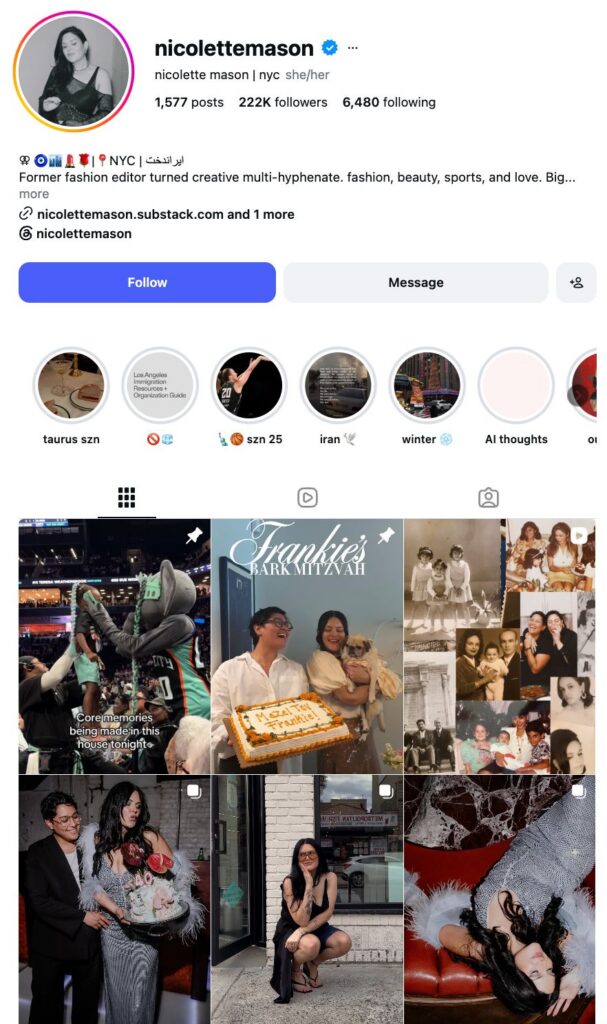
Nicolette carved out space as a style influencer for plus-size fashion at a time when the industry largely ignored this market. Her influence comes from advocating for her community rather than just styling herself. She calls out brands for limited size ranges, champions inclusive designers, and creates content that addresses the specific challenges of plus-size shopping. Her audience trusts her recommendations because she's proven she prioritizes their needs over partnership opportunities — she's turned down lucrative deals with brands that don't offer extended sizing, a public standard that makes her endorsements carry exponentially more weight when she does partner with inclusive brands. For fashion brands who have genuinely invested in size inclusivity, Nicolette represents a creator whose audience trust in her commercial recommendations is among the highest available in the category.
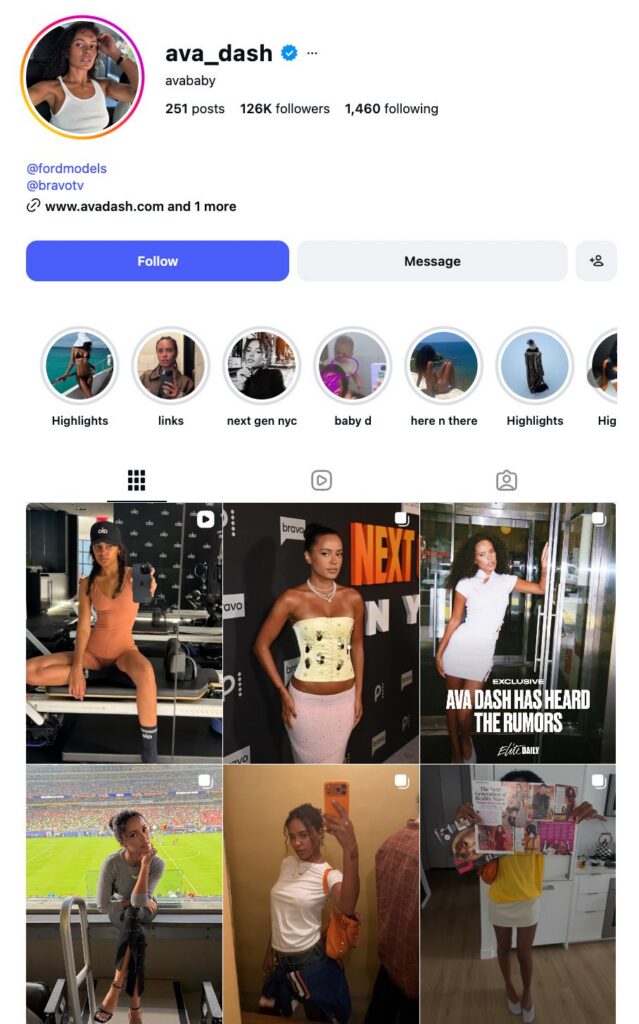
16. Ava Dash
Ava represents the next generation of fashion influencers who grew up on social media and understand community-building as native language. She creates content that feels collaborative rather than prescriptive — featuring friends, asking for styling input, showing the reality behind polished photos. Her approach resonates with Gen Z audiences who value authenticity over perfection and have grown deeply skeptical of influencer content that feels produced rather than genuine.
Her growth trajectory reflects the broader industry shifts that influencer marketing trends consistently surface: community-focused influence is outpacing aesthetic perfection as audiences become more sophisticated about creator motivations and more selective about whose recommendations they act on. For fashion brands building programs for Gen Z consumers, creators like Ava aren't just a channel option — they're the format that matches how that audience processes commercial recommendations.
What These Fashion Influencers Mean for Brand Partner Selection
The patterns across these 16 creators point to a consistent framework for fashion brand partnership decisions. Creators who built lasting empires share three structural characteristics: they specialize deeply rather than broadly, they teach rather than just show, and they build community rather than accumulate followers. Each of those characteristics is also a commercial performance predictor for brand partners.
Deep specialization means pre-qualified audiences. When a creator's entire content identity is organized around a specific point of view — French wardrobe philosophy, plus-size advocacy, vintage accessibility — their followers have already self-selected for that interest. Your brand doesn't need to build relevance with that audience. The creator already did.
Teaching rather than showing means longer content shelf life and higher save rates, which means your brand integration continues working weeks after the post date. Aspirational content gets scrolled past. Educational content gets saved, shared, and returned to. The difference in attribution window between a pretty outfit photo and a principle-based styling tutorial can span months.
Community rather than audience means commercial mobilization. When a creator asks their audience to act — whether it's for a charity cause, a product launch, or a brand recommendation — communities respond. Passive follower aggregations don't. The distinction is measurable in engagement patterns before you ever spend a dollar on a partnership. Identifying which fashion influencers carry these characteristics at scale — across 19 million verified creators — requires audience intelligence that goes well beyond follower counts and engagement rates. SPIRRA's platform evaluates creators through True Follower™ audience authentication, Brand Alignment Scores, Content Alignment Scores, and community engagement quality metrics that surface the depth-of-relationship signals these 16 creators demonstrate. If your current fashion influencer selection process starts and ends with reach and category filters, request a demo to see what partner selection looks like when it's based on the variables that actually predict commercial performance.