
The female fitness influencers generating the highest commercial value for brand partners aren't the ones with the most aspirational bodies or the highest follower counts. They're the ones who built genuine communities of people who act on their recommendations — because those creators earned trust through education, representation, and authentic documentation of real progress. For fitness brands evaluating creator partnerships, understanding how this category of creator operates is the foundation for making selection decisions that drive actual sales, not just impressions.
TL;DR
- Female fitness influencers who prioritize education over aesthetics create longer-lasting behavioral change in their audiences — and audiences that change behavior are audiences that purchase products
- Community-focused fitness content creators generate higher engagement rates than those posting purely aspirational content, a direct commercial signal for brand partners
- Representation in fitness spaces directly impacts adherence rates among underrepresented demographics — brands that align with inclusive creators access previously underserved, high-intent consumer segments
- Authenticity about struggles, setbacks, and imperfect journeys builds trust that translates to sustainable purchasing relationships
- The most effective fitness influencers balance scientific credibility with accessible communication, which pre-qualifies their audiences as informed, high-consideration buyers
- Black female fitness influencers and diverse voices are reshaping industry standards — brands that haven't diversified their creator mix are systematically missing major market segments
- Top female fitness influencers distinguish themselves through specificity rather than broad appeal — that specificity is the commercial signal brands need to prioritize in partner selection
- The shift from transformation photos to process documentation reflects changing audience priorities that brand messaging must match to remain credible
The Educators Who Teach More Than Reps
The fitness influencer landscape has shifted dramatically as audiences grow tired of surface-level content and demand substance. These seven creators built their platforms on educational content that extends beyond workout demonstrations — explaining the science behind training, nutrition principles, and behavioral psychology. They've recognized that their audiences want to understand why certain approaches work, not just how to execute them.
For brands, this educational positioning is commercially significant. Understanding authenticity in influencer marketing has become essential precisely because of creators like these — audiences who follow for genuine expertise respond to brand recommendations as trusted guidance rather than paid promotion, which is the distinction that separates brand integrations that drive sales from ones that generate only impressions.
| Educator Type | Primary Focus | Audience Benefit | Content Format |
| Research-Based | Scientific literature translation | Evidence-backed decision making | Long-form videos, detailed breakdowns |
| Psychology-Focused | Behavioral change and habit formation | Sustainable implementation strategies | Coaching content, mindset frameworks |
| Myth-Busting | Industry transparency and media literacy | Realistic expectations and informed skepticism | Comparison posts, investigative content |
| Functional Training | Movement quality and injury prevention | Long-term health and pain-free movement | Tutorial videos, modification demonstrations |
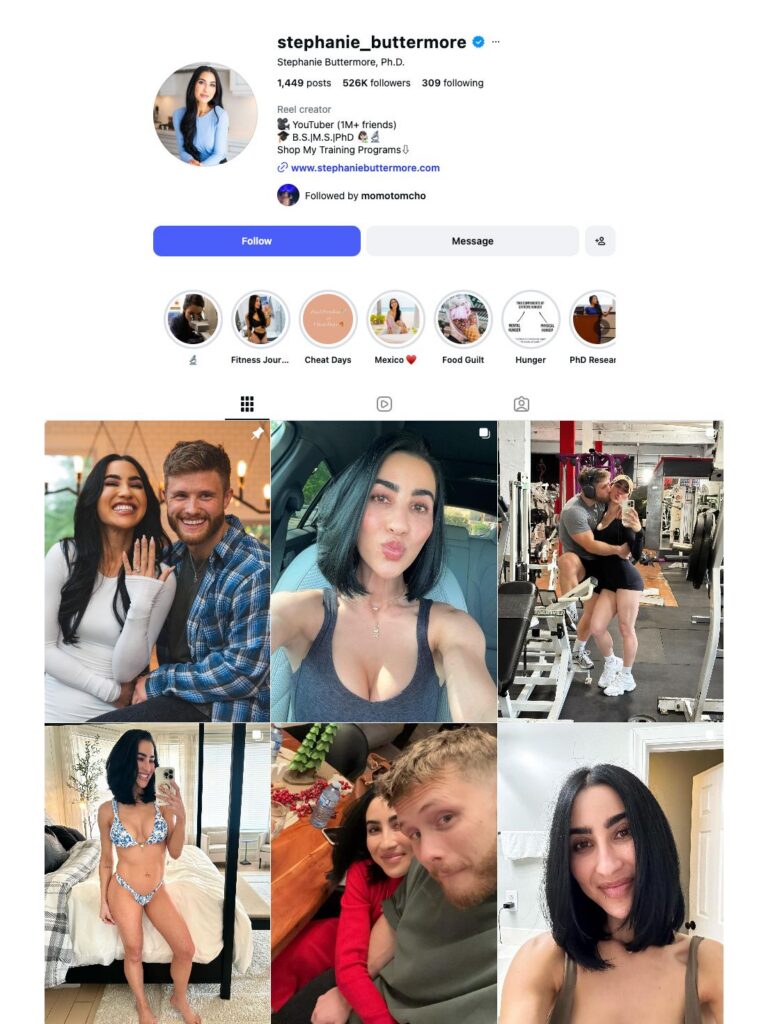
1. @stephanie_buttermore
Stephanie Buttermore's background in cancer research gives her unique credibility when discussing metabolism and body composition. She gained massive attention through her "All In" journey, documenting recovery from years of restrictive eating and excessive training — including sharing the uncomfortable reality of significant weight gain on camera, rather than the polished results that dominate typical fitness influencer content. She explains complex physiological concepts like metabolic adaptation and set point theory in ways that resonate with people who've struggled with yo-yo dieting, and her content focuses heavily on the psychological aspects of food relationships.
For fitness influencers and the brands that partner with them, Buttermore represents what genuine educational authority looks like in practice: an audience that trusts her not because she looks a certain way, but because she's demonstrably right about complex topics. That earned credibility transfers directly to brand recommendations. Supplement, nutrition, and wellness brands that partner with Stephanie are accessing an audience pre-primed to evaluate claims critically — which means they need to bring genuine product quality, and when they do, the conversion signal is exceptionally strong.
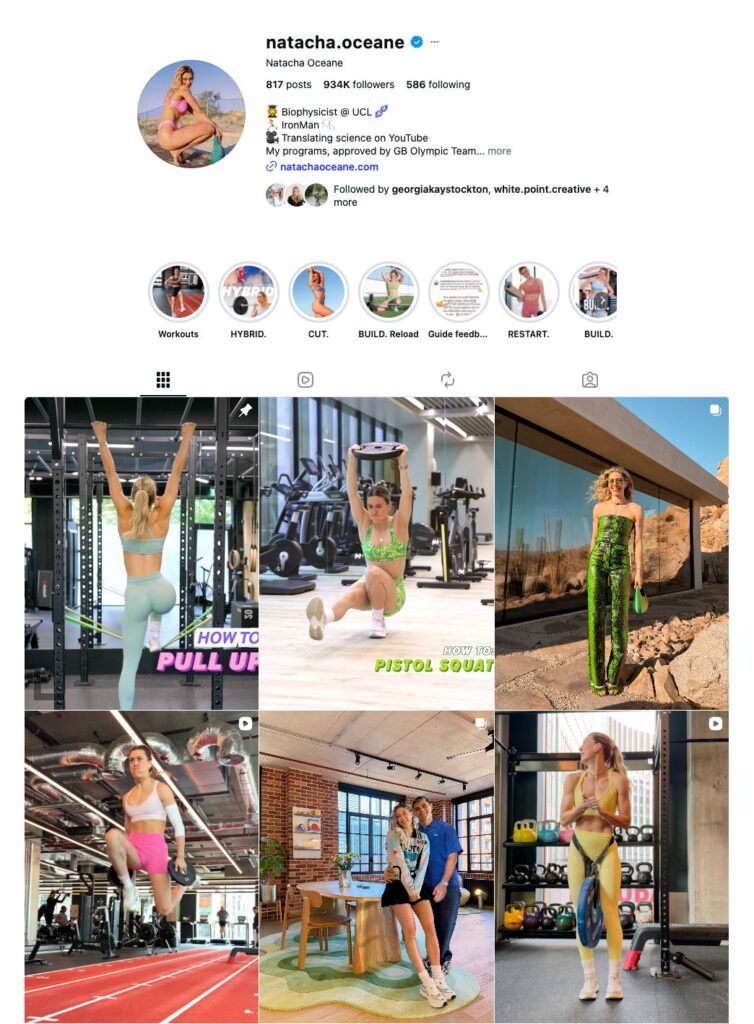
2. @natacha.oceane
Natacha Océane holds a degree in biophysics and brings that analytical mindset to every piece of content she creates. Her YouTube videos often run 20 to 30 minutes because she refuses to oversimplify complex topics for the sake of brevity. She's built a reputation for thoroughly researching claims before presenting them, citing specific studies and explaining their limitations. Her content covers training periodization, circadian rhythm optimization, and evidence evaluation — always with an emphasis on helping viewers understand the mechanisms at play. She's particularly skilled at breaking down why certain fitness trends lack scientific support without being condescending toward people who've tried them.
This fitness YouTuber's audience is among the most intellectually engaged available in the fitness category — people willing to invest 25 minutes watching a video about metabolic science are making considered decisions, not impulse purchases. For brands in sports nutrition, health technology, or fitness equipment, that deliberate purchase behavior is exactly the commercial audience worth premium partnership investment.
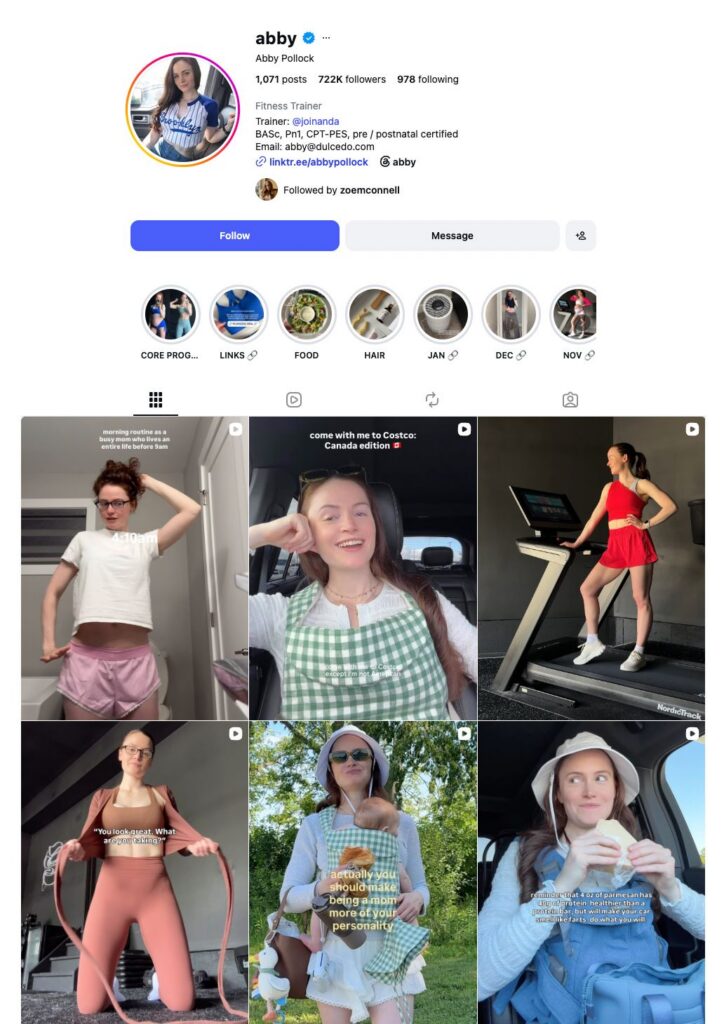
3. @abby
Abby Pollock has built her platform by directly addressing misleading fitness marketing and calling out unrealistic body standards perpetuated by edited photos and undisclosed cosmetic procedures. She regularly posts side-by-side comparisons showing how lighting, angles, and posing can dramatically alter how the same body appears — and discusses the prevalence of performance-enhancing drug use among female fitness models who present their physiques as naturally attainable. Her content serves as a reality check for people comparing themselves to heavily curated social media images.
Her approach directly aligns with what the guide to spotting fake influencers teaches brands about media literacy and audience protection — by teaching her audience to recognize deceptive practices, Pollock has built one of the most skepticism-resistant communities in the fitness space. For brands, this means her endorsements carry an unusually high authenticity premium: her audience knows she's been shown to be honest about everything else, which makes her product recommendations land with proportionally more credibility.
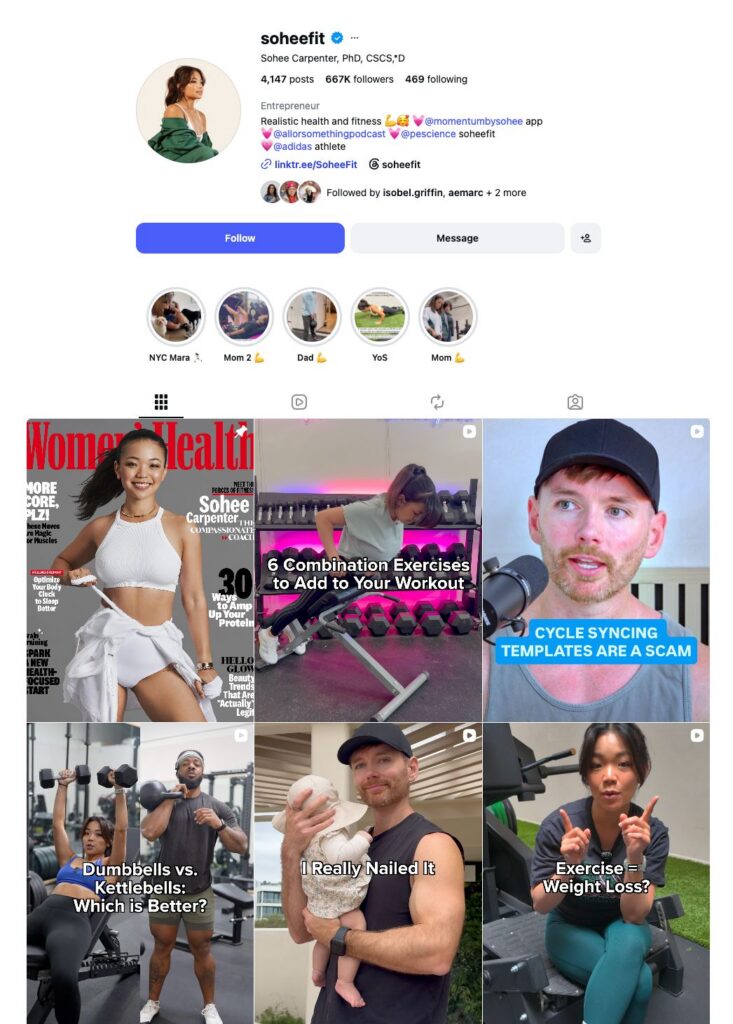
4. @soheefit
Sohee Lee's background in psychology informs everything she creates. She focuses extensively on habit formation, behavioral change, and the emotional components of fitness that most gym influencers ignore — exploring perfectionism, all-or-nothing thinking, and how past experiences shape current relationships with exercise and food. Lee's core insight is that knowing what to do rarely solves the problem, because execution depends on addressing underlying psychological barriers.
For brands targeting the significant segment of fitness consumers who understand what they should do but struggle with implementation, Sohee's audience represents an ideal commercial fit: motivated, informed buyers who are actively seeking solutions to behavioral obstacles, not just information about training protocols. App-based fitness products, coaching platforms, and behavioral health tools will find a pre-qualified audience with purchasing intent that passive fitness content creators simply cannot replicate.
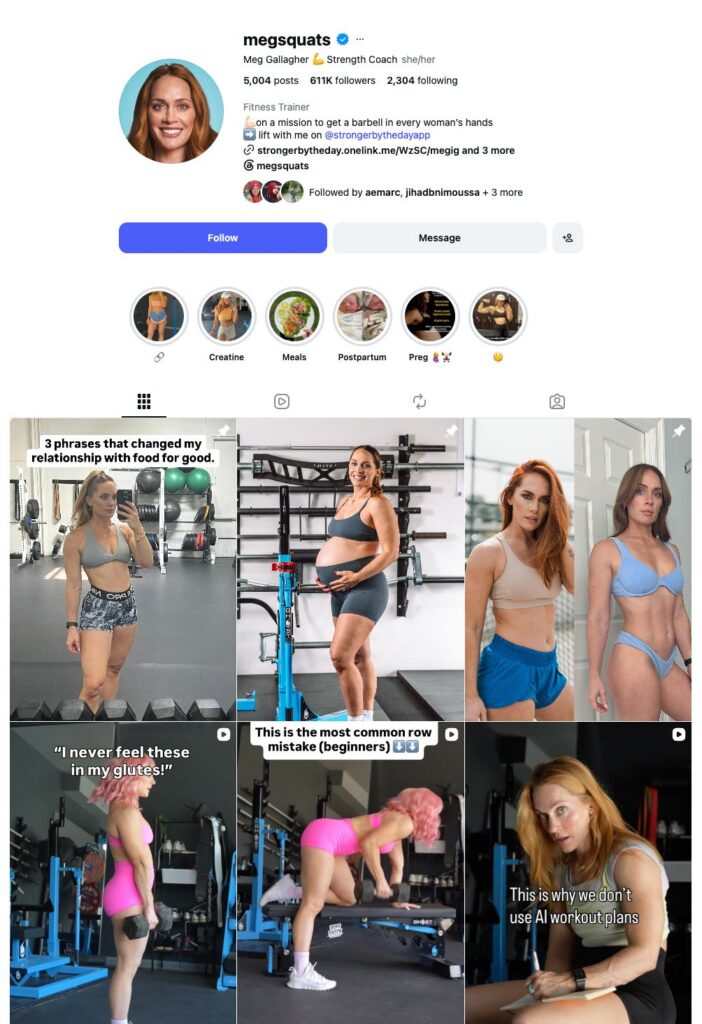
5. @megsquats
Meg Gallagher (Meg Squats) has built her platform around making powerlifting and strength training accessible to people who find traditional gym culture intimidating. She shares detailed programming information, technique breakdowns, and honest discussions about the realities of competitive lifting — including missed lifts, injuries, and periods where training didn't go as planned. This transparency helps viewers understand that progress isn't linear and that experienced lifters face setbacks. As a female fitness influencer who has openly navigated the business side of content creation — discussing sponsorships, product development, and the challenges of monetizing content authentically — Meg has built audience trust that extends to commercial recommendations. Her followers don't just admire her lifting; they trust her judgment about the products and programs she endorses. For strength training equipment, powerlifting gear, and sports nutrition brands, her audience is as pre-qualified as audiences get: they're actively training and actively spending.
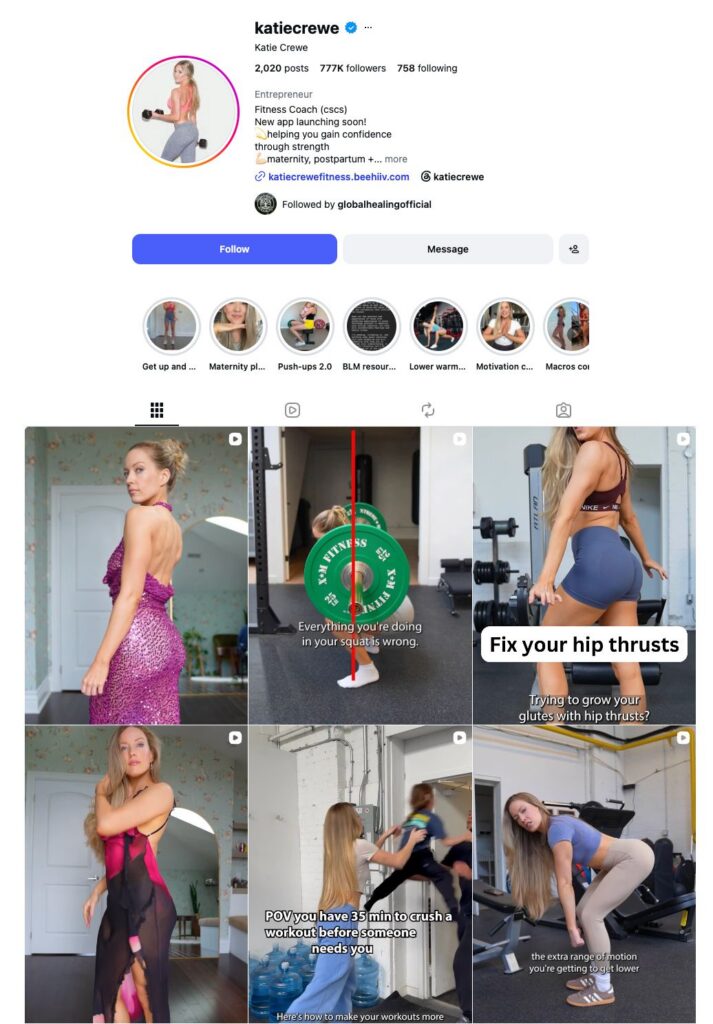
6. @katiecrewe
Katie Crewe focuses on training that improves quality of life rather than purely aesthetic goals — emphasizing mobility, injury prevention, and building strength that translates to everyday activities. She's particularly valuable for people who've been injured or are dealing with chronic pain because she addresses modifications and progressions with genuine clinical thoughtfulness. Crewe challenges the "no pain, no gain" mentality that dominates much of fitness culture, instead advocating for sustainable training that supports long-term health.
Her fitness YouTube content attracts an audience interested in fitness as a tool for improved function rather than appearance changes — a demographic that tends to be older, more financially established, and more decisive as a buyer than aspirational-fitness audiences. For brands in recovery technology, joint support, functional equipment, and injury prevention products, Katie's audience profile represents some of the strongest purchase intent available in the fitness influencer category.
The Representation Builders Breaking Industry Molds
These fitness content creators have expanded the definition of who belongs in fitness spaces. They've built platforms specifically around making fitness more inclusive and accessible to people historically excluded or marginalized — addressing the reality that traditional fitness marketing has centered thin, white, able-bodied women and actively working to change that narrative.
These best female fitness influencers have created communities where people can see themselves represented and find information tailored to their specific circumstances. For brands, the commercial implication is direct and significant: these creators have built deep trust with consumer segments that mainstream fitness brands have chronically underserved. Their endorsements don't just reach those audiences — they reach them with a credibility premium that brands attempting to enter these markets through generic advertising cannot replicate. These creators understand how to build an influencer brand on authenticity — not polished aesthetics, but consistent advocacy for communities that had been told fitness wasn't for them.
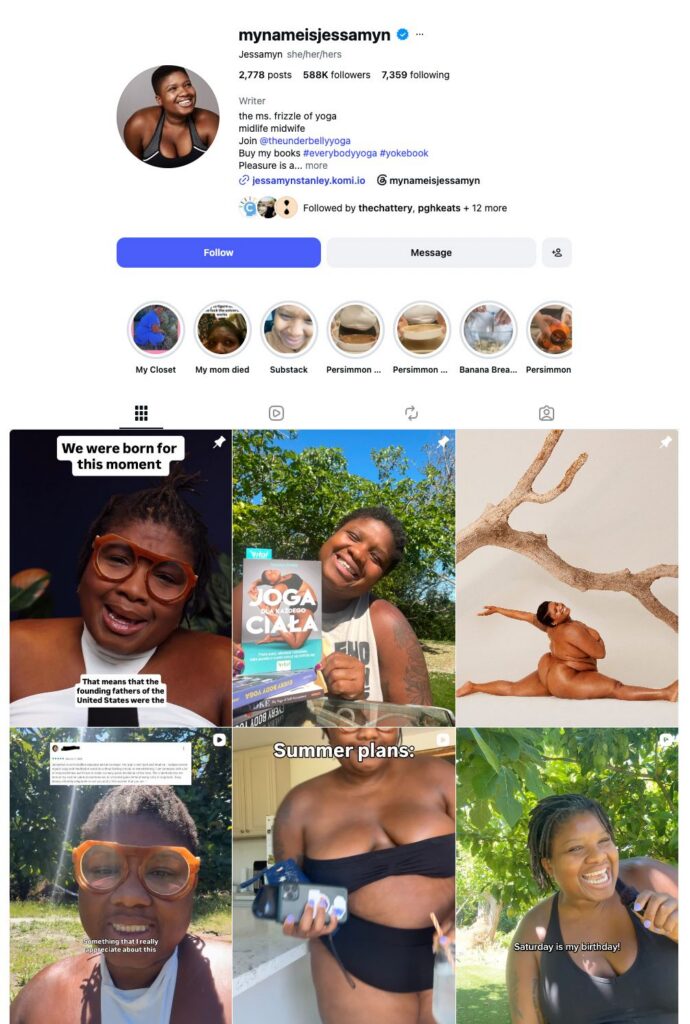
7. @mynameisjessmyn
Jessamyn Stanley has fundamentally changed who sees themselves as capable of practicing yoga. As a plus-size Black woman in a space dominated by thin white bodies, her presence challenges assumptions about what yogis look like. Her content focuses on making yoga accessible regardless of body size, flexibility level, or previous experience — extending beyond physical practice to examine cultural appropriation issues within Western yoga and the importance of honoring the practice's roots. Her authenticity about her own journey, including struggles with body image and self-acceptance, creates connection with followers who've felt unwelcome in conventional fitness spaces.
For yoga apparel, wellness app, and mindfulness product brands, Jessamyn's audience represents a market segment that has been actively seeking inclusive options and that converts at higher rates when they find brands demonstrating genuine values alignment rather than performative inclusivity.
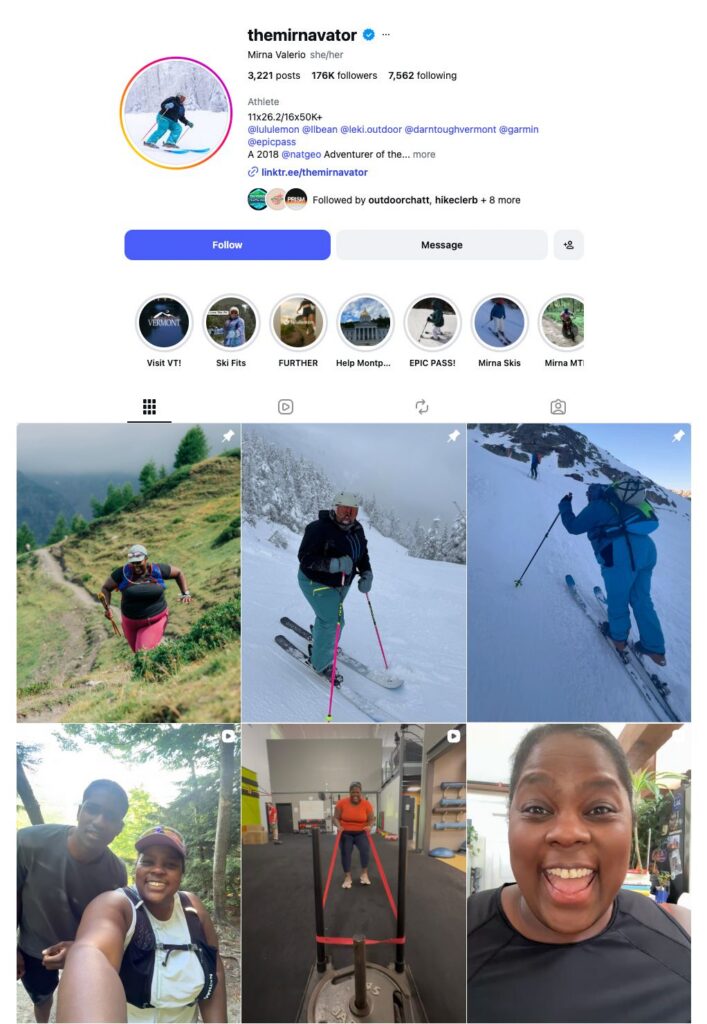
8. @themirnavator
Mirna Valerio is an ultramarathon runner who has shattered stereotypes about what endurance athletes look like — completing races exceeding 100 miles while existing in a larger body, proving that athletic capability isn't determined by size. Her content documents training, race experiences, and the challenges of being a Black woman in the predominantly white trail running community. She addresses microaggressions and outright discrimination while also celebrating the joy she finds in movement.
For running brands, outdoor gear companies, and nutrition products targeting endurance athletes, Mirna's audience is as commercially specific as it gets: people who run ultramarathons, or aspire to, who have found in Mirna permission to pursue serious athletic goals in bodies that mainstream running marketing had previously told them didn't belong. That combination of high-intent athletic behavior and underserved demographic status makes her partnerships unusually commercially powerful.
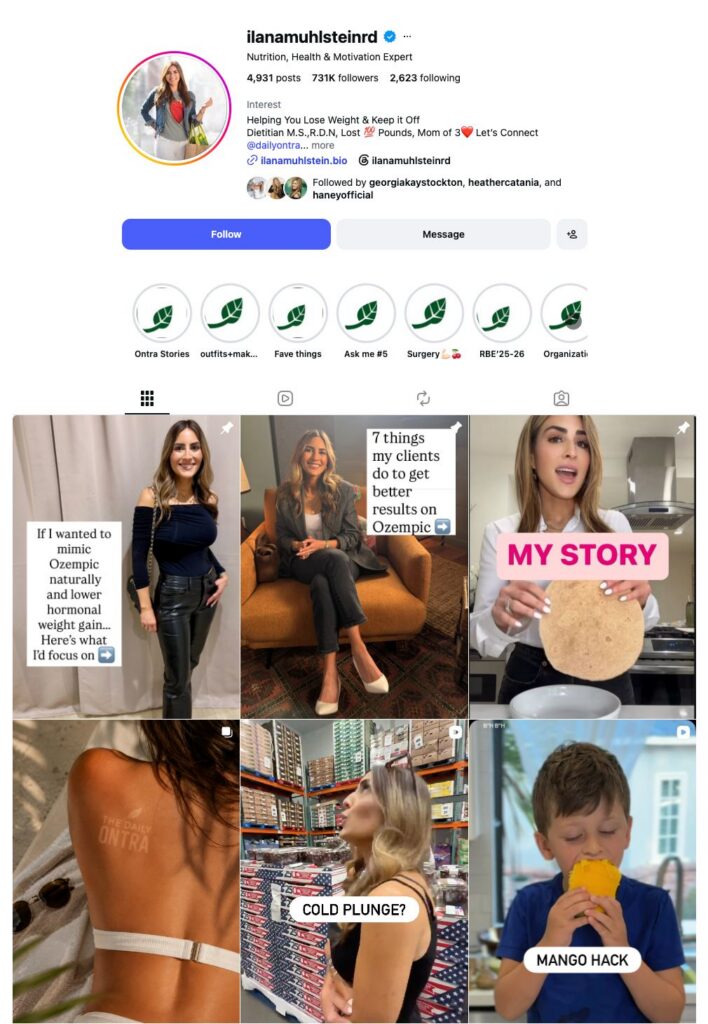
9. @ilanamuhlsteinrd
Ilana Muhlstein is a registered dietitian whose "2B Mindset" program emphasizes eating more vegetables before other foods rather than eliminating entire food groups. She shares her own 100-pound weight loss story while being transparent that she's maintained that loss through flexible eating rather than rigid rules. Her content includes practical tips for grocery shopping, meal planning, and navigating social situations without abandoning health goals — making her advice accessible to people who've failed at restrictive approaches.
As a female fitness influencer with registered dietitian credentials, Ilana occupies a high-credibility position in nutrition-adjacent brand partnerships. Her audience trusts her recommendations not just emotionally but professionally — they understand she has formal accountability for the guidance she provides. For food brands, supplement companies, and nutrition platforms, that professional credibility layer makes her endorsements carry weight that non-credentialed creators in the same space simply cannot match.
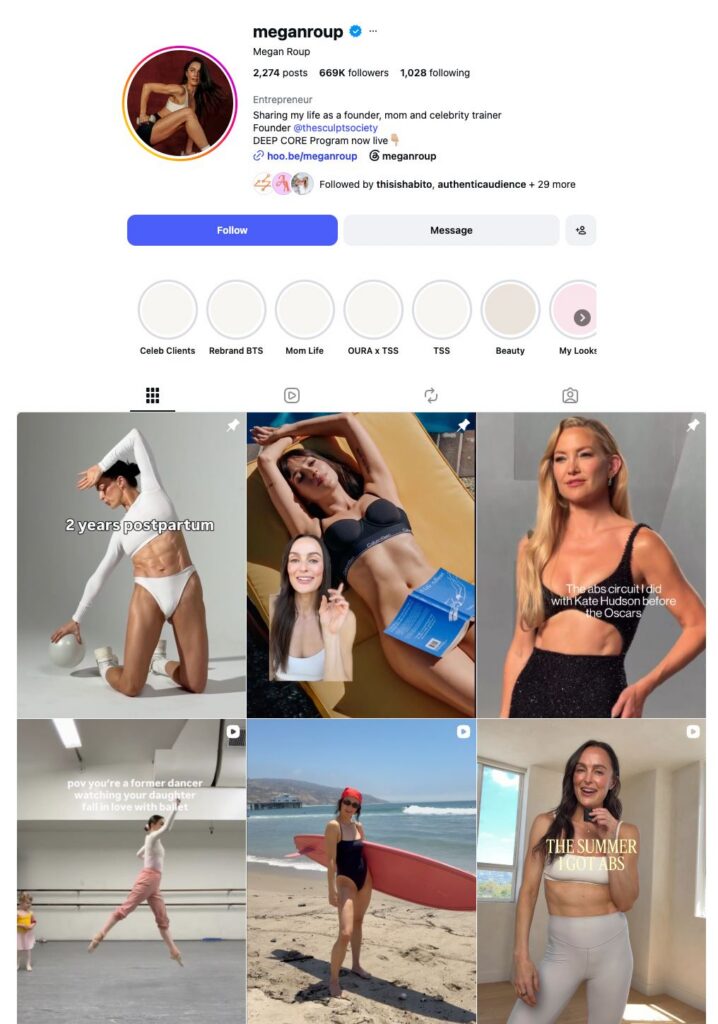
10. @meganroup
Megan Roup created The Sculpt Society as an alternative to intimidating gym environments and overly serious workout culture. Her dance-based cardio and sculpting classes emphasize enjoyment and community over punishment — featuring diverse body types and fitness levels and showing modifications that make workouts accessible to beginners while challenging advanced participants. She's built a brand around the idea that movement should feel good and that you're more likely to stick with exercise you genuinely enjoy.
Her strategy reflects the power of micro-influencers in creating deeply engaged communities over vanity metrics — even as her audience has scaled, the community orientation has remained, producing engagement rates and commercial response patterns more typical of tightly-knit niche audiences than broad fitness accounts. For activewear, streaming fitness, and wellness brands targeting women who've rejected punishing workout culture, Megan's community is pre-qualified by values alignment.
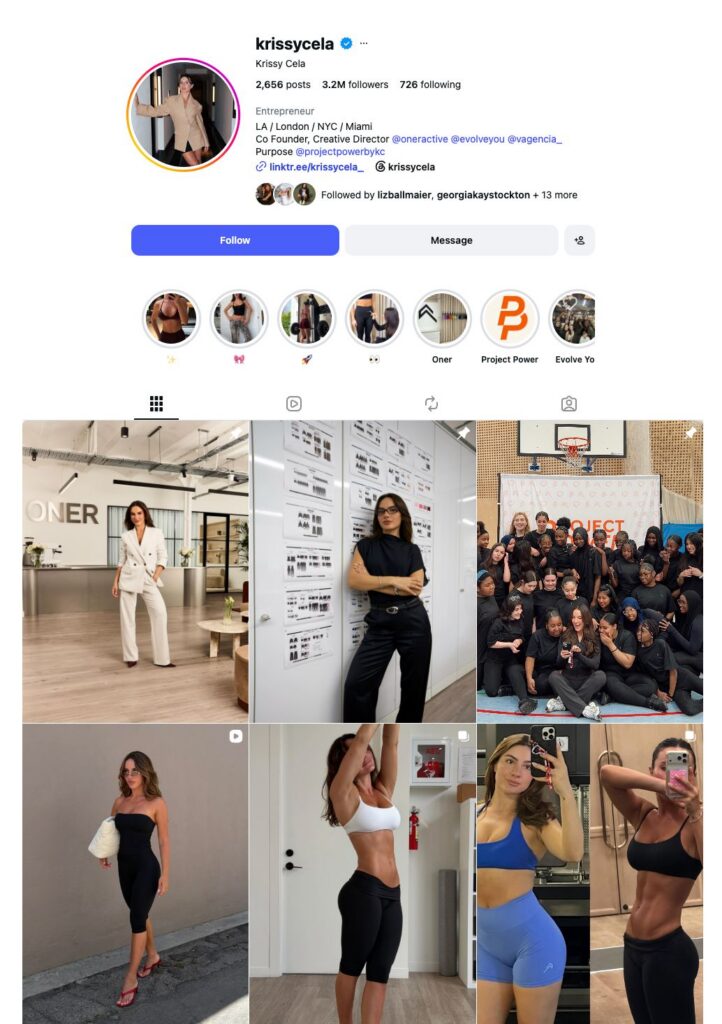
11. @krissycela
Krissy Cela focuses on helping women build strength and confidence through resistance training. Her content emphasizes progressive overload and proper form rather than calorie burning, and she shares how strength training improved her own relationship with her body and helped her move past restrictive eating patterns. She's created an app and workout programs specifically designed for women who want to build muscle but don't know where to start, challenging the outdated fear that lifting weights will make women "bulky."
As a fitness YouTuber and Instagram creator with a dedicated app business, Krissy has demonstrated off-platform audience conversion — the strongest available signal of genuine commercial influence. For gym equipment, protein, and fitness technology brands, her audience has already shown willingness to follow her recommendations into paid products, making brand partnership investment structurally lower-risk than partnerships with creators whose audiences remain purely passive followers.
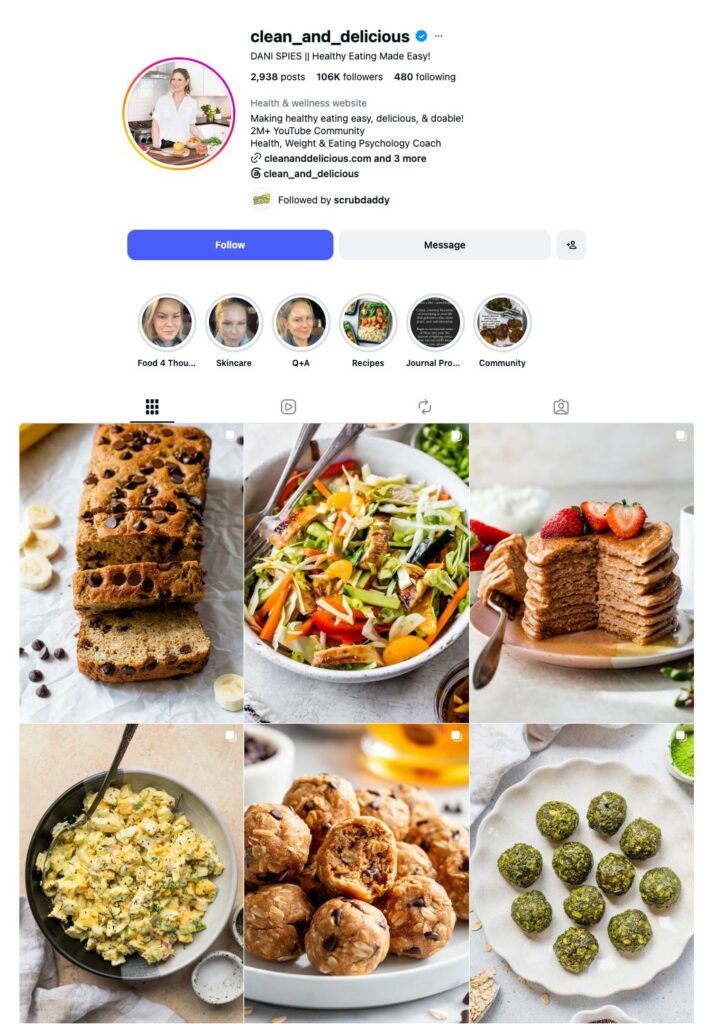
12. @clean_and_delicious
Dani Spies creates content around whole-food nutrition that doesn't require expensive ingredients or complicated cooking techniques. Her recipes and meal prep videos make healthy eating feel achievable for people with limited time, budgets, or cooking experience. She emphasizes that eating well doesn't have to be complicated or expensive — challenging the perception that healthy food is accessible only to wealthy people. Her content fills a genuine gap for people who understand the importance of nutrition but feel overwhelmed by where to start.
For food brands, meal prep tools, and accessible wellness products, Dani's audience is particularly valuable because they've explicitly opted into content that addresses budget and time constraints. That means their purchase decisions are actively shaped by value considerations — brands offering genuine quality at accessible price points will find an audience primed for conversion.
The Authenticity Advocates Showing Real Progress
These fitness influencers built their platforms on transparency about the messy, non-linear reality of fitness journeys. They share not just successes but setbacks, struggles, and the behind-the-scenes work that doesn't make it into highlight reels — recognizing that audiences have grown increasingly skeptical of perfectly curated content and actively seek authentic connection with creators who understand their challenges.
For brands, these are among the most commercially reliable partners in the fitness category. Audiences who follow creators specifically because those creators are honest about failure have demonstrated a particular kind of trust: they've stayed through the difficult content, which means they weren't following for aspirational reasons. They were following for genuine guidance. That trust structure produces more durable purchasing behavior than aspirational influence, and more resilient brand associations through campaign periods.
| Authenticity Element | Why It Resonates | Content Example | Community Impact |
| Showing setbacks and failures | Normalizes non-linear progress | Missed lifts, weight fluctuations, injury recovery | Reduces shame around imperfection |
| Discussing mental health | Acknowledges psychological reality of fitness | Anxiety around food, body image struggles, burnout | Creates safe space for vulnerability |
| Sharing life context | Demonstrates fitness as one priority among many | Balancing work, relationships, training | Relieves pressure to make fitness entire identity |
| Admitting uncertainty | Models learning process rather than expertise facade | Trying new approaches, changing opinions | Builds trust through intellectual honesty |
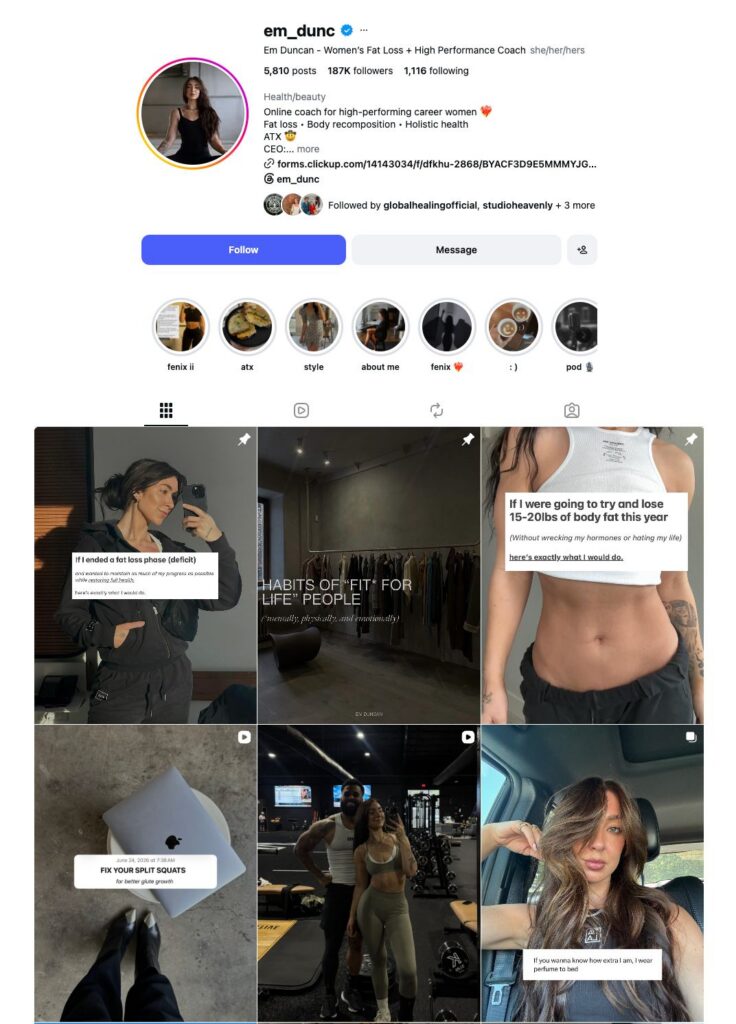
13. @em_dunc
Emily Duncan has built a significant following by documenting the realities of postpartum fitness and the pressure women face to "bounce back" after pregnancy. She shares the physical and emotional challenges of returning to exercise after giving birth — including diastasis recti, pelvic floor issues, and the mental adjustment of inhabiting a completely different body. Her content provides a counternarrative to celebrity postpartum transformations that set unrealistic expectations, emphasizing that recovery takes time and that no timeline should feel mandatory.
As a female fitness model who built influence through honest documentation rather than polished transformation, Emily's commercial position is clear: brands in postpartum recovery, pelvic floor health, and maternal wellness are accessing an audience that has been chronically underserved by both fitness content and fitness brands. Her followers trust her because she's shown them what genuinely helping mothers looks like — and brands that meet that standard convert at exceptional rates.
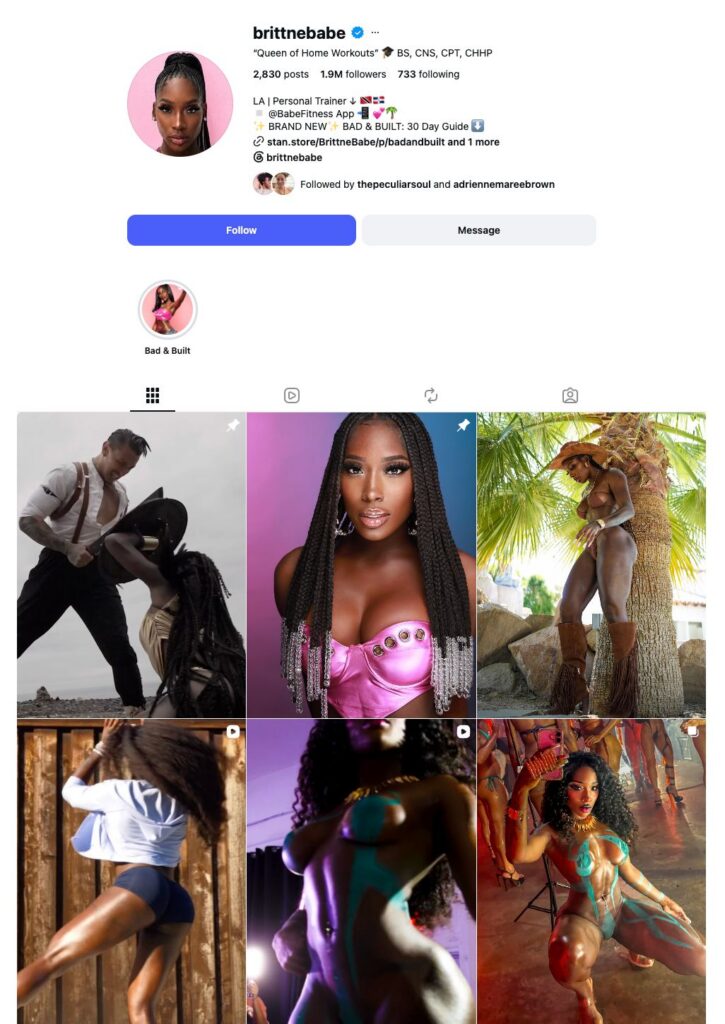
14. @brittnebabe
Brittne Jackson is among the Black female fitness influencers creating space for women of color in an industry that has historically excluded them. Her content celebrates Black beauty and culture while providing solid training information — addressing the specific challenges Black women face in fitness spaces, from hair care concerns with frequent washing to dealing with racist comments and being made to feel unwelcome in certain gym environments. She's created a community where Black women can discuss these issues openly while supporting each other's fitness goals.
Understanding how to work with influencers while maintaining authenticity is exactly what Brittne demonstrates through her approach to sponsorships — she partners with brands that demonstrate genuine commitment to her community's needs, and her audience knows it. Brands entering the Black women's fitness market through Brittne's partnership benefit from the credibility transfer that only comes from a creator whose community has watched her maintain standards over time.
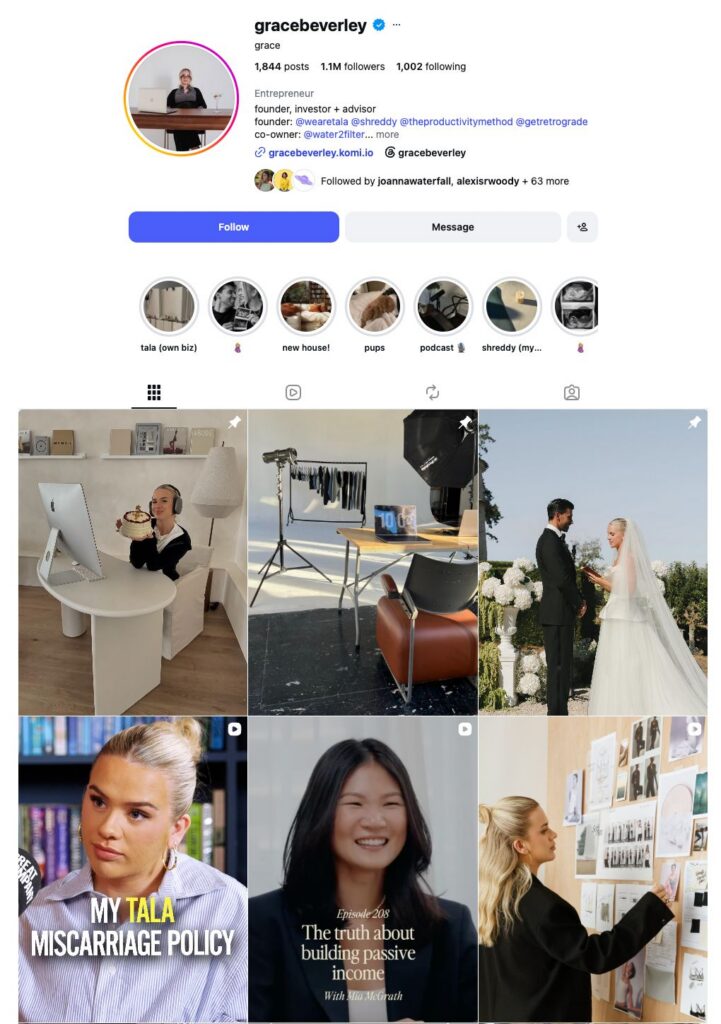
15. @gracebeverely
Grace Beverley has built multiple fitness businesses while being transparent about the challenges of entrepreneurship and the pressure of maintaining a public presence. She discusses the environmental impact of fitness industry practices and has created sustainable activewear and fitness equipment alternatives. Her content extends beyond workouts to address work-life balance, mental health, and the reality that fitness is just one aspect of a full life — being open about struggles with perfectionism and how building businesses while maintaining her own fitness has required boundary-setting and adjusted expectations.
As a fitness model who has built platform-independent business revenue, Grace carries the commercial credibility signal that indicates genuine audience ownership. Her willingness to call out unsustainable industry practices means her endorsements carry an implicit ethics stamp — for sustainable activewear, eco-conscious fitness brands, and wellness companies with genuine values alignment, her community's trust in her commercial judgment is among the most durable available in the category.
16. @sarahs_day
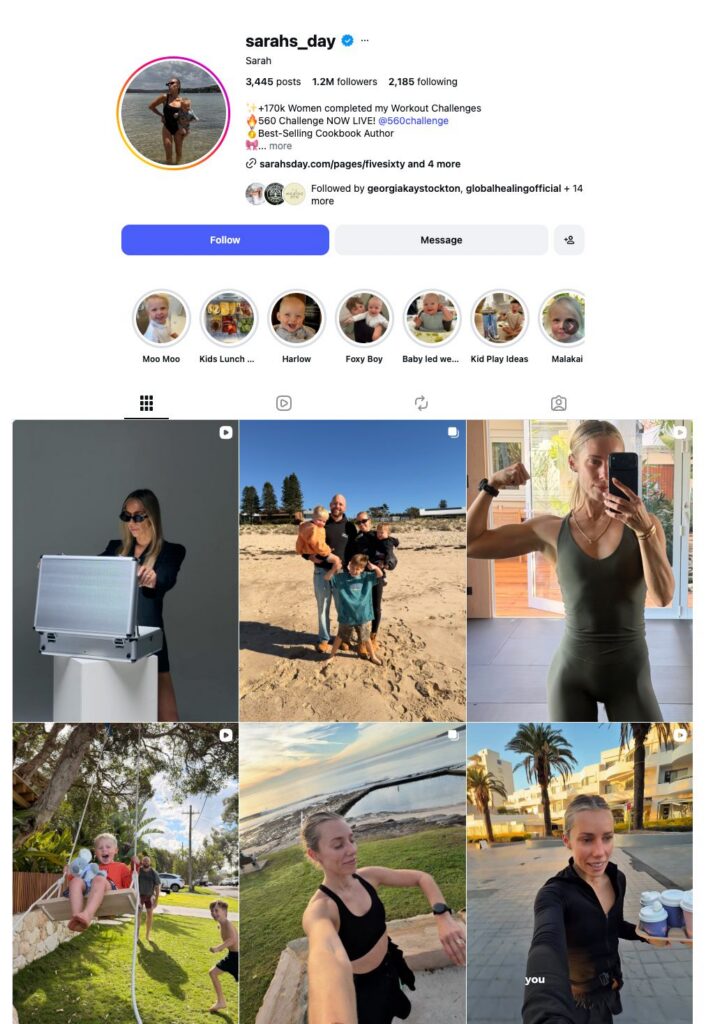
Sarah's Day (Sarah Stevenson) takes a holistic approach to health that includes fitness, nutrition, mental wellness, and lifestyle factors — covering workout routines, gut health, stress management, and the trial-and-error process of finding what works for her specific body. She emphasizes bio-individuality and the importance of listening to your body rather than following generic advice. As a fitness YouTuber, her willingness to share both her knowledge and her uncertainties creates a sense of exploring health together rather than positioning herself as the authority with all the answers.
For health and wellness brands operating in the holistic space — adaptogens, gut health products, sleep optimization, hormone health — Sarah's audience is holistically minded and research-curious. They've followed her through multiple health challenges, which means they've demonstrated patience and investment in long-term health approaches rather than quick-fix mentalities. That behavioral pattern predicts receptivity to health products that require sustained use and trust in the underlying science.
17. @whitneyysimmons
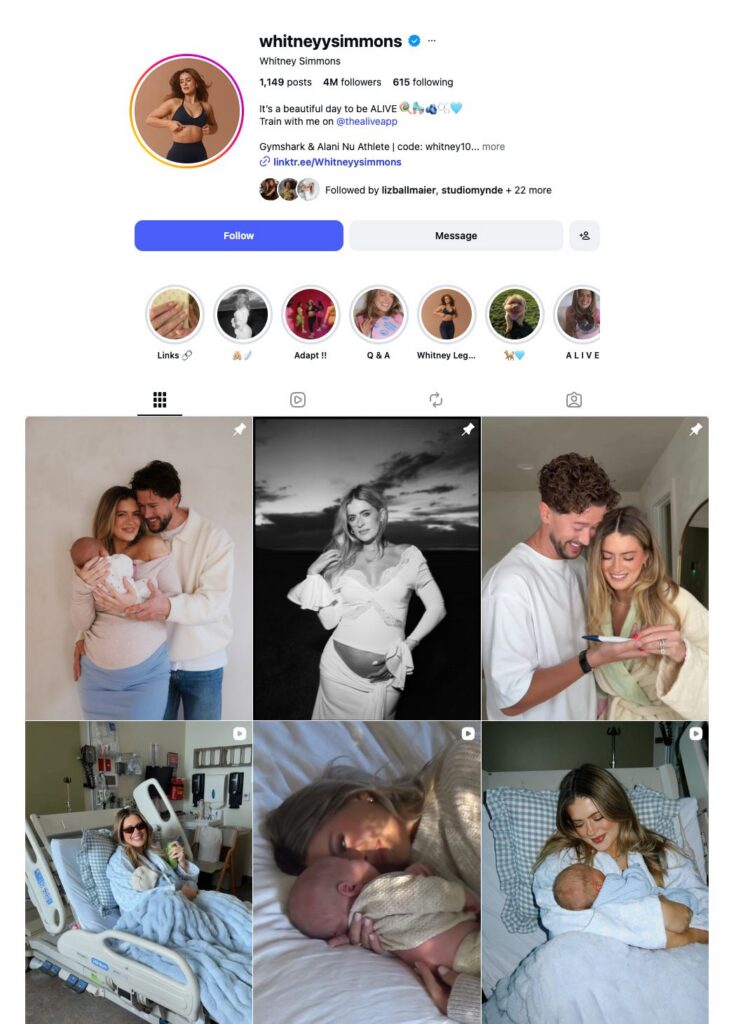
Whitney Simmons has built one of the largest followings among fitness influencers on Instagram by being consistently relatable and authentic — sharing workouts, nutrition, and daily life in ways that feel accessible rather than aspirational. She's open about mental health struggles, relationship challenges, and the pressures of maintaining a public platform. Her workout content includes both gym-based and at-home options, and she frequently reminds her audience that everyone has off days.
Her success demonstrates what how to find influencers on Instagram frameworks consistently surface: the creators who prioritize authentic connection over follower count end up building audiences with stronger commercial response patterns than those optimizing for reach alone. For fitness equipment, apparel, and supplement brands targeting broad women's fitness audiences, Whitney's combination of scale and authentic connection is rare — most creators at her follower count have long since drifted toward polished, aspirational content that trades engagement depth for reach.
18. @blogilates
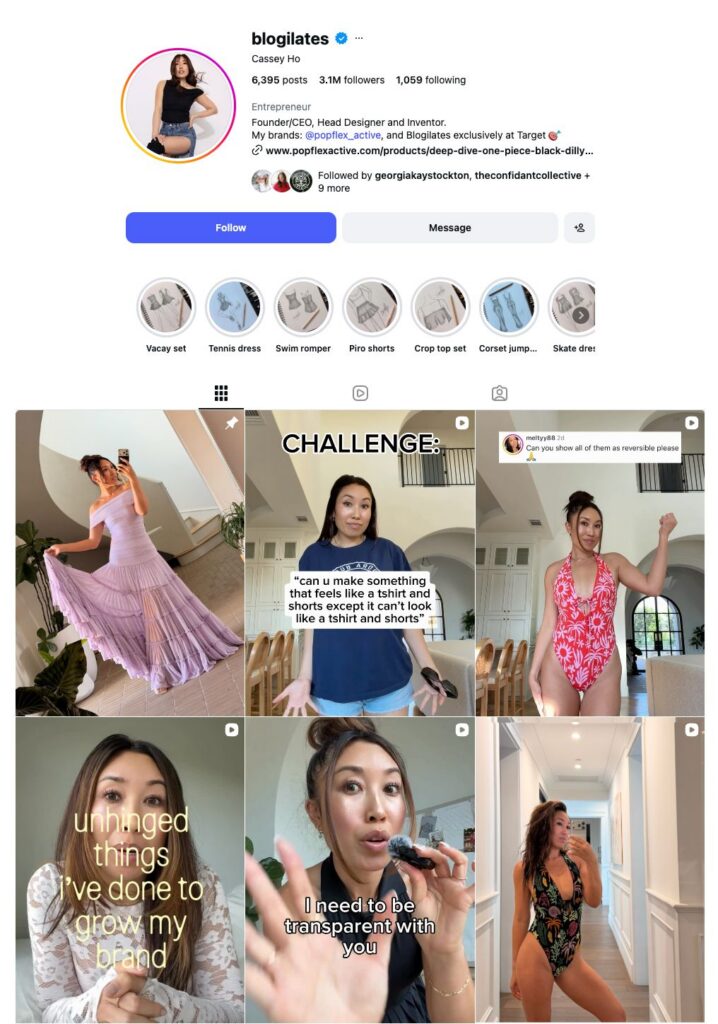
Cassey Ho created Blogilates over a decade ago and has remained relevant by continuously evolving her content and being transparent about her own growth. She's documented her journey from focusing purely on aesthetics to embracing body positivity and challenging the toxic aspects of fitness culture she once participated in — being remarkably open about experiencing body dysmorphia, dealing with negative comments about her appearance, and unlearning harmful beliefs about food and exercise. She's used her platform to call out brands that photoshop models and to advocate for more realistic body standards in fitness marketing.
Her longevity comes from her willingness to admit when she's been wrong and to change her approach as she learns. Her ability to adapt reflects broader influencer marketing trends around authenticity — specifically the trend toward transparency in fitness content and away from the transformation-photo culture that dominated early fitness social media. For brands, Cassey's decade-long audience retention is the clearest possible proof that authenticity-driven creator relationships outlast every aesthetic trend cycle. Her audience has stayed through multiple content pivots because they trust her judgment, not her image — and that kind of audience trust is what brand partnerships are ultimately paying to access.
What These Creators Mean for Fitness Brand Partnerships
The 19 creators profiled here share structural characteristics that predict commercial performance — and every one of those characteristics can be assessed before a brand commits to a partnership.
Education depth predicts audience quality. Creators who teach principles rather than just demonstrate exercises attract audiences with longer content engagement patterns, higher save rates, and more deliberate purchase behavior. Those behavioral signals — not follower counts — are what fitness brands should be screening for in creator selection.
Representation specificity predicts audience concentration. Creators who have built communities around underrepresented groups — Black women in fitness, plus-size athletes, postpartum mothers — have concentrated audiences with specific needs that most brands have chronically underserved. The demand-supply gap in these segments makes brand partnerships with representation-focused creators commercially disproportionately powerful relative to their follower counts.
Authenticity consistency predicts endorsement credibility. Creators who have documented struggles, setbacks, and opinion changes over time have built audience trust that doesn't expire after a campaign period ends. When these creators endorse a product, their audiences have years of evidence that the creator's standards are genuine — which makes the conversion signal proportionally stronger than the same endorsement from a creator whose entire feed is polished aspiration.
Identifying which female fitness influencers carry these characteristics at scale — across program portfolios of 20 to 50 active partnerships — requires audience intelligence that goes well beyond category filters and follower minimums. SPIRRA evaluates creators across 150 verified data points including True Follower™ audience authentication, Brand Alignment Scores, Content Alignment Scores, and community engagement quality metrics that surface the depth-of-relationship signals these 19 creators exemplify — across 19 million verified creators.
If your fitness brand's creator selection process currently begins and ends with reach and engagement rate, request a demo to see what partner selection looks like when it's based on the variables that actually predict which female fitness influencers will drive commercial outcomes for your specific brand objectives.