

Most organizations run influencer marketing and SEO as though they belong to entirely different departments, and in a lot of cases, they literally do. The social team measures reach and engagement. The SEO team measures rankings and backlinks. Neither one is wrong to focus on what it focuses on, but the separation leaves real value on the table, because a well-run influencer partnership can function as a genuine link-building and search-visibility asset, not just a social one.
That gap matters more than it used to. Organic search results account for 94% of all clicks, according to AIOSEO's 2026 SEO statistics compilation, and traditional link-building tactics, cold outreach for guest posts, unpredictable PR pickups, digital PR campaigns that may or may not land, have gotten slower and less reliable as more sites chase the same limited set of high-authority publishers. Influencer partnerships compress a lot of that timeline. A creator with an existing, trusted audience and their own web presence, a blog, a YouTube channel with linked descriptions, a newsletter archive, can generate the kind of contextually relevant link and mention that a traditional outreach campaign might spend months chasing.
For brands genuinely still early in getting started with influencer marketing, this is worth building in from the outset rather than retrofitting later. The rest of this piece walks through why influencer-generated links behave differently in the eyes of search engines, how to structure partnerships that actually create lasting search value, and where the real compliance risks sit, since getting this wrong carries genuine consequences that not enough brands account for upfront.
TL;DR
- Influencer-generated links and mentions tend to carry contextual relevance and genuine audience engagement that manufactured link-building tactics struggle to replicate.
- Google has been explicit that social signals aren't a direct ranking factor, but the behavioral and discovery effects of influencer content, branded search lift, referral traffic quality, expanded search real estate, still meaningfully support organic performance.
- Most brands waste influencer partnerships by treating them purely as social content, without any link placement strategy, disclosure planning, or attribution tracking.
- An effective framework treats creators more like distributed content publishers than pure social amplifiers, with SEO objectives built into the brief from the start.
- Link and mention value depends far more on topical relevance and audience quality than on a third-party domain authority score alone.
Why Influencers Generate Links That Actually Move Rankings
Traditional link-building has long focused on metrics like domain authority, editorial placement, and precise anchor text. Influencer-generated links and mentions bring something different to the equation: real behavioral signals attached to real clicks, from an audience that already trusts the person making the recommendation.
It's worth being precise about what Google has actually said here, since this is an area where overclaiming is easy and common. Google has stated directly that social media signals are not a direct ranking factor. What does appear to matter, based on Google's own public commentary on user experience and quality signals, is what happens after a user clicks through: whether they stay, engage, and find what they were looking for. When an engaged, pre-qualified audience arrives at a page through a trusted creator's recommendation rather than a cold search query, that tends to produce lower bounce rates and longer, more engaged sessions, exactly the kind of signal Google's systems, including its Navboost system that incorporates real user click and engagement data, are built to notice over time.
Influencer links also tend to look more organic by nature simply because of where they show up: personal blogs, YouTube video descriptions, Instagram bio links, newsletter archives, podcast show notes. That diversity of placement, paired with the fact that a genuine product review creates real semantic context around a brand mention, is meaningfully different from a generic guest post written primarily to secure a link. JumpFly's analysis of influencer marketing's SEO benefits makes a related point directly: even when a specific link is nofollow or marked as sponsored, Google treats brand mentions themselves as a kind of implied link that can still carry trust signals and contribute to a brand's perceived authority in its category, and search demand for a brand's name tends to rise measurably following a strong creator partnership.
Ranking position itself remains worth taking seriously in this context, since it determines how much of that traffic actually shows up. The top organic result receives 39.8% of all clicks, and moving from position 2 to position 1 alone generates 74.5% more clicks, per AIOSEO's compiled 2026 statistics. That's the real prize influencer-assisted SEO is working toward: not just a link existing somewhere, but genuine ranking movement for terms that matter, driven partly by the demand and engagement signals a well-matched creator partnership can generate. None of this works, though, if the underlying partnership is mismatched from the start; identifying the right influencers for your brand has to come before any of the link or SEO strategy layered on top of it.
The Content Gap Traditional SEO Outreach Can't Fill
Beyond the link and engagement question, influencer partnerships solve a production problem that most in-house content teams simply can't solve alone: volume and topical breadth at scale.
A typical content team might realistically produce 8 to 12 solid articles a month. Building genuine topical authority around a subject area, the kind of comprehensive subtopic coverage search engines increasingly reward, generally requires far more coverage than one team can produce on its own. Ten creators, each approaching a shared topic from their own angle and expertise, can collectively produce something closer to the breadth a single brand publishing schedule can't match, and SPIRRA's guide to influencer marketing covers this production-scale advantage from the discovery side in more depth.
There's also a distribution dimension worth naming directly. A brand's owned blog might draw a few thousand monthly visitors; a single influencer partnership can put content in front of an audience of 10,000 to several million people the brand doesn't already have access to on its own. And the search landscape itself has shifted to reward that kind of distributed, creator-native content more directly than it used to. Google has a long history of surfacing social posts directly within search results, dating back to real-time Twitter integration in 2009, and that pattern has expanded to include Instagram feeds and other platform content appearing in the results themselves, sometimes above a brand's own website link, according to JumpFly's reporting. That means well-optimized influencer content can occupy genuine search real estate a brand previously could only reach through its own properties.
| Metric | Traditional SEO Content | Influencer Content |
| Production time per piece | Days to weeks, limited by internal bandwidth | Faster in aggregate; parallel production across multiple creators |
| Distribution reach | Limited to the brand's existing owned audience | Immediate access to each creator's established audience |
| Content format variety | Often limited to what the internal team can produce | Naturally spans blogs, video, social, and newsletters |
| Cost per piece | Lower per piece, but constrained by team size | Higher per piece, but scales without proportional headcount growth |
| SEO impact timeline | Can be faster to launch, slower to gain topical breadth | Slower to launch each piece, faster to build topical breadth at scale |
It's worth adding an honest caveat here: content quality still has to be genuinely good for any of this to work. A surface-level mention with no real editorial substance behind it doesn't carry the same semantic weight as a detailed, genuine review, and search engines are generally good at telling the difference. Choosing creators who produce substantive work is the precondition for everything else in this section, not an optional nice-to-have.
How Search Engines Interpret Influencer-Generated Backlinks Differently
The Behavioral Signal Advantage
Even when a specific influencer link carries a nofollow or sponsored attribute, meaning it doesn't pass direct ranking credit in the traditional sense, it can still contribute real value through the traffic, brand awareness, and engagement it generates.
When someone discovers a brand through a trusted creator and later searches for that brand by name, that branded search activity functions as a demand signal Google's systems can factor into how a brand shows up for broader category terms over time. Recognition matters at the click level too: someone who recognizes a brand name in a set of search results is meaningfully more likely to click that listing over an unfamiliar competitor's, even when both appear in similar positions. And the audience arriving through an influencer's genuine recommendation tends to be pre-qualified in a way cold search traffic isn't; they arrived already interested, which tends to translate into lower bounce rates and more pages viewed per session, both patterns Google's systems interpret as quality signals over time.
Organic search remains a genuinely dominant traffic channel overall. In an analysis of 3.25 billion website visits, organic search drove more traffic than social media posts, paid display ads, paid search ads, or email marketing, according to research compiled by Lumar. Influencer SEO sits directly at the intersection of these two channels, driving both immediate referral traffic through the influencer's own platform and, over time, indirect support for a brand's broader organic visibility. Google has also moved well beyond a purely mechanical link-counting model; its systems are understood to weigh whether real users actually engage with a given link, meaning a link genuinely clicked within the body of engaging content tends to carry more practical weight than one buried in a footer or sidebar that nobody interacts with. Influencer links are, almost by definition, placed within the body of content an engaged audience is actually reading or watching, which is a structural advantage over a lot of manufactured link placements.
Topical Authority Clustering Through Influencer Networks
A single influencer link is one data point. Ten creators within the same niche mentioning a brand in a genuinely relevant context is a meaningfully stronger signal that a brand belongs in a specific topic conversation, which is a different and generally more durable outcome than chasing one high-authority link in isolation.
The practical implication is that topical alignment matters considerably more than raw audience size when selecting partners for this kind of strategy. A brand selling sustainable home goods gets more genuine SEO value from partnering with creators already covering sustainability, zero-waste living, or eco-conscious lifestyle content than from a larger, more general lifestyle influencer whose audience isn't specifically primed for that topic. When multiple trusted, topically relevant sources mention a brand in the context of the same subject area and related keywords, that reinforces the association between the brand and that subject matter in ways a single link can't. SPIRRA's analysis of the power of micro-influencers covers a closely related version of this argument from the partnership-value side: a smaller, tightly relevant audience frequently outperforms a much larger, loosely related one.
It's worth avoiding a scattershot approach here specifically because it works against this exact mechanism. Random partnerships spread across unrelated niches dilute topical signals rather than reinforcing them, and can leave search engines with a genuinely confused picture of what a brand's actual area of expertise or relevance is.

Building an Influencer SEO Framework That Scales
Selecting Influencers With SEO Metrics in Mind
Standard influencer vetting, engagement rate, follower authenticity, general brand alignment, remains genuinely important, but it's incomplete for SEO-specific goals, since most influencer discovery platforms don't surface the additional signals that actually predict search value.
A few extra questions are worth adding to any vetting process aimed at SEO outcomes: does the creator maintain a blog or website with a real, indexable presence? Do they publish long-form content that includes outbound links, and where do those links typically point? Are YouTube descriptions actually populated with links, is a newsletter's archive indexable, do podcast show notes include backlinks? Platform matters here in a specific way: an Instagram-only creator can be genuinely valuable for brand awareness, but provides limited direct link equity compared to a blogger, YouTuber, or newsletter writer whose content search engines can actually discover, crawl, and index. It's also worth checking a creator's own linking behavior. A creator whose content regularly and authentically links out to brands they genuinely use signals a content workflow that naturally includes citations and recommendations, which is a good predictor of how they'll handle a partnership with your brand too. Checking whether a creator's own site draws meaningful organic search traffic is a reasonable proxy for whether they carry any real SEO authority of their own to transfer through a link or mention.
On the compliance side specifically: current Google guidance is clear and worth getting exactly right rather than approximating. Since 2019, Google has recommended marking paid, sponsored, or affiliate links with the rel="sponsored" attribute specifically, with rel="nofollow" accepted as an alternative; both are treated as hints rather than hard directives, but using neither on a genuinely paid link is a guidelines violation that carries real risk. Understanding how to spot fake influencers and inauthentic audiences matters here too, since a spammy or low-quality backlink profile on a creator's own site can, in theory, introduce risk into any link they extend to a partner brand.
A useful vetting checklist for this specific purpose: domain authority or equivalent third-party score, content format diversity across platforms, historical linking behavior, topical relevance to the brand's category, audience engagement quality (not just volume), traffic sources for the creator's own site, backlink profile health, platform mix, content longevity, and disclosure compliance history.
One more point worth stating directly: don't overlook smaller, highly engaged, topically relevant creators in favor of raw follower count. A creator with 8,000 followers who all genuinely care about a specific niche often delivers more real SEO and business value than a much larger creator whose audience is broad and only loosely connected to the relevant topic.
Structuring Influencer Partnerships for Maximum Link Equity
Traditional influencer briefs typically focus on messaging, hashtags, and a posting schedule, which misses the SEO opportunity almost entirely. A brief built for search value needs a few additional specifications: expected link placement (blog post, video description, newsletter), a preference for the correct rel="sponsored" or rel="nofollow" attribute where a link is genuinely part of a paid arrangement, and topically relevant anchor text suggestions that read naturally rather than resembling exact-match keyword stuffing, which tends to look manipulative to both readers and search systems.
Content format matters for how much lasting value a given placement carries. Long-form blog reviews with embedded links tend to create more durable, indexable value than a YouTube video description link, which in turn tends to outlast a one-off social post with a bio link that disappears once newer posts push it down. It's generally worth structuring partnership budgets to favor formats that create lasting, indexable content rather than exclusively short-lived social placements.
A staggered, multi-touchpoint partnership tends to outperform a single one-off placement, both for relationship depth and for how the resulting link pattern looks to search systems; a sudden cluster of 15 to 20 nearly identical links appearing in the same week reads very differently, and less naturally, than a similar volume of links accumulating gradually over several months through genuine, varied content. Negotiating rights to reference or embed a creator's content on owned brand properties, with clear attribution, can also extend the value of a single piece of content across multiple channels rather than treating it as a one-time asset.
It's worth being direct about one risk here: an overly prescriptive brief that scripts a creator's every word tends to produce content that reads as an advertorial, which reduces both audience trust and the genuine editorial value that gives the resulting link or mention its SEO weight in the first place. Search systems and audiences alike are reasonably good at detecting promotional content that lacks real substance behind it, so giving creators genuine creative freedom within clear brand-safety guardrails tends to produce better outcomes on both fronts. Once content is live, it's worth tracking it over time to confirm creators actually publish what was agreed and that links remain live; content occasionally gets taken down or edited months after a campaign wraps, which quietly erodes the value of the original placement if it goes unnoticed.
Measuring Link Value Beyond Domain Authority Scores
Third-party metrics like Domain Authority or Domain Rating are useful for rough comparative analysis, but they're not actual Google ranking factors, and treating them as the primary success metric for an influencer SEO campaign misses most of what actually matters.
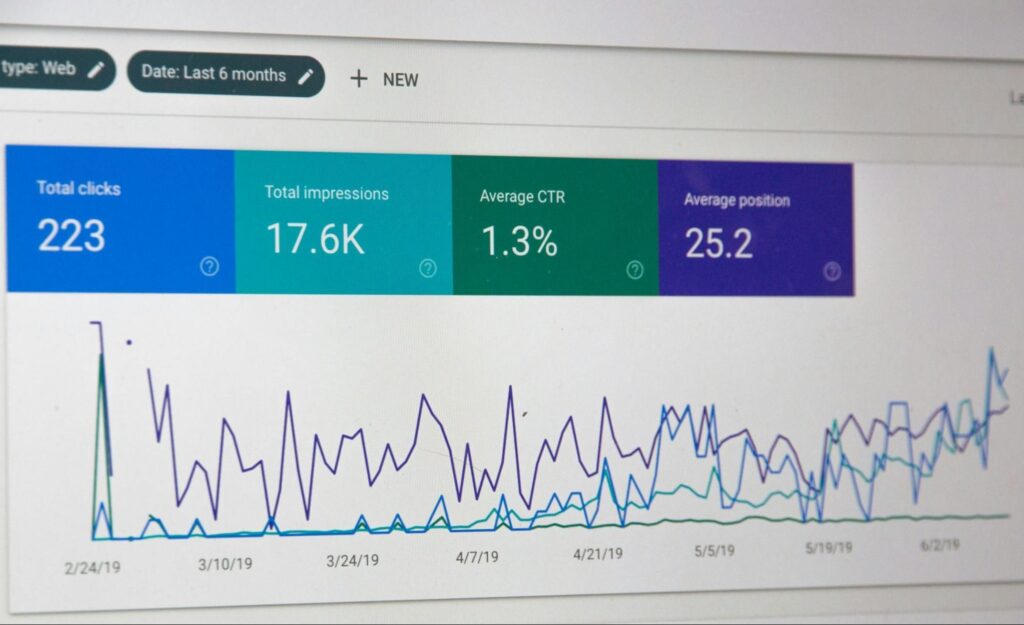
A more complete measurement approach tracks several things in parallel: referral traffic quality (using UTM parameters on every influencer link to track not just clicks but subsequent behavior, bounce rate, pages per session, and conversions from that specific source, compared against site averages); branded search lift (tracking search volume for a brand's name and product names before and after a campaign using tools like Google Trends and Search Console, since an increase is a reasonably direct demand signal); and actual keyword ranking movement for terms semantically related to the content a creator produced, tracked patiently over four to eight weeks rather than expecting immediate change.
| Metric | What It Measures | Tracking Tool |
| Referral traffic quality | Bounce rate, pages per session, and conversions from influencer-driven traffic | Google Analytics with UTM parameters |
| Branded search lift | Change in search volume for brand and product names | Google Trends, Google Search Console |
| Keyword ranking movement | Position changes for terms related to influencer content topics | Search Console, or a third-party rank tracker |
| Link discovery rate | Whether published links have actually been crawled and counted | Search Console's Links report |
| Traffic conversion rate | Whether influencer-driven visitors convert at a comparable or better rate than other channels | Analytics platform, compared against site averages |
It's worth confirming that content has actually been indexed at all before drawing any conclusions about its performance; a simple site:domain.com "brand name" search is a quick way to check whether Google has indexed a specific piece mentioning a brand. Not every published link gets crawled and counted immediately either, so checking Google Search Console's Links report periodically helps confirm when a given link actually enters a site's tracked backlink profile rather than assuming it happened the moment it was published.
One honest caveat worth stating plainly: attribution in this space is genuinely messy. Influencer-driven links and mentions typically work alongside other SEO efforts happening at the same time, and isolating the precise contribution of a single creator partnership from everything else affecting a site's rankings is difficult in practice. It's reasonable to accept measuring a blended impact across multiple contributing factors rather than expecting a clean, single-variable answer. SPIRRA's broader take on what most ROI calculators miss covers a related version of this measurement-integrity problem in more depth.

The Compliance and Attribution Problem No One Talks About
FTC disclosure requirements apply to influencer content regardless of whether SEO is a goal of the partnership, and getting this wrong carries real legal exposure that can also undermine the very SEO value a brand is trying to build.
The FTC's own Disclosures 101 guide for social media influencers is unambiguous on the core requirement: any material connection between a creator and a brand, payment, free product, any relationship of value, must be disclosed clearly and conspicuously alongside the endorsement itself, not buried in an About page, a string of hashtags, or content that requires clicking "more" to see. On the separate, technical question of link attributes, Google's current guidance, unchanged in substance since 2019, is that paid or compensated links should carry the rel="sponsored" attribute, with rel="nofollow" accepted as an alternative; both are treated as hints for ranking purposes rather than absolute directives, but omitting both attributes entirely on a genuinely paid link is a guidelines violation, not just a missed optimization.
The practical implication is that a brand's best protection is prioritizing partnerships built around genuine product use and authentic review, structured as product seeding, affiliate arrangements, or organic collaboration rather than a straightforward pay-per-link transaction. That approach keeps a link or mention editorially justified even with proper disclosure in place, which is exactly the outcome Google's paid-link policies are designed to distinguish from manipulative link-buying. If an audit ever revealed a pattern of paid influencer links with no disclosure and no proper rel attribute, that's genuine manual-action risk that can meaningfully affect a site's rankings, not just a theoretical compliance concern.
A reasonable operational structure for managing this across a campaign:
- Pre-campaign: define the partnership structure clearly, specify disclosure requirements directly in the contract, decide on link attributes upfront, set content longevity expectations, and establish an approval workflow.
- During the campaign: review content drafts, verify link attributes are actually implemented as agreed, check product claims for accuracy, and document every approval.
- Post-campaign: monitor published content periodically, track whether link attributes or the content itself change over time, run quarterly audits of live placements, and archive documentation of compliant campaigns.
It's also worth checking what a given platform or CMS does automatically; some systems apply rel="sponsored" or an equivalent attribute by default to certain content types, which is worth confirming rather than assuming either way when estimating a partnership's likely SEO contribution. Brand safety is part of this too: creators need to understand they can't misrepresent product claims or produce content that runs afoul of advertising standards, since a link from content that's later flagged for misleading claims becomes a liability rather than an asset, both legally and in terms of its ongoing search value.
Where SPIRRA Fits Into Your Influencer SEO Workflow
Everything covered above, vetting creators for topical relevance, tracking link placements, managing disclosure compliance, measuring traffic quality across dozens of partnerships, is genuinely difficult to do manually once a program grows past a handful of creators.
SPIRRA's AI-powered discovery tools address the vetting bottleneck that slows down most influencer SEO programs before they even start. Audience Alignment Score™ and Brand Alignment Score™ filter creators based on genuine audience relevance rather than follower counts alone, which can be inflated or simply irrelevant to a brand's actual niche. True Follower™ transparency reduces the specific risk of a link or mention being associated with a creator whose engagement is inflated or fraudulent, since that kind of low-quality signal can, in principle, transfer some reputational risk to a brand's own domain by association.
On the compliance side, automated brand safety monitoring helps confirm partnerships meet disclosure standards before content goes live, which reduces legal exposure and helps protect the underlying link quality the whole SEO strategy depends on. Performance dashboards that track referral traffic, engagement, and link acquisition in one place address the measurement complexity described earlier in this piece, where brands otherwise have to juggle Google Analytics, Search Console, a backlink tool, and a spreadsheet just to get a partial picture of what's actually working. Cross-platform coverage, whether creators publish primarily on blogs, YouTube, Instagram, or newsletters, means a single workflow can support the multi-format strategy this piece has described, rather than requiring a separate process for every content type.
The visibility stakes here continue to rise. 52% of sources cited in Google's AI Overviews rank in the top 10 traditional search results, according to AIOSEO's 2026 data, which means topical authority increasingly determines visibility across both traditional rankings and newer AI-generated search summaries. Finding creators whose content genuinely carries that kind of topical authority, rather than creators who simply have a large but loosely relevant audience, is the discovery problem SPIRRA's alignment scoring is built to solve at scale.
Ready to turn your influencer partnerships into a genuine, scalable link-building asset? Schedule a demo with SPIRRA to see how AI-powered discovery and verified audience data help you find creators worth building a real SEO strategy around.
Final Thoughts
The separation between influencer marketing, treated as a brand-awareness and social-engagement function, and SEO, treated as a technical optimization function, is largely artificial, and it's a costly one when the two operate in silos with no shared strategy or reporting.
Creators function as distributed content publishers and genuine link-building assets when a brand treats them that way from the start, rather than after the fact. As Digiday reported in August 2025, the boundary between search and social continues to blur; creators are increasingly showing up directly in Google's AI Overviews and short-video search results, and Meta has begun notifying users that search engines can surface their public photos and videos directly in search results, specifically to help boost discoverability for creators and businesses. That shift reinforces a broader point: treating influencer partnerships as a meaningful contributor to search visibility has moved from a nice-to-have experiment to something closer to standard practice for brands paying close attention to where their category's search traffic is actually heading.
None of this makes traditional link-building, guest posts, digital PR, resource-page outreach, obsolete. It's more accurate to say those tactics are incomplete on their own, missing the contextual relevance and genuine audience engagement signals that a well-matched creator partnership can add. Making this work in practice usually requires real cross-functional coordination: social, SEO, and content teams sharing goals and reporting rather than treating influencer marketing and SEO as separate budget lines owned by different people with different incentives.
A reasonable way to start is with a contained pilot: select three to five creators genuinely relevant to a specific topic area, brief them with SEO objectives clearly stated alongside the usual creative and messaging goals, and track results rigorously for 90 days before committing a larger budget. It's worth remembering that this kind of impact builds gradually; links need time to be discovered and crawled, and topical authority signals from multiple creators accumulate over weeks and months rather than appearing overnight. Brands that start building this kind of integrated approach now, while many competitors still treat influencer marketing and SEO as entirely separate functions, tend to see that advantage compound as the underlying content and topical signals accumulate over time.