
The most valuable TikTok influencers for brand partnerships aren't the ones who went viral dancing. They're the ones who built something that would survive if TikTok disappeared tomorrow: a specific area of expertise, a loyal niche audience, and revenue streams that don't depend on any single platform's algorithm.
These 19 creators matter for brand marketers not just as examples of creator success, but as a framework for understanding what makes a TikTok creator worth investing in. Creators who monetize genuine knowledge, build community around consistent perspective, and scale businesses beyond the platform represent structurally superior partnership opportunities than creators whose entire business model depends on the next trending sound.
TL;DR
- TikTok creators who skip viral trends and build around specific expertise produce more loyal, commercially valuable audiences for brand partners
- The most followed person on TikTok isn't always the most profitable partner — niche authority consistently converts better than broad entertainment appeal
- Education, finance, and mental health TikTok creators see higher engagement and stronger purchase-intent signals than entertainment-only profiles
- The top TikTok influencers on this list have diversified revenue streams, which signals audience quality and reduces partnership risk for brands
- Consistency of voice and perspective predicts long-term audience retention better than content volume or production value
- Niche authority creates monetization opportunities that broad appeal cannot match, and those same opportunities signal audience depth that brand partners can leverage
- Commentary and analysis content has longer shelf life than trend-dependent content, which means brand associations built through these partnerships compound over time
Creators Who Monetize Niche Expertise
The tiktok influencers in this category built followings around specialized knowledge rather than entertainment value. For brands, this distinction matters fundamentally: niche expertise creators attract audiences that are actively seeking solutions, not passively scrolling for amusement. The difference between a solution-seeking audience and a passive audience is the difference between content that influences purchase decisions and content that occupies screen time.
These top tiktokers have proven that subject matter depth creates more durable audience relationships than breadth of appeal. Their success metrics look different from traditional influencers, and require specialized approaches to measuring influencer marketing ROI because they generate course enrollments, consulting bookings, and product sales alongside social engagement. That business model diversity is a signal brands should read as audience quality validation — people don't buy courses or consulting services from creators they passively follow. They do it from creators they genuinely trust.
| Monetization Strategy | Platform Dependency Level | Primary Revenue Source | Audience Relationship Type |
| Course Sales and Consulting | Low | Off-platform services | Solution-seeking |
| Brand Partnerships Only | High | Platform-dependent deals | Passive consumption |
| Product Lines and Books | Low | Owned intellectual property | Community investment |
| Creator Fund Focus | Very High | Platform payments | Algorithmic discovery |
| Hybrid Model | Medium | Diversified streams | Multi-channel engagement |
1. Hank Green
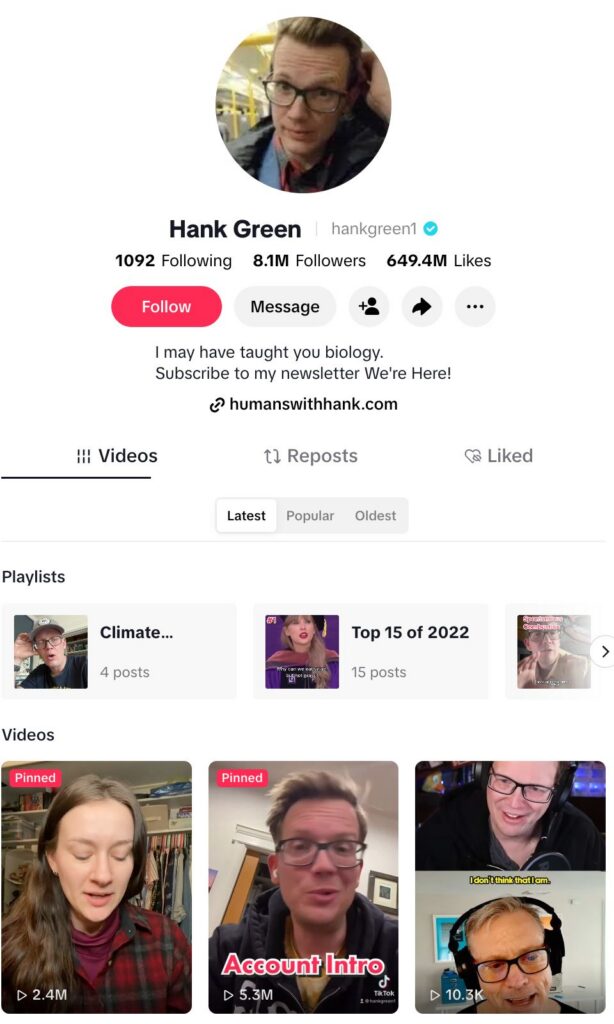
Hank Green entered TikTok with an established YouTube presence and adapted his science communication approach for short-form video without diluting the content. His strategy centers on answering specific questions with depth rather than breadth — creating videos that viewers save, share with people studying similar topics, and return to when they need the information again. He's built a model where educational content drives book sales, podcast downloads, speaking engagements, and traffic to his other platforms where longer-form content lives. The key brand insight from Hank's approach is his refusal to simplify complex topics just to fit the format — which has actually increased his credibility and reach among audiences who are tired of oversimplified science content. He addresses climate change, cellular biology, and physics with nuance, trusting his audience to keep up. That respect for viewer intelligence has created a loyal community that follows him across platforms. For brands in science-adjacent categories — technology, health, environmental products — his audience represents exactly the kind of high-attention, solution-seeking demographic that commands premium CPMs. These tiktok influencers demonstrate that educational authority, not follower count, is the variable that predicts audience commercial value.
2. Dr. Julie Smith
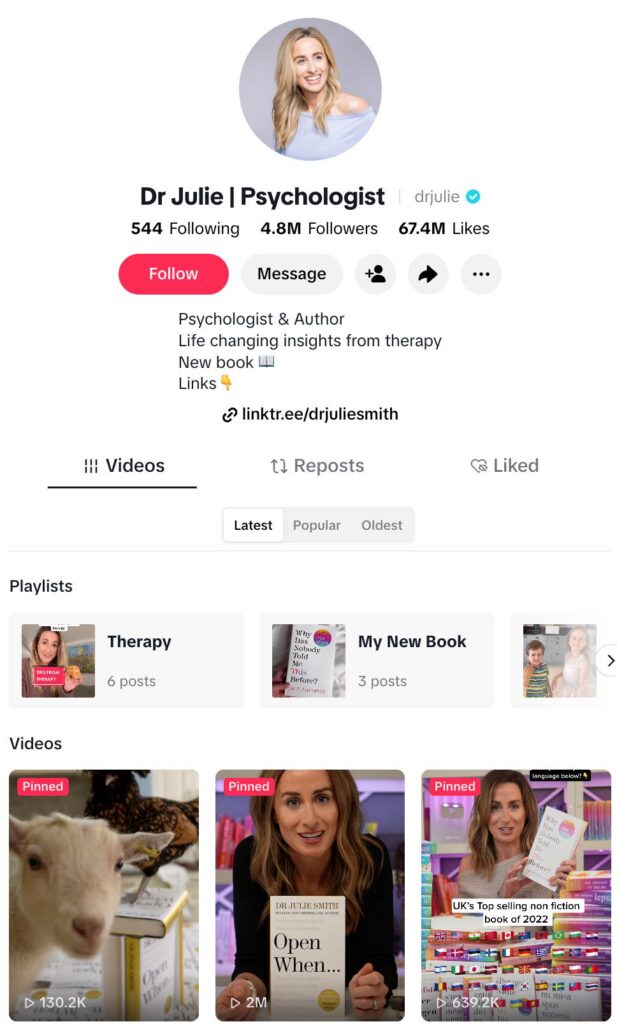
A clinical psychologist who turned mental health education into a publishing and services business, Dr. Julie Smith posts content that addresses specific psychological concepts without the self-help fluff that saturates the wellness space. Her videos explain CBT techniques, attachment styles, and emotional regulation in under 60 seconds. She's monetized through a bestselling book deal and therapy resources rather than relying primarily on brand partnerships.
What sets her apart from other top tiktokers in the wellness category is her clinical background and willingness to say "therapy isn't one-size-fits-all" — a message that creates genuine trust rather than aspirational dependency. Her comment sections have become informal support communities, which she moderates carefully to maintain ethical boundaries. For brands in mental health, personal development, or healthcare-adjacent categories, Dr. Smith represents a creator whose audience is demonstrably action-oriented: they're booking therapy, buying books, and seeking professional support — the highest-intent audience behavior available.
3. Alexis Nikole Nelson
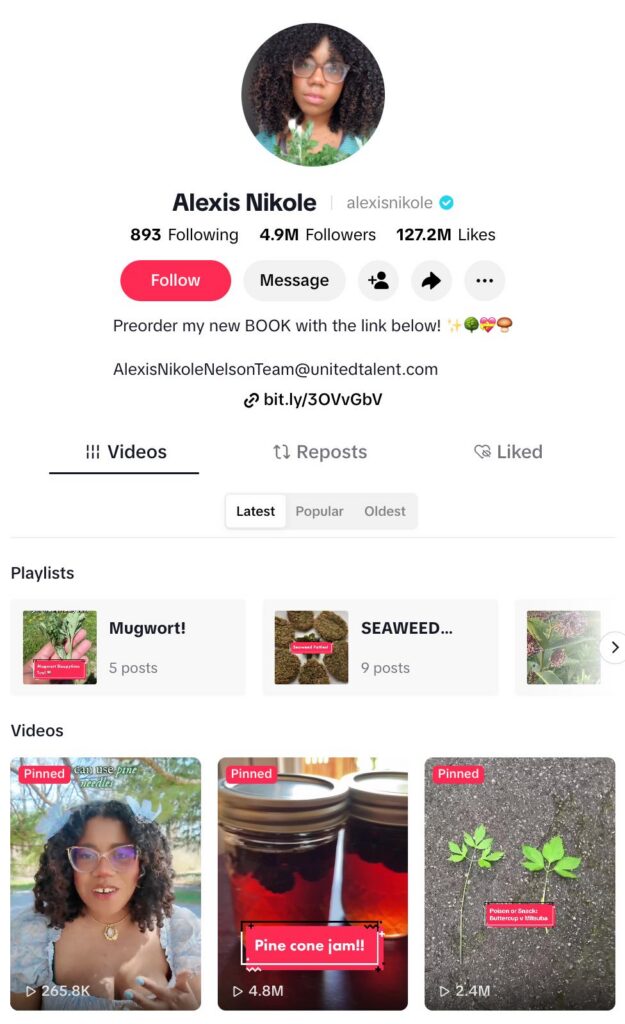
Known as the Black Forager, Alexis built her following around sustainable food sourcing and wild edibles — combining environmental education with practical foraging knowledge, food accessibility awareness, and ecological context. She's monetized through outdoor brand partnerships, a cookbook deal, and paid workshops. Her approach demonstrates the importance of authenticity in influencer marketing and how tiktok influencers can carve out distinct space in crowded niches by adding cultural and historical depth that purely instructional content lacks.
For brands, Alexis represents a creator whose audience is concentrated in an overlapping set of values — sustainability, food culture, environmental awareness — that makes her partnerships self-selecting for brand alignment. Brands in outdoor, food, sustainability, or wellness categories don't just reach her followers. They reach followers who are specifically pre-qualified by the values Alexis has consistently modeled.
4. Spencer Barbosa
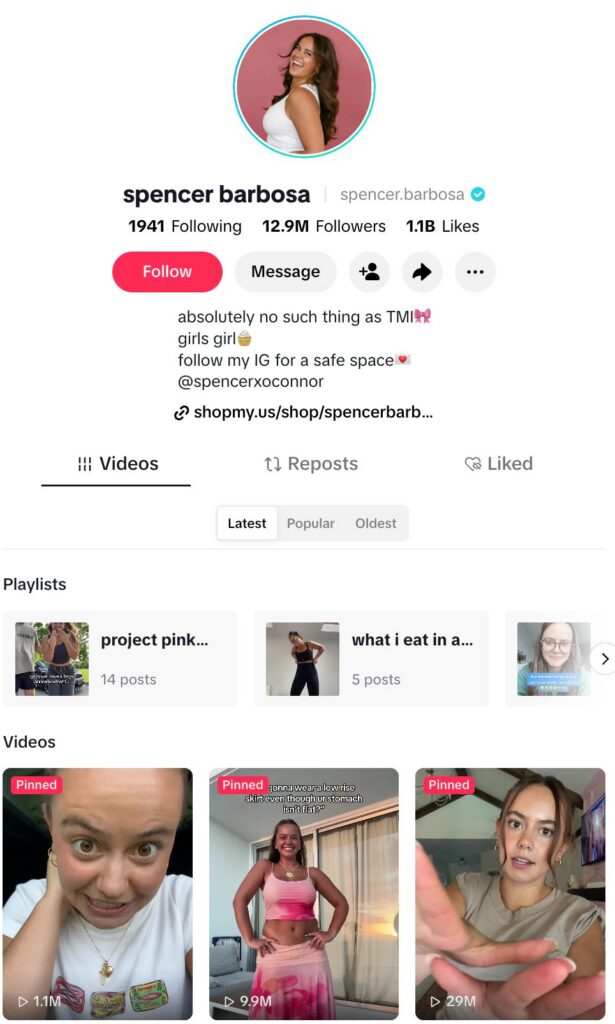
Spencer creates body-positive content that moves beyond affirmations into practical discussions about diet culture, clothing industry standards, and mental health. Her revenue comes from merchandise, university speaking engagements, and value-aligned brand partnerships — with a notable differentiator: she publicly shares when she turns down lucrative deals that don't match her message, which has become one of the most credibility-building signals she could demonstrate to her audience.
Her willingness to show the business side of content creation, including declined partnerships, has strengthened community trust in ways that traditional promotional content cannot replicate. For this famous tiktok creator's audience, when she does partner with a brand, that partnership carries the implicit validation of having passed her public standards. That's a commercial signal brands in body-positive wellness, inclusive fashion, and mental health categories should weight heavily in partner selection.
5. Keith Lee
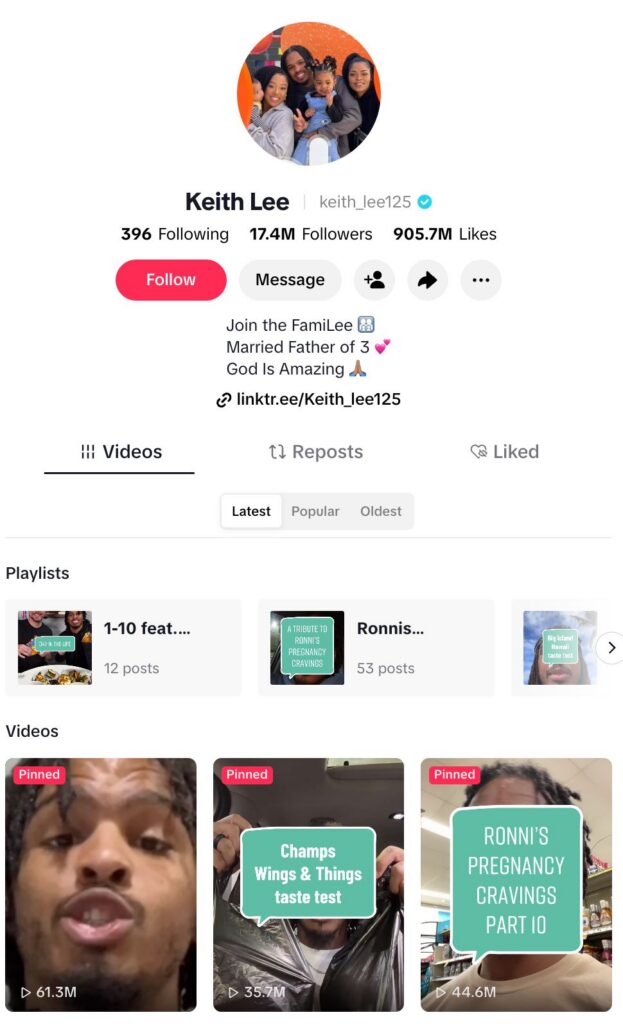
A food critic who reviews local restaurants with straightforward honesty, Keith has become powerful enough to dramatically impact small business revenue overnight — some restaurants report 500% increases in customers after a positive review. His monetization strategy is structurally unusual: he refuses most traditional sponsorships to maintain perceived objectivity, generating income instead through his own food products and consulting for restaurant owners seeking to understand what drives his review outcomes.
The economic impact Keith generates has made him a genuine case study in the power of micro-influencers and how tiktok stars can drive measurable real-world business outcomes more effectively than macro creators with diffuse audiences. His rating system — taste, price, customer service — is simple, consistent, and applied without exception. His comment sections have become community resources where locals share their own restaurant recommendations, creating a crowdsourced guide that extends his influence beyond his own posting calendar. For food, hospitality, and local business brands, Keith represents proof that vertical-specific influence consistently outperforms broad entertainment appeal when the goal is commercial action rather than brand awareness.
6. Humphrey Yang
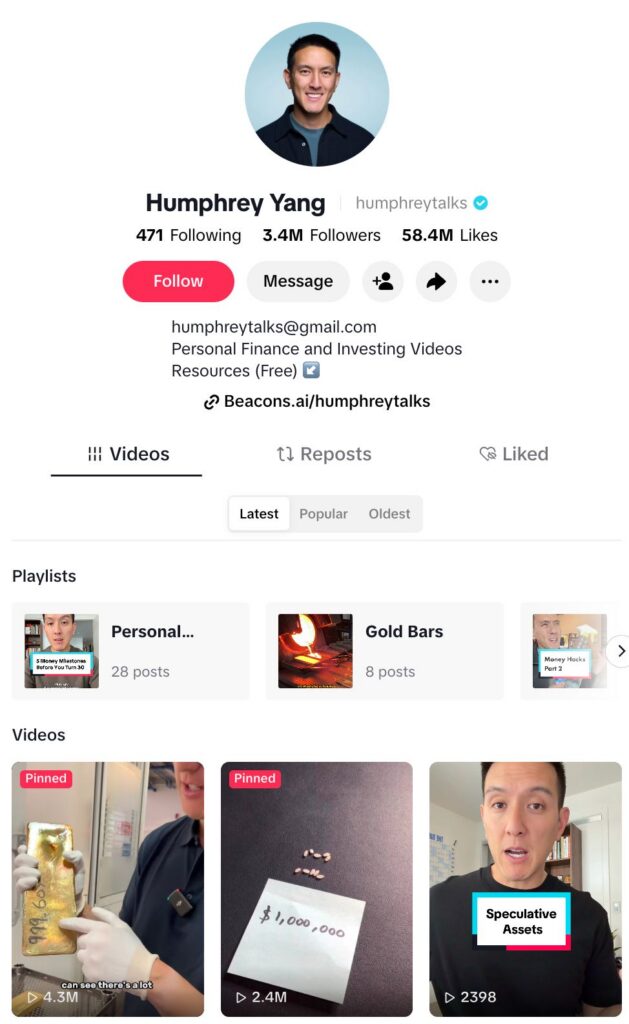
This financial educator breaks down complex investment concepts, retirement planning, and economic policy using props and visual aids. Humphrey monetizes through financial planning services, online courses, and affiliate partnerships with investment platforms. What distinguishes him from other finance tiktok stars is his willingness to engage systemic issues rather than defaulting to personal responsibility narratives — he'll explain how 401(k) plans work while also discussing why the retirement system is structurally problematic. His content serves both beginners and people with existing financial literacy who want deeper analysis.
For brands in fintech, investment, insurance, or financial services, Humphrey's audience is among the most commercially valuable available on TikTok: adults actively engaged with financial decision-making, seeking information before significant purchases, and demonstrating exactly the research-phase behavior that financial advertisers pay premium CPMs to reach.
Storytellers Who Turned Commentary Into Community
This category of tiktok influencers built audiences through personality-driven commentary rather than instructional content. These tiktok stars demonstrate how to build an influencer brand through consistent voice and perspective — creating the kind of parasocial relationships where audience members feel they know the creator personally. For brands, this relationship type creates a specific and valuable dynamic: audiences trust these creators' recommendations not because of demonstrated expertise, but because of sustained emotional connection. That's a different trust mechanism, appropriate for different brand categories, and it should be matched accordingly in partnership strategy.
| Creator Type | Content Format | Primary Monetization | Community Strength Indicator |
| Reactive Commentary | Response videos | Podcast deals, brand partnerships | Comment section engagement depth |
| News Analysis | Educational breakdowns | Speaking fees, media appearances | Save and share rates |
| Cultural Criticism | Video essays | Patreon, consulting | Cross-platform following |
| Personality-Driven | Lifestyle content | Product lines, tours | Merchandise sales velocity |
| Political Commentary | Opinion pieces | Subscriptions, memberships | Controversy resilience |
7. Brittany Broski
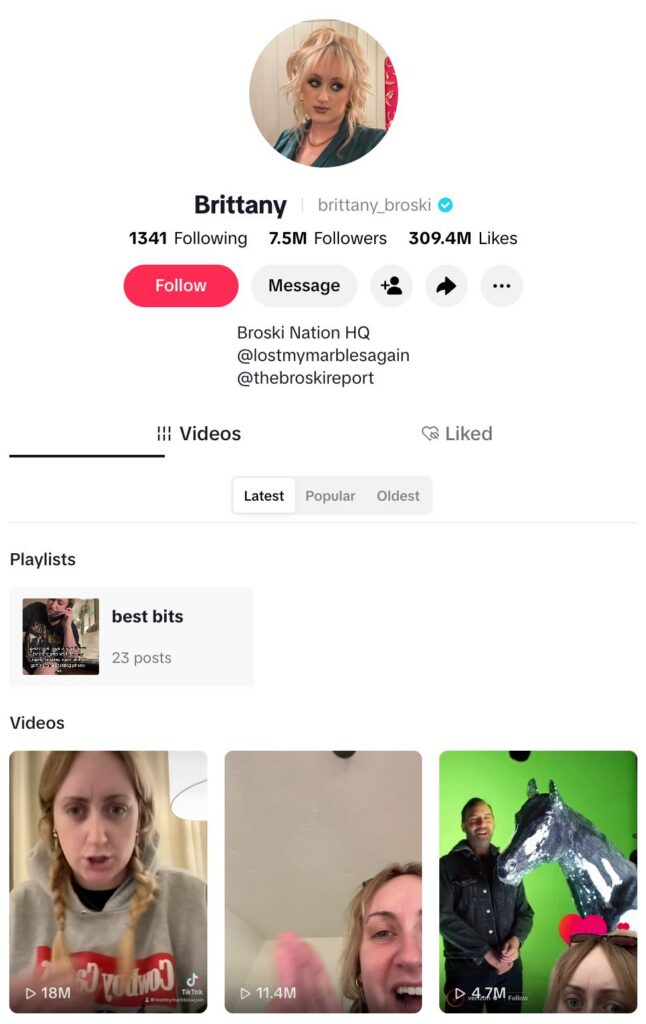
Brittany went from a viral Kombucha reaction video to building a multimedia brand through genuine personality and pop culture commentary. She's monetized through podcast deals, brand partnerships, and a growing traditional media presence. Her content strategy is deceptively simple: react to things she genuinely cares about with unfiltered enthusiasm. One of the top tiktokers who successfully made the jump to hosting and interviewing without losing her core audience, her business strategy involves saying yes to opportunities that let her be herself rather than molding herself to brand requirements.
For brand partners, Brittany's enthusiasm authenticity — the fact that her interests are visibly genuine — is what makes her recommendations commercially valuable. Audiences trust her product endorsements because they've watched her be unfiltered about things she doesn't like. When she does endorse, the contrast registers. That's the trust mechanism brands in entertainment, lifestyle, and consumer goods categories are paying for.
8. Drew Afualo
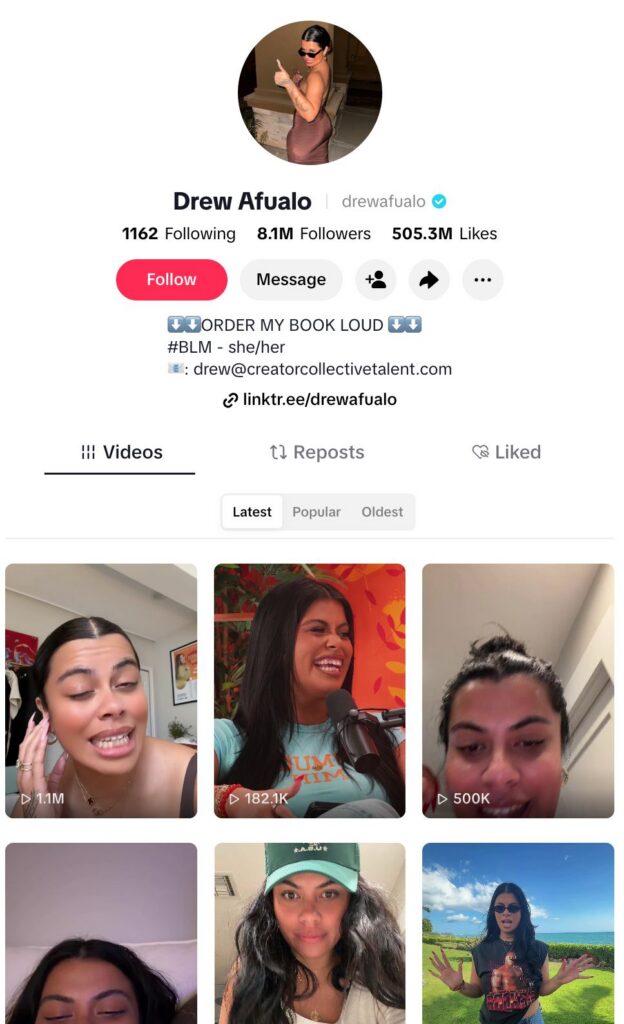
Drew built her following by responding to misogynistic content with sharp, humorous takedowns. She's monetized through a podcast, book deal, and brand partnerships with companies targeting her predominantly female audience. Her business model relies on being the voice her community wishes they had — a positioning that creates deep loyalty rather than broad but shallow reach. Her willingness to be polarizing is a commercial asset for the right brand partner, not a liability. Highly engaged audiences that form around a specific shared perspective convert at substantially higher rates than broadly appealing audiences with diffuse interests. For brands targeting women ages 18 to 35 in beauty, personal care, entertainment, or cultural products, Drew's audience represents concentrated, motivated purchasing power. For tiktok stars in this category, brand alignment isn't just a values exercise — it's the mechanism by which the partnership's commercial effectiveness is determined.
9. Tara Lynn
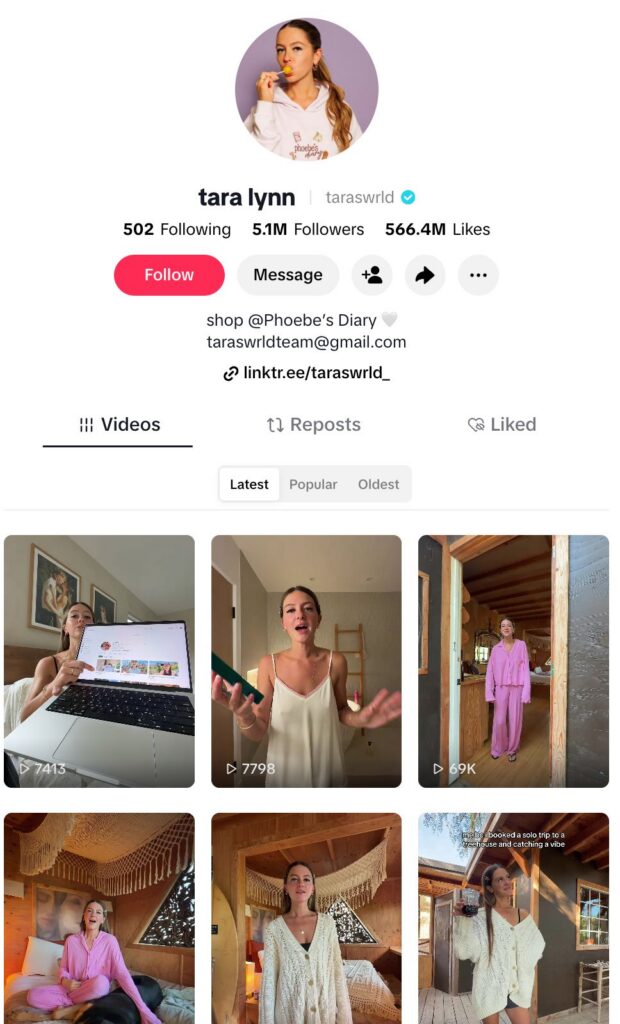
A creator who shares stories about customer service experiences, workplace dynamics, and retail culture, Tara built community around shared frustration with service industry challenges. She monetizes through merchandise and a Patreon where she shares extended stories. She's one of the famous tiktok creators who built influence without initially showing her face — proving that relatability and narrative quality matter more than visual presentation.
For brands, Tara's community demonstrates something important: audiences that form around shared experience, rather than around a creator's appearance or aspirational lifestyle, show unusually high commercial loyalty to brands that validate that shared experience. Her community wants to feel seen. Brands that understand this and structure partnerships around that emotional acknowledgment will generate significantly stronger responses than brands that treat her audience as a demographic to reach.
10. Sarah Schauer
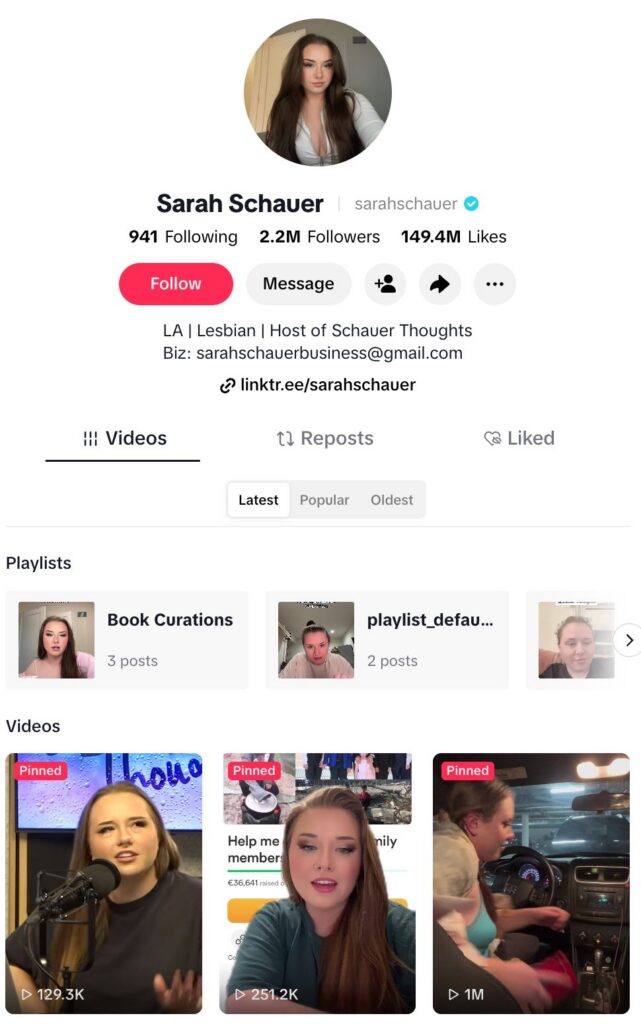
Sarah creates comedy content that blends observational humor with millennial and Gen Z experience commentary. She's monetized through a podcast with Brittany Broski, brand deals, and comedy writing opportunities. Her content works because she identifies specific, relatable moments and exaggerates them just enough to be funny without losing the truth of the observation.
For brands, Sarah represents tiktok stars who use the platform to demonstrate range that translates into traditional entertainment opportunities — meaning her audience actively follows her creative development, not just her current output. That developmental investment from an audience indicates stronger long-term retention and better brand recall from sponsorship placements. Consumer brands targeting millennial and Gen Z women in lifestyle, beauty, or entertainment categories will find her audience primed for the conversational, self-aware brand messaging that performs best with those demographics.
Builders Who Scaled Beyond the Algorithm
This final category examines tiktok influencers who have built businesses that could survive if TikTok disappeared tomorrow. For brand marketers, this is the most important category — not because these creators are more famous, but because their platform independence is the strongest available signal of genuine audience quality. Creators who have successfully converted TikTok attention into off-platform revenue have demonstrated the most difficult thing to fake in influencer marketing: actual influence over audience behavior.
These creators have diversified revenue streams well beyond traditional influencer collaboration pricing models, building owned audiences through email lists, product lines, and direct customer relationships. Their business sustainability is your partnership risk mitigation. A creator whose business depends entirely on TikTok's algorithm is a structurally risky long-term partner. A creator whose audience follows them across platforms, buys their products, and attends their events has demonstrated audience ownership that reduces your campaign's dependency on any single distribution channel. [spirra]
11. Elyse Myers
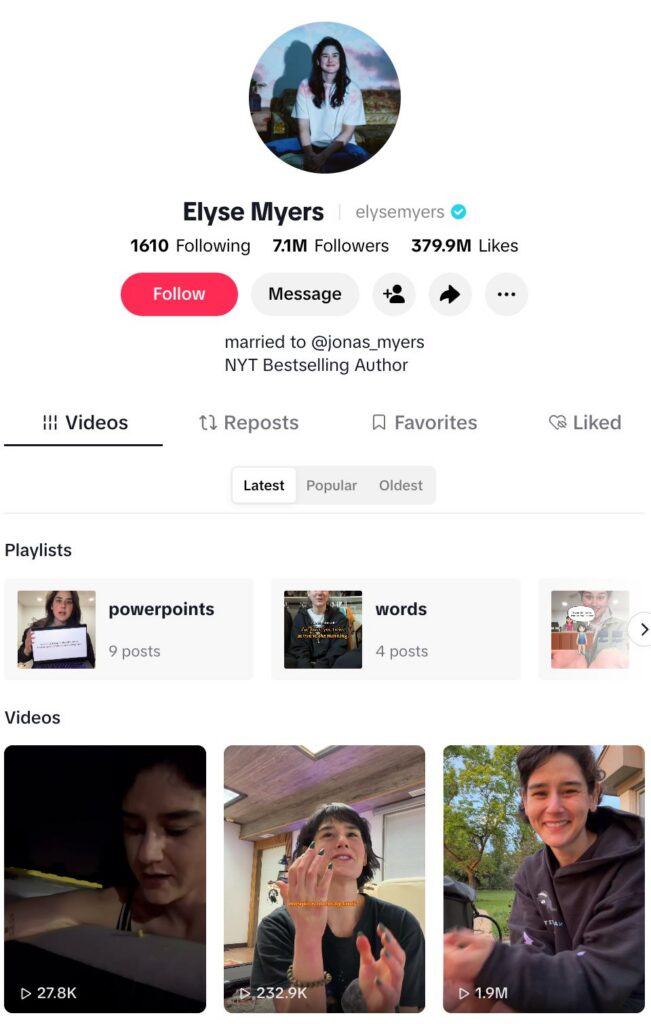
Elyse built her following through storytelling videos about awkward social situations and mental health experiences. She's monetized through a podcast, book deal, and brand partnerships that align with her anxious-but-trying persona. Her business success comes from making vulnerability feel productive rather than performative — a distinction her audience recognizes and rewards with deep loyalty.
Her content strategy treats each video as a standalone story with beginning, middle, and end — which makes posts more shareable and less dependent on follower familiarity. For brands, this structural approach is commercially significant: shareable content reaches beyond the creator's existing audience, extending your sponsorship's organic reach into networks that didn't follow the original placement. Brands in mental health, wellness, humor, and everyday consumer goods will find an audience that has specifically selected a creator who makes imperfect, relatable experience feel valuable.
12. Tabitha Brown
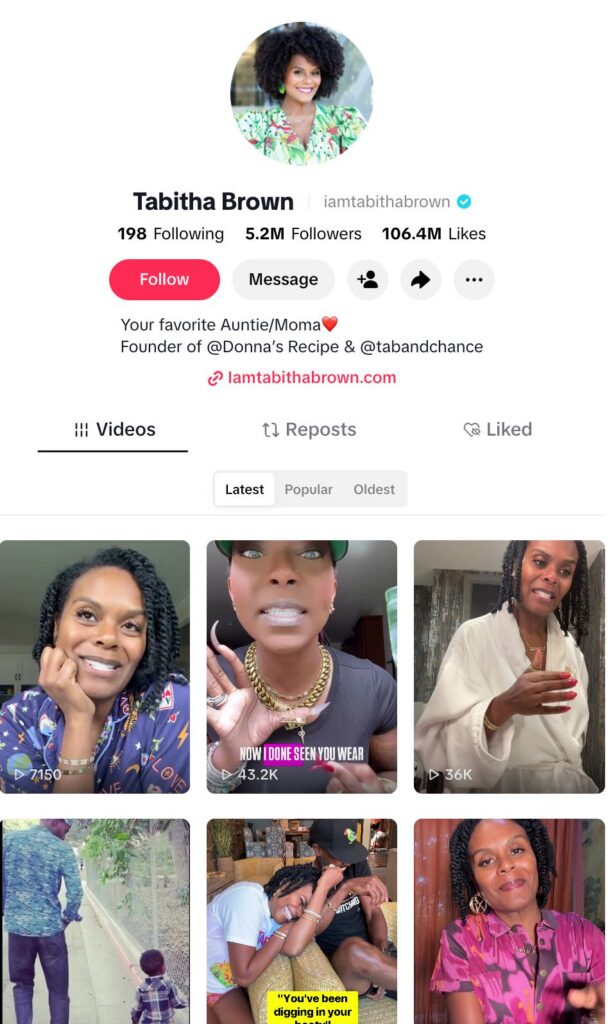
A vegan cooking creator who built a lifestyle brand around positivity and plant-based eating, Tabitha has monetized through cookbooks that became bestsellers, a Target product line that expanded into home goods, and acting opportunities in television and film. She represents how tiktok stars can expand from niche content into broader lifestyle positioning and how to work with brands by maintaining consistent values across every venture.
Her consistent voice — warm, encouraging, faith-based positivity — makes every business expansion feel like a natural extension rather than a cash grab, which maintains community trust even as she scales. She's one of the famous tiktok creators who successfully made the transition from content creator to lifestyle brand without alienating her original audience. For brands, Tabitha represents the highest-trust tier of partnership available on TikTok: an audience that has already proven willingness to follow a creator off-platform into product purchases. That proven off-platform conversion is the clearest possible signal that a partnership will generate commercial outcomes rather than just impressions.
13. Monet McMichael
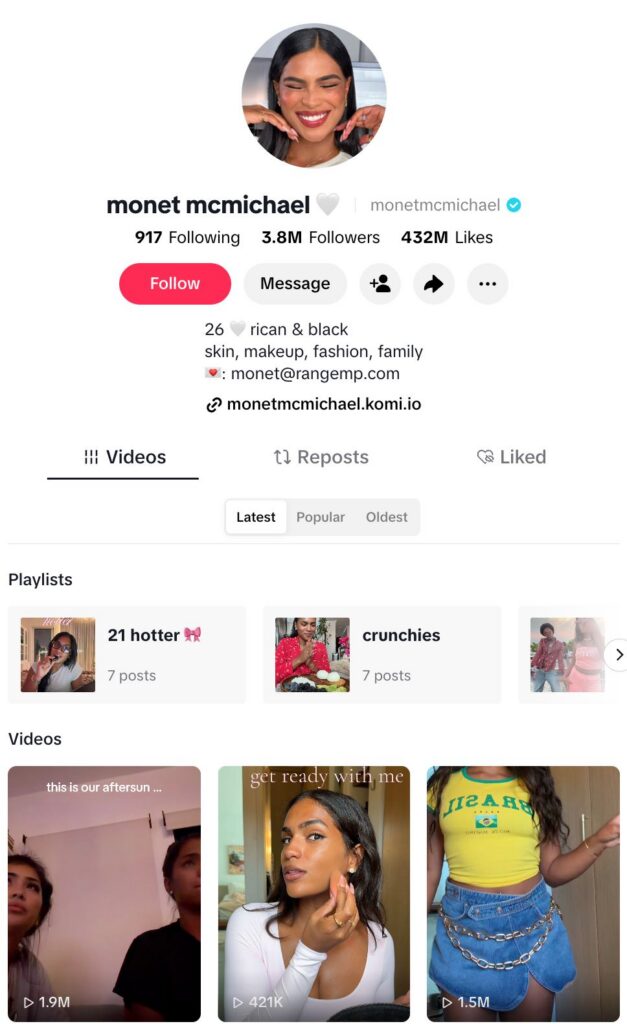
A hairstylist who shares hair care education, styling tutorials, and industry insights, Monet has built a business that includes a product line, salon ownership, and educational courses for other stylists. Her content serves both potential clients and other professionals simultaneously — effectively doubling her addressable market without requiring separate content strategies.
One of the top tiktokers who successfully balances aspirational content with accessible practical advice, her monetization strategy focuses on premium offerings rather than volume — which aligns her positioning as an expert rather than an entertainer, and attracts an audience that makes considered purchase decisions rather than impulse buys. For brands in hair care, beauty, professional education, or salon industry categories, Monet's audience is pre-qualified by demonstrated interest in investing in quality products and professional guidance.
14. Tinx
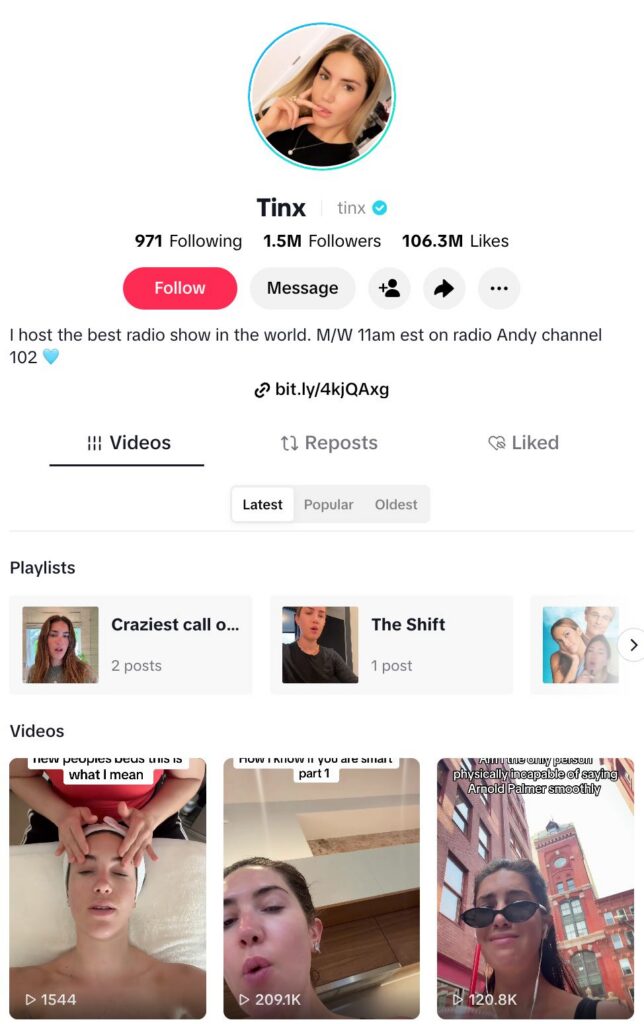
A lifestyle and dating advice creator who built a following around "rich mom energy" and relationship commentary, Tinx has monetized through a podcast, newsletter, and brand partnerships with luxury goods companies. Her content strategy involves creating frameworks and terminology that her audience adopts — "the box theory," "rich mom" — which strengthens community bonds by giving followers a shared vocabulary that identifies them as part of a specific in-group.
Tinx represents tiktok influencers who've built personal brands that genuinely transcend any single platform. Her newsletter audience and podcast listeners are not interchangeable with her TikTok followers — they're a subset who have made multiple additional commitments to her content. For luxury, lifestyle, beauty, and fashion brands, that multi-platform committed audience is worth substantially more per impression than a single-platform audience of equivalent size, because those additional commitment signals indicate higher-income, higher-intent consumers who have already demonstrated willingness to invest in lifestyle-aligned products.
15. Alix Earle
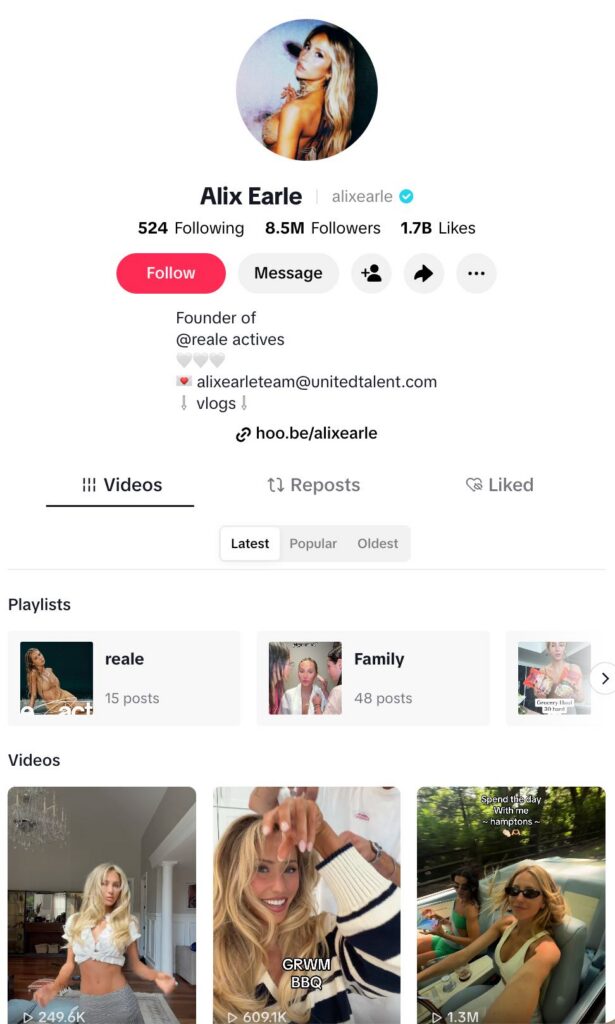
A college student who shares getting-ready routines, product recommendations, and lifestyle content, Alix has become one of the most influential voices in beauty despite no professional credentials — a demonstration that perceived authenticity and consistent access to a creator's genuine life can generate influence that formal expertise cannot replicate. She's monetized through brand partnerships, affiliate links, and a growing presence in traditional beauty media.
Her influence is so significant that products she mentions routinely sell out, exemplifying key influencer marketing trends to watch and creating what's been called "the Alix Earle effect." What differentiates her from other beauty tiktok stars is her willingness to show the full getting-ready process, including unflattering angles and product failures. Transparency about what doesn't work makes her endorsements of what does work dramatically more credible. For brands, her sell-out track record is the most concrete ROI validation available in her category — and it makes her a high-competition, premium-rate partner for beauty and lifestyle brands where that demonstrated conversion history justifies the investment.
Why Platform Dependency Is Your Most Important Partner Selection Signal
Every creator on this list built something that would survive if TikTok disappeared tomorrow. That's not an accident. It's the defining characteristic that separates creators worth long-term brand investment from creators who represent platform-dependent risk.
When a brand partners with a creator whose entire business depends on TikTok's algorithm — who has no email list, no off-platform community, no owned products, and no alternative distribution — that brand is sponsoring a media placement rather than building an audience relationship. Algorithm changes, platform policy updates, and the ongoing regulatory uncertainty around TikTok's US operation are risks that the creator and the brand share, because the brand's sponsorship is distributed exclusively through the creator's platform-dependent reach.
Creators who have diversified their business models have demonstrated audience ownership. Their followers didn't just double-tap and scroll. They subscribed to a newsletter, bought a book, joined a community, purchased a product, or followed the creator to another platform. Each of those actions is evidence of genuine influence — the audience made an active choice to deepen the relationship beyond passive following. That demonstrated audience behavior is what brand partnerships are paying to access.
For brand managers building TikTok creator programs, platform independence should be an explicit evaluation criterion alongside audience size and engagement rate. Ask potential partners:
- What percentage of your revenue comes from sources other than TikTok brand deals?
- Do you have an email list? How large, and what's your open rate?
- Have your followers purchased your products, courses, or services directly?
- Do you post content consistently across other platforms, and does your audience follow you there?
- What would happen to your business if TikTok's US operation shut down tomorrow?
Creators who answer these questions with confidence have built something genuine. Creators who deflect, minimize, or can't answer have built platform dependency. The former are long-term partnership assets. The latter are short-term media placements, and should be priced and structured accordingly.
The top 10 tiktok influencers for any serious brand program aren't necessarily the ones with the highest follower counts. They're the ones whose audiences have made multiple commitments — the creators who have proven that their influence extends to action, not just attention. Reaching that standard of creator quality at scale, across a portfolio of 20 to 50 active partnerships, requires the kind of verified audience intelligence and business sustainability data that generic search tools and media kits cannot provide.
SPIRRA's platform evaluates creators across 150 verified data points — including True Follower™ audience authentication, Brand Alignment Scores, Content Alignment Scores, and cross-platform performance data that surfaces the platform-independent signals that predict long-term partnership value. Across 19 million creators, the platform identifies not just who has the largest audience, but whose audience has demonstrated the commercial behavior patterns your brand's campaign requires.
If your TikTok creator selection process currently stops at follower count and category, request a demo to see what platform-independent audience quality looks like at the scale your program requires.