
Influencer marketing for restaurants is one of the most effective tools available to drive local awareness, fill tables, and build a loyal customer base, but most restaurants run it wrong. They invite a creator for a free meal, get a pretty Reel, see a brief spike in Instagram followers, and wonder why reservations didn't move. The problem isn't influencer marketing itself; it's the absence of a system behind it. When you match the right creator to the right audience, build in trackable calls to action, and run campaigns with clear performance benchmarks, influencer marketing for restaurants becomes a repeatable growth engine rather than a one-off branding exercise. This guide covers how to build that system from the ground up.
Why Influencer Marketing for Restaurants Works (When Done Right)
Food is one of the most naturally shareable categories on the internet. A perfectly plated dish, a chef at the pass, a table full of people genuinely enjoying themselves; these are the raw materials of content that performs. Restaurants don't need to manufacture a compelling story. They already have one. The job of influencer marketing is to put that story in front of the right people through a voice they already trust.
The mechanism is trust transfer. When a creator whose audience follows them for food recommendations, neighborhood guides, or lifestyle content posts about your restaurant, their followers interpret it as a personal referral rather than an advertisement. That distinction matters enormously for conversion. A first-time customer arriving via a creator recommendation has already cleared the skepticism barrier that paid ads spend CPMs trying to break through.
The secondary benefit is content production. A single creator partnership can generate short-form video, photography, Story content, and UGC that a restaurant can repurpose across paid social, email, and its own organic channels for weeks. For a restaurant marketing team managing multiple priorities on a lean budget, that content leverage is significant.
Building the Foundation: Goals, Budget, and the Right Creator Tier
Before you book a single creator, you need to answer three questions: what outcome are you trying to drive, what budget are you working with, and which creator tier fits both. Campaigns that skip this step tend to produce content that looks good but doesn't move the metrics that matter.
Defining Campaign Objectives With Actual Numbers
Vague goals produce vague results. Set specific, time-bound targets before any outreach begins. A useful goal looks like: increase Friday and Saturday reservation volume by 20% over the next six weeks, or generate 15 pieces of reusable UGC for paid social within 30 days. These targets shape every downstream decision, from which creators you select to how you structure the brief and measure success.
Common restaurant campaign objectives include driving reservations for a new location opening, promoting a seasonal menu or limited-time offer, increasing weekday covers during slower dayparts, and building content assets for paid amplification. Each objective calls for a different creator profile and a different set of KPIs.
Choosing the Right Creator Tier
Creator tier selection should follow directly from your objective and budget, not the other way around.
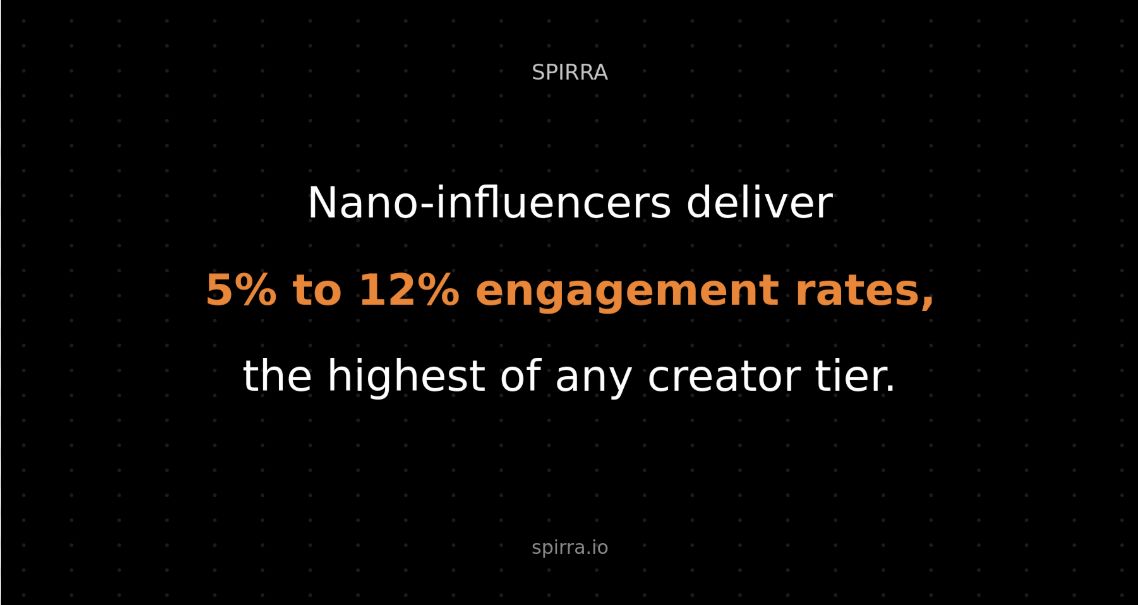
Nano-influencers (1K to 10K followers) deliver the highest engagement rates in the industry, often 5% to 12%, because their audiences are small and genuinely attentive. These creators are ideal for hyperlocal awareness, product seeding, and UGC collection. Compensation is often product-based (a hosted dinner), which keeps costs minimal while generating authentic content. For a neighborhood restaurant trying to build local credibility, a cluster of nano creators can accomplish more than a single expensive placement.
Micro-influencers (10K to 100K followers) sit at the performance sweet spot for most restaurant campaigns. They combine meaningful reach with strong niche credibility, whether that's a food-focused audience, a neighborhood guide following, or a dining culture community. Engagement rates typically run 1.5% to 6%, and these creators produce content that converts. Micro-influencer partnerships are well-suited to performance-based models, including affiliate tracking and promo code deals, that tie compensation directly to reservations or revenue.
Macro-influencers (100K to 1M+ followers) deliver broad awareness and viral potential, but at significantly higher cost and lower engagement per follower. They make sense for major launch moments, national promotions, or campaigns where awareness at scale is the primary goal. For most independent restaurants and regional chains, macro placements are best deployed selectively, after micro campaigns have validated your messaging and identified which creative angles actually drive reservations.
A blended approach works well in practice: use nano and micro creators for ongoing conversion-focused campaigns, and activate a macro creator strategically around a key moment such as a grand opening or seasonal launch.
Finding and Vetting Creators: What Actually Matters
The most common creator selection mistake is evaluating influencers by follower count rather than audience fit. A food creator with 45,000 followers whose audience skews 80% toward your target demographic and geographic radius will almost always outperform a lifestyle creator with 200,000 followers whose audience is diffuse and nationally distributed.
The metrics that actually predict performance are audience demographics (age, location, gender), engagement rate across recent posts (not lifetime averages), content quality and native style, and audience authenticity scores that distinguish real engaged followers from inflated counts.
SPIRRA's AI-powered influencer discovery platform handles this analysis at scale. Rather than manually reviewing profiles and requesting media kits, SPIRRA's algorithms analyze millions of data points including audience psychographics, content history, brand affinities, and sentiment to surface creators whose audiences demonstrate genuine propensity to engage with your restaurant category. SPIRRA's multi-layered authenticity verification goes beyond basic follower audits to surface an Authenticity Score for every creator, so you're not guessing at fit or exposure to fake engagement.
When evaluating creators manually, use this vetting checklist:
- Review the last 10 posts for consistent engagement (not a single viral outlier inflating lifetime averages)
- Request audience demographic data confirming geographic and age alignment with your customer profile
- Confirm no active conflicting partnerships with direct competitors
- Evaluate content style for native, authentic feel rather than heavy ad disclosure language
Verify that food and dining content performs comparably to their non-food posts

Crafting the Brief: Give Creators a Direction, Not a Script
The brief is where most restaurant campaigns either unlock or cap their potential. Over-scripted briefs strip out the authenticity that made the creator partnership worth pursuing. Under-briefed campaigns produce content that misses key messages or lacks a trackable call to action.
A strong creator brief covers the required elements (restaurant name, location, key dish or feature to highlight, campaign hashtag, disclosure requirements) alongside a specific and measurable call to action (a promo code for a free appetizer, a reservation link, a limited-time offer tied to the post). It also gives the creator clear permission to execute in their own voice and visual style.
The brands that get the best results from influencer marketing are the ones that treat creators as collaborators, not production houses. Invite them to experience the restaurant genuinely before any content obligation. Let them find their own angle. The strongest restaurant influencer content feels like a personal recommendation, not a paid placement, because that's exactly what drives the trust transfer that makes the channel work.
Tracking and Measurement: Connecting Creator Activity to Reservations
Influencer marketing for restaurants only compounds in value when you measure it properly. Without attribution infrastructure, you're producing brand awareness you can't quantify, which makes it impossible to optimize spend or justify the channel to stakeholders.
Build measurement into every campaign before content goes live. Assign unique UTM-tagged links to each creator for tracking web traffic and reservation page visits. Issue unique promo codes to each creator so that redemptions can be directly attributed to specific partnerships. Tag reservation system entries with campaign source identifiers so you can track conversion rates from creator-driven traffic. Where your POS system allows it, track average check size from influencer-attributed covers to capture revenue per campaign, not just traffic.
SPIRRA's Data Lab analytics suite centralizes performance data across all creator partnerships in a single dashboard, tracking engagement rates, click-through rates, conversion metrics, and cross-platform performance aggregation. For restaurants managing multiple simultaneous partnerships, this kind of consolidated reporting is the difference between having data and actually being able to act on it in time to optimize a live campaign.
The KPIs worth tracking for restaurant influencer campaigns are:
- Reach and impressions (audience exposed to campaign content)
- Engagement rate (likes, comments, saves, shares divided by impressions; target 3% to 8% for micro creators)
- Click-through rate on reservation links (target 2% to 5%)
- Promo code redemption volume (direct attribution to creator performance)
- Reservation conversion rate from creator-driven traffic (target 10% to 20% of tracked clicks)
- Revenue per campaign based on average check multiplied by attributed covers
Run weekly performance reviews during active campaigns. Identify which creators are producing the best CPA, which content formats are generating the most saves and reservation clicks, and reallocate budget and content requests toward what's working.
Platform Strategy: Where to Run Restaurant Influencer Campaigns
Different platforms serve different parts of the consideration funnel for restaurant marketing, and your platform mix should reflect your campaign objective.
TikTok
TikTok is the strongest platform for discovery and viral awareness. Its algorithm surfaces engaging content to users who don't already follow the creator, which means a restaurant with zero TikTok history can generate significant organic reach if the content resonates. Use TikTok for trend-native content, chef moments, behind-the-scenes kitchen footage, and menu reveals. Measure views, immediate engagement spikes, and any associated reservation uptick in the 48 to 72 hours following a post.
Instagram Reels and Stories
Instagram balances discovery with repeat exposure through Explore, profile content, and Stories. Reels work well for polished but authentic menu storytelling, dining atmosphere content, and limited-time offers. Stories are ideal for time-sensitive promotions, reservation CTAs, and real-time coverage of events or special nights. Track saves, DMs, link taps, and story replies as leading indicators of conversion intent.
YouTube
YouTube supports longer-form content with durable search value. Restaurant walkthroughs, chef interviews, and "best of" neighborhood dining guides can surface in search for months after publication. Use YouTube for deeper brand storytelling and category-level discovery, especially in markets where local food content has a strong search audience. Track watch time and clicks to booking pages.
Brief creators with platform-specific guidance: short, personality-driven hooks for TikTok; polished but authentic moments for Reels; tutorial or narrative-driven content for YouTube. Secure content usage rights in every creator contract so that winning creative can be repurposed across paid social and owned channels immediately.
Turning Creator Content Into a Compounding Asset
The campaigns that produce the best long-term ROI treat influencer content as the starting point of a content engine, not the endpoint. Every piece of creator content that generates strong engagement is a candidate for paid amplification, email integration, and loyalty program activation.
Short-form creator videos repurposed as paid social ads consistently outperform polished brand-produced spots in restaurant categories because they retain the authentic, native feel that converts. A 30-second creator clip running as a paid TikTok or Instagram ad can deliver lower CPMs and stronger conversion rates than a produced brand video, while requiring zero additional production spend.
Build a content repurposing workflow into your campaign plan from the start. Identify the top two or three performing creator assets by engagement rate and click-through rate after the first week of a campaign. Submit those for paid amplification using SPIRRA's campaign management tools to extend their reach beyond the creator's organic audience. Feed UGC into email nurture sequences for subscribers who have visited but not returned recently. Use creator content in loyalty program communications to reinforce the social proof that drives repeat visits.
Loyalty mechanics also create a compounding loop when tied to influencer campaigns. Offering loyalty points or exclusive perks to customers who redeem a creator's promo code extends the trackable attribution window beyond the initial visit and creates measurable data on repeat visit frequency from influencer-sourced customers.
Advanced Tactics: Seasonal Campaigns, Limited Drops, and Creator Collectives
Once your baseline influencer program is running with consistent measurement, several advanced approaches can significantly increase campaign impact without proportionally increasing budget.
Creator-led menu drops generate outsized attention when a new or limited item is revealed exclusively through influencer content before broader announcement. Inviting three to five micro creators to a preview tasting and timing their posts to drop simultaneously creates a moment of social proof that reaches multiple audience segments at once and generates earned media from followers who see multiple independent recommendations in the same window.
Seasonal campaigns tied to genuine restaurant events (holiday menus, anniversary specials, summer patio openings) give creators authentic narrative anchors that produce better content than evergreen briefs. A creator who is genuinely excited about a limited seasonal dish will generate more compelling content than one who is working from a generic "come visit us" brief.
Building a standing creator collective, a small roster of five to ten creators who post about your restaurant on an ongoing retainer or recurring partnership basis, reduces the acquisition cost of new creator relationships and builds audience familiarity through repeated, consistent exposure over time. Audiences who see the same restaurant recommended by a trusted creator multiple times over months develop brand familiarity that converts at significantly higher rates than single-exposure campaigns.
Why SPIRRA Is the Right Platform for Restaurant Influencer Marketing
Managing influencer marketing for restaurants across discovery, outreach, contracts, content approvals, tracking, and payments is operationally complex, especially for marketing teams that are also running events, managing social channels, and coordinating with front-of-house operations.
SPIRRA is built to remove that operational complexity. The platform gives restaurant marketers access to more than 18 million discoverable influencers with verified audience data, transparent performance benchmarks, and cross-platform analytics. SPIRRA's AI-powered discovery matches your campaign to creators based on audience demographics, psychographics, content performance history, and brand affinity data, not just follower count. SPIRRA's Authenticity Score protects your budget from fake engagement. Contract management, content approvals, payment processing, and performance reporting are all handled inside a single interface so your team can focus on the campaign rather than the administration.
For restaurant groups managing campaigns across multiple locations, SPIRRA's multi-brand and agency solutions scale to meet that complexity without the overhead of managing separate tools for each market.
Book a free SPIRRA demo to see how the platform can streamline your restaurant influencer program, from creator discovery to campaign reporting, and what a data-driven influencer strategy looks like for your specific audience and goals.
Frequently Asked Questions
How much should a restaurant budget for influencer marketing?
There is no fixed answer, but a practical starting framework allocates 40% to 50% of the influencer budget to creator fees (including hosted dining experiences for nano and micro creators), 20% to 30% toward content production or seeding costs, and 20% to 30% toward paid amplification of top-performing creator assets. Many restaurants begin with product-only deals (hosted meals) with nano creators to generate UGC and validate messaging before committing larger budgets to paid creator partnerships.
How do you track whether an influencer campaign actually drove reservations?
Through a combination of unique promo codes, UTM-tagged reservation links, and tagged entries in your reservation system. Assign every creator their own trackable assets before any content goes live, and build a simple reporting dashboard that correlates creator post dates with reservation volume by source. SPIRRA's analytics suite centralizes this data across all active creator partnerships so you're not reconciling spreadsheets manually.
Should restaurants work with food-specific influencers only?
Not necessarily. Food creators are an obvious fit, but neighborhood lifestyle creators, local event guides, and date night content creators often deliver highly relevant audiences at lower cost and with less competition from other restaurant campaigns. The key criterion is audience fit, specifically whether the creator's followers match your target customer by location, age, and dining behavior, not content category alone.
How do you handle FTC compliance for sponsored restaurant content?
Include clear disclosure requirements in every creator contract, specifying that all sponsored content must use clear language such as #ad or #sponsored. Build a content approval step into your campaign workflow so that every post can be reviewed before it goes live. SPIRRA's brand safety and compliance monitoring tools automate verification as part of the campaign management process, reducing compliance risk without adding manual review overhead.
What content formats perform best for restaurant influencer campaigns?
Short-form vertical video consistently outperforms static images for discovery and engagement in restaurant categories. POV dining footage, chef content, dish reveals, and genuine reaction content tend to generate the strongest saves and shares. Behind-the-scenes content (kitchen access, prep moments, team culture) performs well for building brand affinity beyond the immediate menu. For conversion-focused campaigns, content that includes a specific, time-bound offer tied to a promo code or reservation link consistently drives higher click-through rates than purely aspirational creative.